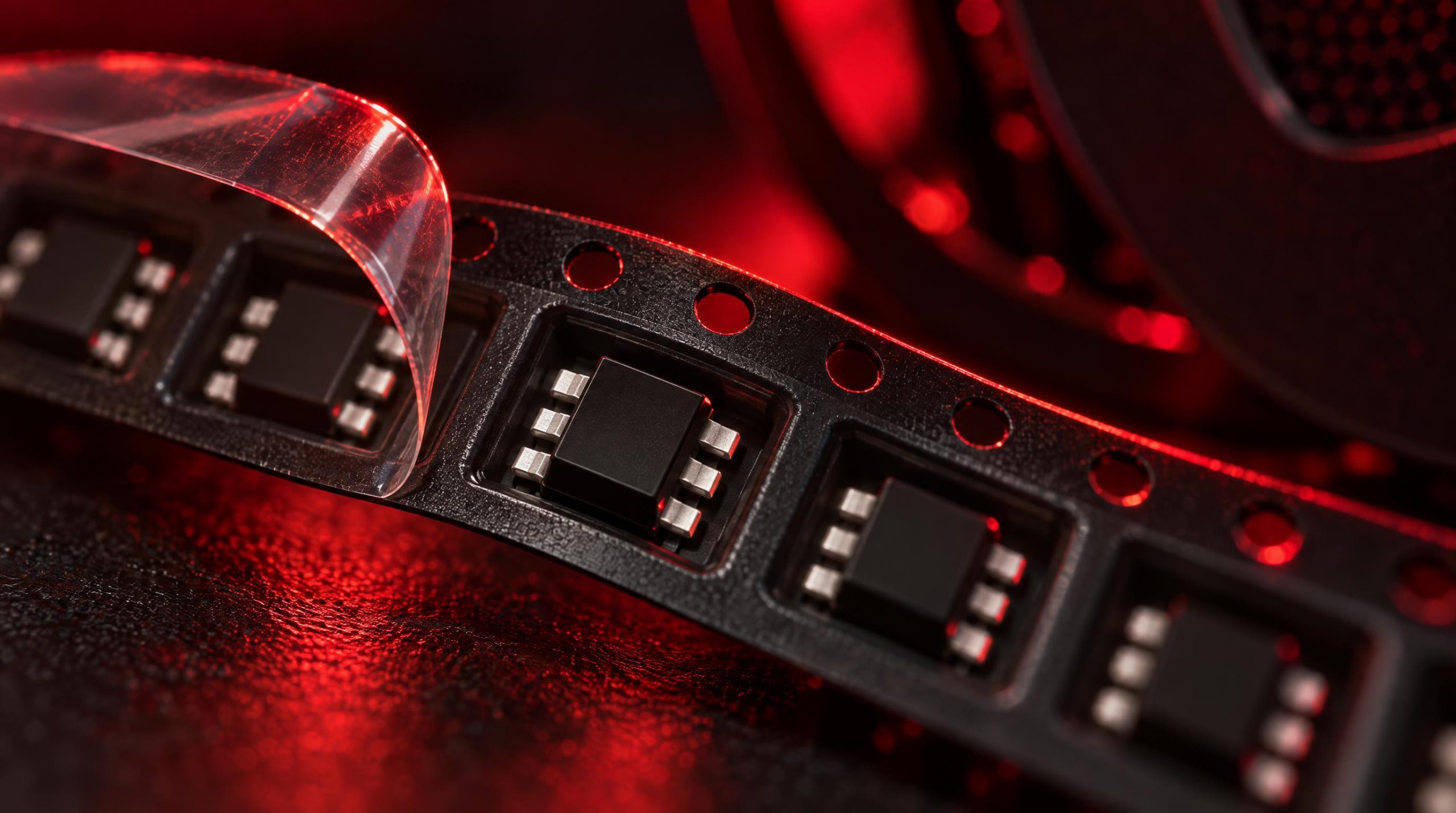
Linear voltage regulators have been a fixture of electronic design for decades, and for good reason. They are straightforward to implement, generate no switching noise, and require minimal external components. Low-dropout regulators — LDOs — extended that usefulness further by allowing regulation even when the voltage headroom between input and output is very small, making them indispensable in battery-powered designs, portable medical equipment, RF front ends, and precision analog circuits. Linear regulator ICs remain among the highest-volume component categories in electronics procurement, which also makes them one of the most frequently affected by end-of-life (EOL) events.
This article covers both sides of the equation. The first half works through the technical parameters that actually drive LDO selection — not just voltage and current ratings, but the specifications that determine whether a part will behave correctly in a specific circuit. The second half addresses what happens when a part reaches EOL or goes into shortage: how to evaluate cross-references properly, how to source once a part is past last-time-ship, and how to manage lifecycle risk before a discontinuation notice becomes a production emergency.
Selection Guide & Sourcing Strategy
A practical engineer’s reference: key selection parameters, LDO vs. standard linear tradeoffs, and proven strategies for managing EOL component risk.
5 Key Takeaways
|
① LDOs shine where headroom is tight 100–500 mV dropout vs. 2 V+ for standard linear regulators |
② Zero switching noise is the key advantage Preferred for ADCs, RF, and precision analog subsystems |
③ Output cap ESR causes hidden failures Bipolar LDOs need ESR 0.1–2 Ω; CMOS LDOs want low-ESR ceramics |
|
④ EOL risk is real for long-lifecycle products Analog and PMIC lines are discontinued every year; a missed PCN can stall production |
⑤ Proactive sourcing beats reactive scrambles Pre-qualify alternates and monitor PCN feeds before stock-outs hit |
|
100–500 mV LDO dropout voltage |
2 V+ Standard linear |
|
<10µV RMS output noise: |
6–12 mo Typical PDN lead time |
LDO vs. Standard Linear Regulator
|
⚡ LDO (Low-Dropout)
|
Standard Linear (NPN/BJT)
|
6 Critical Selection Parameters
|
Dropout Voltage Evaluate at maximum load current — not light load. Scales with current through pass element on-resistance. |
Quiescent Current (Iq) Dominates standby budget in IoT/wearables. Modern ultra-low-Iq LDOs: sub-µA range. A 200 µA vs. 2 µA difference meaningfully affects battery life. |
|
PSRR Check PSRR at the converter’s switching frequency — not just DC. 60 dB at 100 Hz but only 20 dB at 1 MHz passes ripple straight through. |
Output Noise Internally generated noise from reference & error amp. Low-noise LDOs: <10 µVRMS for VCOs, ADC refs. General-purpose: hundreds of µVRMS. |
|
Thermal & Package Power = (Vin – Vout) × Iout. TO-220 handles watts with heatsink; SOT-23 limited to a few hundred mW in free air. DFN/QFN outperform SOT-223 for SMD. |
Output Cap ESR Bipolar LDO: needs 0.1–2 Ω ESR for stability. CMOS LDO: designed for low-ESR ceramics. Swapping topology without changing caps can cause oscillation. |
Component Lifecycle Stages & Response Strategy
|
Intro New design wins; qualify early |
Growth Volume ramps; standard procurement |
Maturity Stable supply; monitor PCN feeds |
|
Decline Stock thins; qualify alternates now |
Phase-Out PDN issued; calculate LTB quantity |
Obsolete Remaining stock & redesign only |
Act in Decline & Phase-Out stages — not after stock-out. PCN notices may reach 6–12 months before the last-time-buy window closes, but many buyers miss formal notifications entirely.
Cross-Reference Validation Checklist
Pin-compatible ≠ drop-in replacement. Always validate these specs against the original datasheet before qualifying an alternate:
|
Max input voltage incl. transients Output voltage accuracy / reference Dropout voltage at max load current Quiescent current |
Output capacitor ESR range PSRR at application frequency Thermal rating of package Enable/disable logic polarity |
⚠ Key Watch: Bipolar → CMOS topology changes bring entirely different ESR requirements. A cross-reference that was valid previously may no longer be safe if the manufacturer updated internal silicon.
4 Proactive EOL Sourcing Strategies
Calculate LTB quantity against full remaining product lifecycle. Use both demand forecasts and design roadmap input — overbuying wastes capital; underbuying stalls production. |
Qualify at least one validated alternate for every single-source or at-risk LDO before EOL. Removes time pressure from the validation process when a PDN arrives. |
Aggregate PCN/PDN feeds via component intelligence platforms. Goal: know about discontinuation at announcement — not when distributor stock runs out. |
Purchasable stock can still exist across a number of supply channels. Ask whoever is quoting for traceability docs, date code verification, and incoming inspection; avoid parts without clear supply chain documentation. |
|
WIN SOURCE — Global Independent Distributor of Electronic Components Component supply · Shortage sourcing · Lifecycle management · Alternative solutions AS9120 · ISO 9001:2015 · ISO 14001 · ERAI member · win-source.net |
Browse Linear Regulators → |
What Is a Linear Voltage Regulator?
A linear voltage regulator is an active circuit that maintains a stable DC output voltage regardless of changes in load current or input voltage. At its core, it operates by placing a controlled pass element — a bipolar transistor or MOSFET — between the input and output rails. The pass element acts like a variable resistor, and an internal feedback loop continuously adjusts its resistance to keep the output voltage at the target value. The fundamental trade-off is that the voltage difference between input and output is dissipated entirely as heat, making thermal management a first-order concern in any design where the input-to-output differential is significant.
Because they contain no switching elements, linear regulators produce no switching noise. This is their defining advantage over buck converters and other switching topologies. The output is inherently clean, which is why linear regulators remain the preferred power solution for noise-sensitive subsystems even in systems where a switching converter handles the bulk of the voltage conversion. The practical use case is often a switching regulator stepping down a high rail, followed by a linear regulator providing a clean, precise supply to an ADC, DAC, RF module, or precision sensor.
Standard Linear vs. LDO: What the Difference Actually Means
The term “LDO” is sometimes used loosely to mean any linear regulator, but it has a specific technical meaning. All linear regulators require some minimum voltage difference between input and output to maintain regulation — this is the dropout voltage. In a classic NPN-based series regulator (the LM723 family or the original LM317 topology), the dropout voltage can be 2 V or more, because the pass transistor requires significant base drive. An LDO uses a PMOS pass element, which needs only a small gate-to-source voltage to stay fully on, reducing the dropout voltage to the order of 100–500 mV depending on load current and device design.
This distinction matters whenever the input voltage is close to the desired output. A 3.3 V rail powered from a lithium-ion cell at end of discharge (around 3.5–3.6 V) is a case where a standard linear regulator would simply drop out of regulation, while a well-specified LDO continues to function. The same logic applies when post-regulation follows a DC/DC converter: a tightly regulated 3.3 V buck output followed by an LDO to generate 3.0 V requires a device with a dropout voltage well below 300 mV at the expected load. Choosing a standard linear regulator for this role would either require raising the intermediate rail — reducing efficiency — or cause intermittent regulation loss.
Key Parameters for LDO Selection
Input and output voltage range, along with maximum output current, are the obvious starting points, but they represent only part of the selection picture. Several other parameters have a significant effect on whether a device actually performs correctly in a given circuit, and these are the ones most often overlooked when engineers treat a cross-reference as a drop-in replacement.
Dropout Voltage
Dropout voltage is defined as the input-to-output voltage differential at which the LDO can no longer maintain regulation. It is not a fixed number — it increases with load current, because the voltage drop across the pass element’s on-resistance scales with current. When sizing an LDO, the dropout voltage must be evaluated at the maximum expected load current, not at light load. Datasheets typically provide a curve or a table entry at rated current, which is the relevant figure for worst-case design.
Quiescent Current
Quiescent current (Iq) is the current drawn by the LDO’s internal circuitry when the output is at no load — essentially the overhead cost of keeping the regulator running. In always-on battery-powered applications such as IoT sensors, wearables, or remote metering equipment, quiescent current can dominate the standby power budget. Modern ultra-low-Iq LDOs are available with quiescent currents in the low-microamp or even sub-microamp range, and the difference between a 200 µA and a 2 µA device can meaningfully extend battery life in duty-cycled systems. For designs that are always drawing substantial load current, Iq is less critical, but it should not be ignored in thermal calculations.
Power Supply Rejection Ratio (PSRR)
PSRR quantifies how well the LDO attenuates noise and ripple present on the input voltage before it reaches the output. It is expressed in decibels and is strongly frequency-dependent — most LDOs show good PSRR at low frequencies (where the feedback loop is effective) and progressively worse rejection at higher frequencies as loop gain rolls off. For applications where the LDO follows a switching converter, the PSRR at the converter’s switching frequency is the critical specification, not the low-frequency figure. An LDO with 60 dB PSRR at 100 Hz but only 20 dB at 1 MHz will pass most of the converter’s switching ripple to the load if the converter operates at 1 MHz.
Output Noise
Output noise is distinct from PSRR. PSRR describes rejection of externally applied input disturbances, while output noise describes voltage fluctuations generated internally by the LDO’s own reference and error amplifier circuits. In RF, precision measurement, and audio applications, intrinsic output noise can matter more than PSRR. Low-noise LDOs from manufacturers such as Texas Instruments, Analog Devices, and STMicroelectronics are available with output noise figures below 10 µVRMS, suitable for powering ADC reference circuits, VCOs, and low-noise amplifiers. Standard general-purpose LDOs typically produce output noise in the hundreds of µVRMS range, which is acceptable for digital logic supply but not for sensitive analog front ends.
Thermal Performance and Package Selection
Because a linear regulator dissipates power as heat — proportional to (Vin – Vout) × Iout — package selection directly affects how much current the device can handle in practice. A through-hole TO-220 package can dissipate several watts with an adequate heat sink, while a small SOT-23 is limited to a few hundred milliwatts in free air before junction temperature limits are reached. DFN and QFN packages offer lower thermal resistance than SOT-223 for surface-mount designs. When the calculated power dissipation is close to the package’s rated limit, the solution is either to choose a larger package, add thermal copper pours on the PCB, or reconsider whether the voltage differential can be reduced — for example by using a pre-regulating buck converter to bring the input rail closer to the output voltage before the LDO stage.
Output Capacitor Stability Requirements
This parameter does not always appear prominently in marketing summaries, but it is one of the most common causes of problems when substituting one LDO for another. Older bipolar-pass-element LDOs typically require a minimum equivalent series resistance (ESR) in the output capacitor — usually 0.1 to 2 ohms — to maintain loop stability. Modern CMOS-based LDOs are generally designed for ceramic output capacitors with very low ESR. If a CMOS device is substituted for a bipolar device without changing the output capacitor, the circuit may oscillate. The reverse is also true: a CMOS LDO designed for ceramic may become unstable with a high-ESR electrolytic. Always verify the output capacitor ESR range specified in the datasheet of both the original device and any proposed replacement.
Matching Regulator Type to Application
Given the parameters above, the selection decision comes down to which specifications are genuinely constrained by the application. For powering microcontrollers and digital logic from a well-regulated intermediate bus, a general-purpose LDO with modest PSRR and standard Iq is usually sufficient. For battery-powered portable equipment, quiescent current and dropout voltage become the dominant criteria. For RF transceivers, ADCs, DACs, and precision reference circuits, low output noise and high PSRR at the relevant frequency range are the governing specifications — and often justify the cost premium of a low-noise device from the BiCMOS product families offered by Texas Instruments or Analog Devices.
Automotive applications add another layer of requirements. LDOs used in vehicle electronics must typically be AEC-Q100 qualified, operate over a wider temperature range (–40°C to +125°C or higher), and withstand load dump transients that can drive the input voltage to 40 V or more. Many standard commercial LDOs are not suitable for direct automotive use regardless of how well their basic electrical parameters match. When sourcing for automotive applications, qualification status should be confirmed before finalizing a BOM or a cross-reference candidate.
Component Lifecycles and the EOL Problem
Linear regulators and LDOs have long been considered stable, long-lifecycle parts — and many are. A device like the LM317 has been in production for decades. But the broader component supply picture has changed significantly. Product lifecycles across the semiconductor industry are compressing, particularly in analog and power management categories, and discontinuations in these lines now arrive every year rather than once a decade. A single missed EOL notice can translate directly into stalled production lines and costly redesigns.
The standard mechanism for EOL notification is the Product Change Notice (PCN) or Product Discontinuation Notice (PDN). Manufacturers are supposed to issue these with adequate lead time — sometimes 6 to 12 months or more before the last-time-buy (LTB) window closes. In practice, the system has gaps. Not every EOL event arrives with a formal PCN reaching all affected customers, particularly smaller-volume buyers who are not on direct notification lists from the manufacturer. By the time franchise stock is depleted, the window for a planned LTB may have already closed.
For products with long field lives — industrial equipment, medical devices, defense systems, infrastructure electronics — this creates a specific problem: the circuit was designed around a specific LDO, the production run spans many years, and the part goes EOL halfway through the product lifecycle. Redesigning around a new part is often not a practical option, because qualification, regulatory re-approval, or simply the cost of board revision makes it prohibitive. The alternative is to locate remaining stock: once a part is past last-time-ship, purchasable stock can still exist across a number of supply channels, and finding it becomes a sourcing exercise rather than a catalog order.
Understanding where a component sits in its lifecycle is useful for setting procurement strategy. The recognizable stages — introduction, growth, maturity, decline, phase-out, obsolescence — each call for different responses. During the decline and phase-out stages, production volumes at the manufacturer drop, authorized distributor stock thins, and lead times lengthen. These are the signals to act: qualify alternates, calculate LTB quantities based on projected demand, and identify sourcing options before the part is formally declared obsolete.
Cross-Reference and Alternate Part Validation
When an LDO goes EOL, the first instinct is often to find a pin-compatible replacement from a current production family. Cross-reference tables provided by manufacturers or third-party databases are a reasonable starting point, but they should never be treated as confirmed drop-in solutions. The most common misconception is that matching package and pinout equals electrical compatibility. In reality, manufacturers regularly update internal silicon architectures, and a part that was a reliable cross-reference several years ago may have since transitioned from a bipolar to a CMOS pass topology — bringing with it entirely different output capacitor stability requirements, quiescent current behavior, and noise characteristics.
A proper cross-reference validation follows a structured checklist. Starting from the original device’s datasheet, the key electrical parameters to compare are:
- Maximum input voltage rating — the replacement must equal or exceed the original, including transient spikes in the application
- Output voltage accuracy — for fixed-output devices, verify the tolerance; for adjustable devices, verify that the internal reference voltage matches, or plan to revise external feedback resistors
- Dropout voltage at maximum load current — ensure the headroom in the application is sufficient for the replacement’s dropout at the expected load
- Quiescent current — relevant to battery life and standby power calculations
- Output capacitor ESR range — confirm compatibility with the capacitors already on the PCB
- PSRR at the application’s relevant frequency — particularly if the LDO follows a switching converter
- Thermal rating of the proposed package — verify the replacement can handle the actual power dissipation in the application environment
- Enable/disable pin behavior and active polarity — pinout compatibility does not guarantee logical compatibility of control signals
Once a candidate passes the datasheet comparison, circuit-level validation in the actual application is still necessary. Some failures — particularly stability issues related to output capacitor interaction — only appear under specific load transient conditions or at temperature extremes. Bench testing should cover the full load range and the expected input voltage range, not just the nominal operating point — and final approval of the substitute belongs to the customer’s engineering team.
Building a Sourcing Strategy for Legacy and EOL Parts
Managing EOL risk is more effective as a continuous process than as a reactive scramble. The procurement teams and engineering organizations that handle it well share a common approach: they track component lifecycle status as part of normal BOM management, not as a separate emergency procedure. This means monitoring manufacturer PCN feeds, using lifecycle intelligence tools, and maintaining a list of pre-qualified alternates for single-source or at-risk components before a discontinuation notice arrives.
When a part has no viable functional equivalent — which happens more often with older proprietary LDOs than with commodity regulators — the sourcing task becomes locating existing stock. Sourcing runs the length of a product’s life: prototype builds, volume production, and the years after a part is withdrawn while a fielded design still has to be supported. Engaging an independent distributor as part of a broader supply chain strategy — not only when a shortage has already hit — gives procurement teams earlier visibility into what is available, and the questions to ask are the same whoever is quoting: certifications, counterfeit-mitigation process, inspection, date-code and return policies.
Several concrete strategies are worth building into procurement practice:
- Last-Time Buy (LTB) planning — When a PDN is issued, calculate demand carefully against the remaining product lifecycle before the LTB window closes. Overbuying ties up capital and creates obsolete inventory; underbuying leaves a gap. Demand forecasting and design roadmap input are both required for an accurate LTB quantity.
- Pre-qualified alternates on the BOM — Qualifying at least one alternate for every single-source or at-risk LDO before it goes EOL removes the time pressure from the validation process. The alternate exists, it is validated, and it can be switched in without a design emergency.
- Lifecycle monitoring tools — Platforms that aggregate PCN and PDN feeds, and tools like component intelligence services, provide earlier warning than waiting for distributor stock-out notices. The goal is to know about a discontinuation when it is announced, not when inventory runs out.
- Sourcing after last-time-ship with traceability requirements — When sourcing EOL or hard-to-find LDOs, traceability documentation, date code verification, and incoming inspection are essential. Parts sold without clear supply chain documentation carry higher counterfeit risk, particularly for high-demand legacy devices.
WIN SOURCE is a global independent distributor of electronic components, stocking linear regulators and LDOs across current-production and hard-to-find part numbers from manufacturers such as Texas Instruments, STMicroelectronics, Analog Devices, Infineon, Microchip and NXP, and supporting shortage sourcing, lifecycle management and alternative solutions with comparative analysis support. It holds AS9120, ISO 9001:2015 and ISO 14001 certifications and is a member of ERAI, and its WinLink BOM tool and WinConnect API support sourcing teams managing multi-line BOMs.
Final Thoughts
Linear regulators and LDOs are deceptively simple devices. The basic specifications — input voltage, output voltage, current rating — are easy to read from a datasheet. The harder work is understanding how parameters like dropout voltage, PSRR, quiescent current, and output capacitor requirements interact with the specific demands of a design, and recognizing where a standard general-purpose device is sufficient versus where a specialized low-noise or automotive-grade device is actually needed.
The sourcing dimension adds another layer of complexity that does not appear in any datasheet. As component lifecycles continue to shorten, the question is no longer just “which LDO is right for this circuit” but also “how long will I be able to buy it, and what is the plan when I can’t.” Proactive lifecycle management — pre-qualified alternates, monitored PCN feeds, disciplined LTB calculations, and supply relationships that cover the years after last-time-ship — converts what is otherwise an operational emergency into a manageable planning process.
Frequently Asked Questions
What is the difference between a linear regulator and an LDO?
Both regulate by dissipating the input-output difference across a pass element, but a standard NPN-based linear regulator needs 2 V or more of headroom to stay in regulation, while an LDO’s PMOS pass element needs only about 100–500 mV depending on load. LDOs are the choice when the input sits close to the output — a 3.3 V rail from a lithium cell near end of discharge, or a 3.0 V post-regulator after a 3.3 V buck.
Which LDO specifications matter most?
Dropout voltage at maximum load (not light load), quiescent current for battery-powered designs, PSRR at the frequency of the upstream switching converter, intrinsic output noise for RF and precision analog rails, thermal capability of the package for the actual (Vin – Vout) × Iout, and the output-capacitor ESR range the loop needs for stability.
Why did my circuit oscillate after swapping one LDO for another?
Most often the output-capacitor stability requirement changed. Older bipolar-pass LDOs need some ESR (typically 0.1–2 Ω) in the output capacitor; modern CMOS LDOs are designed for low-ESR ceramics. Substituting one topology for the other without changing the capacitor can make the loop unstable, so always compare the ESR range in both datasheets.
How should I validate a cross-reference for a discontinued LDO?
Compare the replacement’s datasheet against the original on maximum input voltage, output accuracy or reference voltage, dropout at maximum load, quiescent current, output-capacitor ESR range, PSRR at the relevant frequency, package thermal rating and enable-pin polarity, then bench-test across the full load, input and temperature range. Pin compatibility is necessary but not sufficient, and final approval belongs to your engineering team.
What can I do when a linear regulator goes end-of-life?
Calculate a last-time buy against the remaining product life, switch to a pre-qualified alternate, or locate remaining stock — purchasable stock can still exist across a number of supply channels after last-time-ship. Monitoring PCN and PDN feeds and qualifying an alternate for every single-source regulator before the notice arrives keeps the choice a planning decision rather than an emergency.
Part discontinued, obsolete or hard to find?
WIN SOURCE is a global independent distributor of electronic components, supporting component supply, shortage sourcing, lifecycle management and alternative solutions. Visual inspection, non-destructive testing and electrical testing are applied according to material risk, customer requirements and the applicable quality process, and orders are covered by the published return policy and a 3-year warranty on eligible components.
Stock and pricing are updated daily — search a part number or contact us for current availability, lead time and a quote.
© 2026 Win Source Electronics. All rights reserved. This content is protected by copyright and may not be reproduced, distributed, transmitted, cached, or otherwise used without the prior written permission of Win Source Electronics.