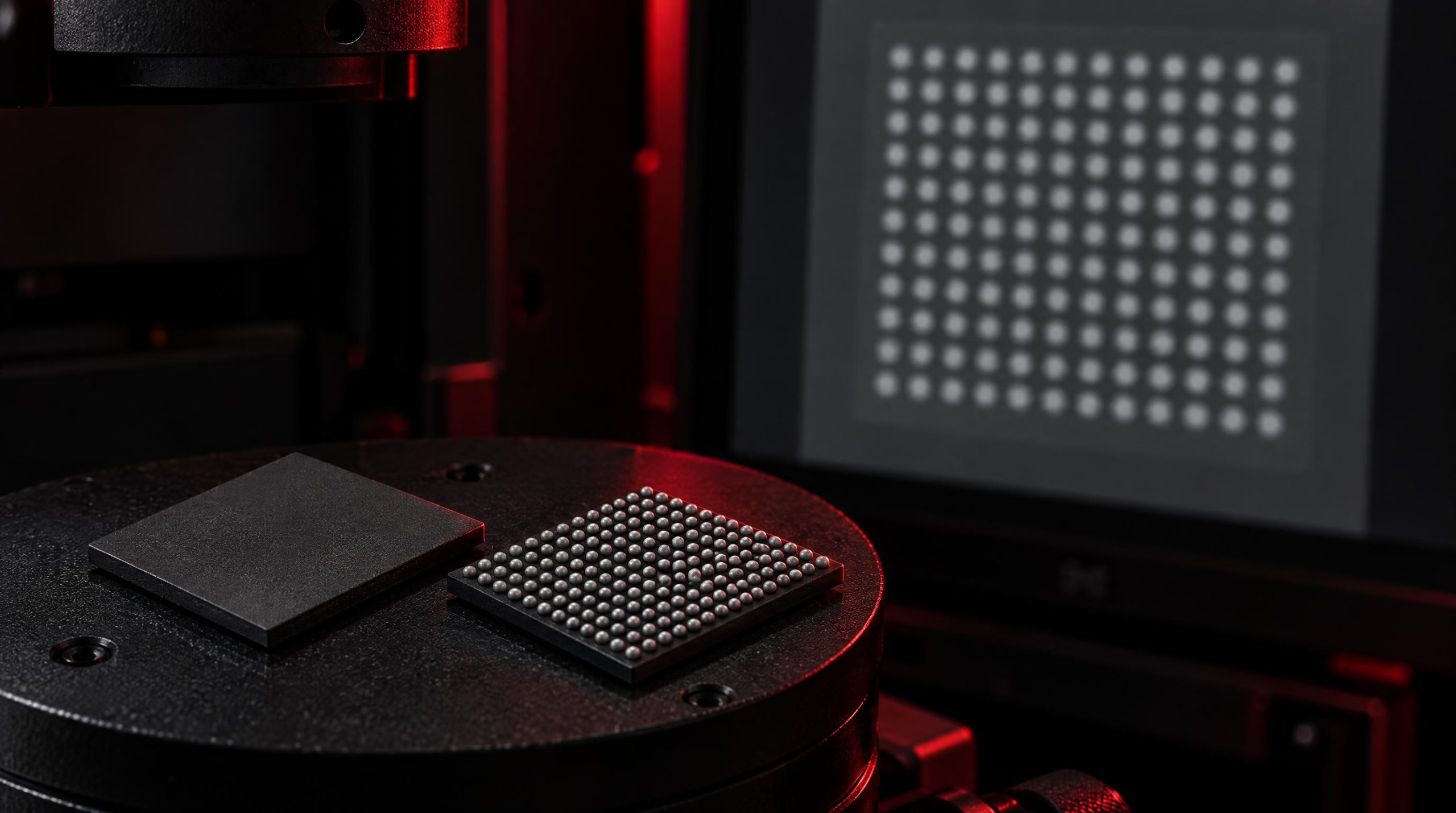
Pick up any modern smartphone, fitness tracker, or smart thermostat and there is a single chip doing the work that once required an entire circuit board of discrete components. That chip is a System on a Chip (SoC) — an integrated circuit that consolidates a processor, memory interfaces, graphics, wireless radios, and a range of specialized accelerators onto one piece of silicon.
The concept sounds straightforward, but the engineering and supply-chain implications of SoC technology reach far beyond consumer gadgets. SoCs now sit at the heart of automotive driver-assistance systems, industrial IoT gateways, AI edge devices, and data-center accelerators. Understanding what an SoC is, how it is built, and why it matters is increasingly useful knowledge for engineers, product managers, and procurement professionals alike. This guide covers all of that in plain English.
Everything you need to know about the integrated circuits powering smartphones, vehicles, AI devices, and beyond.
|
What Is an SoC?
|
A System on a Chip (SoC) is an integrated circuit that consolidates a processor, memory interfaces, graphics, wireless radios, and specialized accelerators — all onto one piece of silicon. It is essentially a complete computer system compressed into a single chip die, delivering performance that once required an entire circuit board.
|
What’s Inside an SoC?
|
All blocks. One die. Maximum efficiency.
|
CPU Cores
General-purpose computation (ARM, RISC-V)
|
GPU
Parallel processing, rendering & ML inference
|
|
NPU / AI Engine
On-device ML, image & speech recognition
|
Memory Interface
On-chip cache + LPDDR, eMMC, UFS
|
|
Wireless Radios
Wi-Fi, Bluetooth, 4G/5G, USB, PCIe
|
Power Management
PMU, voltage regulators, power gating
|
|
Security Subsystem
Crypto accelerators, secure enclave, TEE
|
DSP & Analog
Signal processing, ADC/DAC, PLLs
|
|
SoC vs. MCU vs. MPU
|
|
Microprocessor (MPU)
CPU Only
Needs separate chips for memory, storage & peripherals. Powerful but ecosystem-dependent.
Ex: Intel/AMD CPUs
|
Microcontroller (MCU)
CPU + RAM + Flash + Peripherals
Self-sufficient for simple tasks. MHz speeds, KB–MB memory. Optimized for low cost and power.
Ex: STM32, PIC
|
|
System on a Chip (SoC)
MCU + GPU + NPU + Radios + DSP
Full OS capable. Handles multi-domain workloads — AI, multimedia, wireless, real-time control.
Ex: Snapdragon, Apple A-series
|
|
Where SoCs Are Used
|
|
Mobile & Consumer
Smartphones, tablets, smart TVs, wearables
43% of demand
|
Automotive
ADAS, infotainment, EV control, ISO 26262
Fastest growing
|
Industrial & IoT
Robotics, smart metering, gateways, sensors
30B+ devices
|
|
AI & Edge
TPUs, Trainium, edge inference, data centers
Rapidly expanding
|
Medical & Aerospace
Wearables, implantables, imaging, avionics
High reliability
|
|
6 Key Advantages of SoC Integration
|
|
Smaller Form Factor
Dozens of chips into one die — enabling wearables, earbuds, implants
|
|
Lower System Cost
Fewer chips, simpler PCBs, reduced assembly costs
|
Higher Performance
On-chip comms 100× faster than off-chip bus, tighter CPU–GPU–memory coupling
|
|
Improved Reliability
Fewer solder joints & inter-chip interfaces = fewer failure points
|
Simplified Supply Chain
One SoC to source vs. managing a dozen discrete chips
|
|
The Future of SoC Technology
|
|
5 Key Takeaways
|
|
1
|
An SoC is a complete system on one die — CPU, GPU, NPU, memory, radios, and security blocks all integrated, enabling faster, smaller, and more power-efficient devices than multi-chip designs. |
|
2
|
SoCs sit at the heart of modern technology — from the smartphone in your pocket to ADAS processors in vehicles and AI accelerators in data centers. |
|
3
|
The global SoC market is growing rapidly — driven by AI integration, automotive electrification, and IoT proliferation. |
|
4
|
Supply chain risk is real — when a single SoC is the heart of a product, any supply disruption can halt production; proactive obsolescence planning is essential. |
|
5
|
Chiplets and RISC-V are reshaping the landscape — modular die-stacking and open-architecture cores are the next frontier for high-performance, cost-effective SoC design. |
|
Source SoC-Adjacent Components
Memory, PMIC, embedded MCUs/MPUs, sensors, connectors & more — with obsolescence & shortage management.
|
Submit Your RFQ → |
| WIN SOURCE — Global independent distributor of electronic components |
|
What Is a System on a Chip (SoC)?
An SoC is an integrated circuit that brings together all the functional blocks needed to run a complete electronic system — or a significant subsystem — on a single chip die. Rather than assembling a processor here, a memory controller there, and a wireless radio elsewhere on a printed circuit board, an SoC designer places all of those elements on the same substrate and connects them through high-speed on-chip buses. The result is a device that is smaller, faster, and more power-efficient than an equivalent multi-chip solution.
The abbreviation can be written either as SoC or SOC; both are widely used and refer to the same thing. What sets an SoC apart from a simple microcontroller or a bare CPU is the scope of integration. An SoC is, in essence, a complete computer system — or close to one — compressed onto a single piece of silicon. A well-known example is Apple’s A-series and M-series chips, which pack CPU cores, GPU cores, a neural engine, memory controllers, and dozens of other functional blocks into a single package used in iPhones and Macs.
What’s Inside an SoC: Key Components
The exact composition of an SoC varies with its intended application, but most devices share a common set of functional blocks. These blocks — often called IP (Intellectual Property) cores — are pre-designed, pre-verified modules that a chip designer licenses or develops in-house and then integrates into the larger design.
Typical SoC components include:
- Processing cores (CPU): One or more central processor cores — ranging from a simple microcontroller core to a cluster of high-performance ARM or RISC-V cores — handle general-purpose computation.
- Graphics processing unit (GPU): Handles parallel computation tasks, especially rendering, image processing, and increasingly machine-learning inference.
- Memory and memory interfaces: On-chip cache (L1/L2/L3) plus interfaces to external RAM and flash storage (LPDDR, eMMC, UFS). Some SoCs integrate small amounts of embedded SRAM or even stacked memory on-package.
- Digital signal processor (DSP): Optimized for audio, video, sensor, and communications signal processing tasks that would be inefficient on a general CPU.
- Neural processing unit (NPU) / AI accelerator: Dedicated hardware for machine-learning workloads such as image recognition, speech processing, and on-device inference.
- Wireless and wired communication interfaces: Wi-Fi, Bluetooth, 4G/5G modems, USB, HDMI, PCIe, Ethernet, SPI, I²C, and UART controllers are commonly integrated, depending on the target application.
- Power management unit (PMU): Voltage regulators, power-gating logic, and battery-management circuits that control how power is distributed across the chip.
- Security subsystem: Hardware-based cryptographic accelerators, secure enclaves, and trusted execution environments that protect sensitive data and firmware.
- Analog front-end blocks: Analog-to-digital converters (ADCs), digital-to-analog converters (DACs), PLLs, and oscillators that bridge the digital core to real-world signals.
All of these blocks are connected by an on-chip interconnect fabric — typically based on a bus architecture such as ARM’s AMBA or a more sophisticated Network-on-Chip (NoC) topology — that routes data between them efficiently. The choice and arrangement of these blocks is what makes one SoC suitable for a smartphone and another suitable for an industrial motor controller.
How an SoC Works: Integration and Interconnect
Building an SoC begins with defining the system’s requirements — the target application, performance envelope, power budget, and cost target. From there, chip architects select or develop the IP blocks that will fulfill those requirements. Many of those blocks are licensed from specialist IP vendors (Arm, Synopsys, Cadence, and others are major suppliers), while proprietary blocks such as Apple’s Neural Engine or Qualcomm’s Hexagon DSP are developed in-house.
Once the IP blocks are assembled, they must be connected and the system verified. Because a modern high-end SoC can contain billions of transistors, traditional simulation alone is no longer sufficient for verification. Design teams use formal verification, hardware emulation, and FPGA prototyping to catch functional bugs before committing to silicon fabrication. This process is both time-intensive and expensive, which is one reason SoC development cycles for complex chips can stretch to several years and cost hundreds of millions of dollars.
A critical aspect of how an SoC achieves its efficiency is through on-chip communication. Because all the functional blocks share the same substrate, data travels between them in picoseconds over metal interconnects, rather than traversing the external PCB traces that connect discrete chips. This eliminates much of the energy that traditional multi-chip designs spend driving signals off-chip. The reduction in external cabling and off-chip communication is a significant reason why SoCs consume far less power than equivalent discrete-component systems.
SoC vs. Microcontroller vs. Microprocessor
These three terms are often used loosely, but they describe meaningfully different types of silicon. Understanding the distinctions helps clarify where each fits in a design.
A microprocessor (MPU) is a CPU — it performs arithmetic and logic operations and executes instructions, but it relies on separate chips for memory, storage, and peripheral functions. Desktop and server processors from Intel and AMD are microprocessors. They are powerful general-purpose compute engines but need an entire ecosystem of supporting chips to function.
A microcontroller (MCU) integrates a CPU core, a small amount of RAM and flash memory, and a set of basic peripherals (GPIO, timers, ADC, UART) onto one chip. MCUs are self-sufficient for simple embedded tasks and are optimized for low cost and low power consumption. They typically run at MHz-range clock speeds with kilobytes to a few megabytes of on-chip memory. Devices like the STM32 family from STMicroelectronics or the PIC series from Microchip are well-known examples.
A System on a Chip (SoC) goes further. It includes everything an MCU has, and adds complex modules such as a GPU, NPU, DSP, high-speed memory interfaces, and radio subsystems. The line between a sophisticated MCU and a simple SoC can be blurry, but as a practical rule, the term SoC is applied to chips capable of running a full operating system (Linux, Android, RTOS with heavy middleware) and handling demanding, multi-domain workloads. A Qualcomm Snapdragon powering an Android phone or an NXP i.MX application processor running an automotive infotainment system are archetypal SoCs.
The right choice depends entirely on the application. Simple, cost-sensitive, low-power tasks — think a washing machine controller or a garage door opener — are well served by MCUs. Applications demanding rich user interfaces, wireless connectivity, AI inference, or multimedia processing typically warrant an SoC. Many end products use both: an SoC handles the high-level application layer while one or more MCUs manage real-time peripheral control.
WIN SOURCE, a global independent distributor of electronic components, stocks embedded MCUs, MPUs, SoCs and FPGAs across current-production and hard-to-find part numbers — useful reference points when evaluating the broader component ecosystem around an SoC-based design.
Where SoCs Are Used
SoCs are now foundational components across a remarkably wide range of industries. The list below reflects the major application domains, each with distinct design priorities.
Mobile and Consumer Electronics
Smartphones and tablets remain the largest single market for SoCs. Every major smartphone platform — Apple’s A18 Pro, Qualcomm’s Snapdragon 8 Elite, MediaTek’s Dimensity series, Samsung’s Exynos — is an SoC. These chips integrate 5G modems, multi-core CPUs, advanced GPUs, dedicated AI engines, image signal processors, and security enclaves into packages smaller than a fingernail. The same logic applies to smartwatches, wireless earbuds, tablets, smart TVs, and gaming consoles.
Automotive
The automotive sector is one of the fastest-growing application areas for SoCs, driven by the transition to electrification and the proliferation of advanced driver-assistance systems (ADAS). Automotive SoCs must meet stringent safety standards (ISO 26262) and operate reliably across wide temperature ranges and harsh electrical environments. Qualcomm, for example, reports that its Snapdragon Digital Chassis platform has secured design wins with a large number of automakers worldwide. NXP Semiconductors is another major player, offering secure, high-reliability SoC solutions tailored for ADAS and vehicle networking.
Industrial and IoT
Industrial automation, robotics, smart metering, and building management systems increasingly rely on SoCs to deliver real-time processing, communications, and sensor fusion in compact, power-efficient packages. The IoT segment is a structural growth driver: the installed base of connected devices keeps growing, and each of them requires some form of SoC-class integration to handle diverse connectivity protocols and processing demands. Low-power SoCs with sub-microamp sleep currents — such as the Qorvo QPG6200L announced in early 2025 with tri-radio Matter, Zigbee, and BLE support — are designed specifically for always-on smart-home and industrial applications.
AI, Edge Computing, and Data Centers
AI inference at the network edge — in cameras, gateways, and embedded devices — requires specialized SoCs that balance compute density with power efficiency. In data centers, custom AI accelerator SoCs (such as Google’s TPU or Amazon’s Trainium/Inferentia) are increasingly common, purpose-built for training and inference workloads that general-purpose CPUs handle inefficiently. Digital SoCs that support intensive parallel processing for AI and graphics represent one of the fastest-growing segments in the broader semiconductor market.
Medical and Aerospace
Wearable health monitors, implantable devices, diagnostic imaging systems, and avionics increasingly use SoCs to shrink form factors while expanding functionality. In these sectors, reliability and long component lifecycle are as important as raw performance — which creates its own procurement challenges discussed in the next section.
Advantages of the SoC Approach
The shift from discrete multi-chip designs to integrated SoC platforms delivers concrete engineering and business benefits:
- Power efficiency: Because data moves between functional blocks over short on-chip paths rather than across PCB traces and chip-to-chip interfaces, SoCs consume significantly less energy per operation than equivalent discrete-chip architectures.
- Smaller form factor: Consolidating dozens of chips into one die and one package dramatically reduces PCB area, enabling the miniaturization that makes modern wearables, earbuds, and implantable medical devices possible.
- Lower system cost: Fewer chips mean fewer packages, fewer passive components, simpler PCB designs, and reduced assembly costs — even when the SoC itself is expensive relative to any individual discrete chip it replaces.
- Higher performance: On-chip communication is orders of magnitude faster than off-chip bus communication, enabling tighter coupling between CPU, GPU, and memory that directly translates to application-level performance.
- Improved reliability: Fewer solder joints and inter-chip interfaces mean fewer potential failure points, which matters in automotive, industrial, and medical applications.
- Simplified supply chain: Sourcing and managing one SoC is simpler than sourcing a dozen discrete chips — though, as the next section explains, that simplicity comes with its own risks.
Design and Supply-Chain Challenges
SoC technology is not without its complications. On the design side, as process nodes advance below 7 nm and 5 nm, chips now integrate billions of transistors, and managing the growing number of interconnected IP blocks while ensuring seamless communication and optimal system performance becomes genuinely difficult. Balancing performance, power, and silicon area simultaneously — often called the PPA tradeoff — is an increasingly pressing concern for SoC design teams, with traditional interconnect architectures struggling to scale without introducing performance bottlenecks or excessive power overhead.
From a procurement and supply-chain perspective, the very integration that makes SoCs powerful also introduces concentration risk. When a single SoC is the heart of a product, a supply disruption — whether from a fab capacity shortage, a geopolitical event, or a component reaching end-of-life status — can halt production entirely. This is particularly relevant in automotive and industrial markets, where product lifecycles often span a decade or more while semiconductor product lifecycles can be far shorter. When a key SoC or its supporting components enter the end-of-life phase, engineering teams face a costly choice between a board redesign, a last-time buy, or finding a qualified alternative solution — with final approval of any alternate resting with the customer’s engineering team.
Chiplet-based architectures — where a system is built from multiple smaller dies connected through advanced packaging rather than one monolithic chip — are gaining traction as a way to manage these design and yield challenges. Major chipmakers including AMD, Intel, and several custom silicon teams are adopting chiplet approaches, which also changes how the supporting component ecosystem is sourced and managed. SoC-adjacent components such as memory devices, power management ICs, connectors, and circuit protection components each carry their own lifecycle and availability risk.
Proactive obsolescence management and shortage management planning — ideally established before a crisis point is reached — are an integral part of responsible SoC-based product lifecycle management. Engaging a global component distributor as a long-term supply-chain partner, rather than only at the moment of a shortage, gives engineering and procurement teams more options and more time to evaluate alternatives.
The Future of SoC Technology
The SoC market continues to grow, with forecasts differing between research firms on the exact figures, and several technology trends are shaping the next generation of SoC development.
AI integration is the most prominent near-term driver. Dedicated neural processing units are now standard in flagship mobile SoCs, and the trend is moving rapidly into automotive, edge IoT, and industrial segments. Chips such as Qualcomm’s Snapdragon 8 Elite and Apple’s A18 Pro both incorporate dedicated NPUs that their makers rate in the tens of trillions of operations per second (TOPS), enabling sophisticated on-device AI workloads that would have required cloud connectivity just a few years ago.
RISC-V architecture is emerging as a significant competitor to ARM-based cores in SoC designs, particularly in embedded and IoT applications where licensing costs and architectural flexibility matter. Analyst forecasts generally expect RISC-V to be the fastest-growing SoC core architecture over the next few years, reflecting rising interest from both startups and established semiconductor companies in open-architecture silicon.
Chiplet integration and advanced packaging are reshaping the economics of high-end SoC development. Rather than scaling monolithic dies to ever-larger sizes — which becomes progressively less cost-effective at advanced nodes — designers are assembling systems from smaller, specialized chiplets connected through 2.5D and 3D packaging technologies. This approach improves yield, allows mixing of different process nodes (logic, memory, analog, RF), and enables more modular product families. The software and verification challenges of chiplet design are significant, but adoption is accelerating in AI, HPC, and automotive markets.
Energy efficiency will continue to be a primary design constraint. As AI workloads expand and edge devices multiply, the ability to deliver more compute per milliwatt becomes a competitive differentiator. Power management at the SoC level — through techniques like dynamic voltage and frequency scaling, power gating of unused blocks, and heterogeneous core architectures — will remain a key area of innovation.
Conclusion
A System on a Chip is one of the most consequential ideas in modern electronics engineering: take everything a system needs to function, shrink it onto a single die, and let physics do the rest. The result is devices that are faster, smaller, and more power-efficient than anything a discrete-component approach could match at the same cost. From the smartphone in a pocket to the ADAS processor in a vehicle navigating a highway, SoCs are the unseen engines of contemporary technology.
For engineers and procurement teams, understanding what an SoC contains and how it behaves across a product lifecycle matters as much as understanding its datasheet. The components that surround an SoC — memory, power management ICs, sensors, passive components, connectors — each have their own supply dynamics, and an SoC that reaches end-of-life can pull an entire surrounding BOM into uncertainty. Planning for those transitions early, and working with capable supply-chain partners, is as important as the original design decision.
Frequently Asked Questions
What is the difference between an SoC and a microcontroller?
A microcontroller integrates a CPU core, small amounts of RAM and flash, and basic peripherals for simple embedded tasks, running firmware without a full operating system. An SoC includes all of that and adds complex blocks — GPU, NPU, DSP, high-speed memory interfaces, radios — and is typically capable of running Linux, Android or a heavy RTOS stack. Many products use both, with the SoC handling the application layer and an MCU handling real-time control.
What is inside a typical SoC?
One or more CPU cores, a GPU, memory controllers and caches, a DSP, increasingly an NPU for machine learning, wired and wireless interface controllers, a power management unit, a security subsystem, and analog blocks such as ADCs, DACs and PLLs — all connected by an on-chip bus or network-on-chip fabric. The exact mix depends on whether the chip targets a phone, a car, an industrial gateway or a data center.
Why are SoCs more power-efficient than multi-chip designs?
Because data moves between blocks over short on-chip interconnects instead of being driven across PCB traces and chip-to-chip interfaces, which is where much of the energy in a discrete design goes. Shared power management, power gating of unused blocks, and heterogeneous cores that match the workload add further savings.
What is a chiplet, and how is it different from an SoC?
A chiplet-based design builds the system from several smaller dies — logic, memory, I/O, analog — connected through advanced 2.5D or 3D packaging, rather than one large monolithic die. It improves yield and lets each die use the most suitable process node. The finished package still functions as a system on a chip from the board’s point of view, but it changes how the parts are manufactured and sourced.
What happens to my product when its SoC reaches end-of-life?
Because the SoC is the heart of the design, a discontinuance forces a choice between a last-time buy sized against remaining demand, a qualified alternate, or a board redesign — and the surrounding memory, PMIC and interface components often have to be re-evaluated at the same time. Monitoring lifecycle status from design time and engaging a supply-chain partner before a notice arrives keeps more of those options open; any alternate should be approved by your own engineering team.
Part discontinued, obsolete or hard to find?
WIN SOURCE is a global independent distributor of electronic components, supporting component supply, shortage sourcing, lifecycle management and alternative solutions. Visual inspection, non-destructive testing and electrical testing are applied according to material risk, customer requirements and the applicable quality process, and orders are covered by the published return policy and a 3-year warranty on eligible components.
Stock and pricing are updated daily — search a part number or contact us for current availability, lead time and a quote.
© 2026 Win Source Electronics. All rights reserved. This content is protected by copyright and may not be reproduced, distributed, transmitted, cached, or otherwise used without the prior written permission of Win Source Electronics.