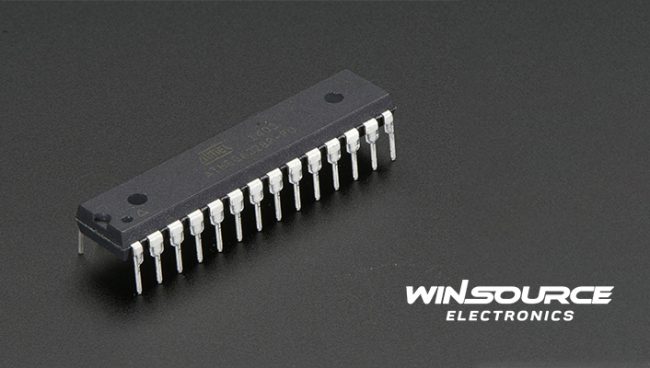
What is ATmega328P?
The Atmel ATmega328P-AU is a microcontroller based on the AVR enhanced RISC architecture. It is a small and powerful chip that acts as the brain of an electronic device, controlling its operations and handling input/output tasks. The ATmega328P is commonly referred to as a “microchip” or simply “micro” in the embedded systems community.
ATmega328P-AU Architecture
At the heart of the ATmega328P-AU lies a 32KB flash memory, 1KB EEPROM, and 2KB SRAM. This architecture lays the foundation for creating intricate and resourceful programs. The 23 general-purpose I/O lines, coupled with 32 general-purpose working registers, offer a versatile platform for crafting diverse applications.
Peripherals Galore
One of the standout features of the ATmega328P-AU is its array of peripherals, enhancing its utility across various domains. The inclusion of three flexible timer/counters with compare modes empowers precise timing control, while internal and external interrupts add a layer of responsiveness to the microcontroller.
The serial programmable USART, byte-oriented Two-Wire serial interface (I2C), and SPI serial port facilitate seamless communication with other devices, broadening the scope of potential projects.
The 6-channel 10-bit A/D converter (expandable to 8 channels in TQFP and QFN/MLF packages) opens doors to analog applications, such as sensor interfacing and data acquisition. Additionally, the programmable watchdog timer with an internal oscillator ensures system stability, and the five software-selectable power-saving modes contribute to energy efficiency – a critical consideration in battery-powered applications.
Programming Languages and Tools
One of the reasons why the ATmega328P is so popular is because it can be programmed using a variety of languages and tools. The most common language used for programming the ATmega328P is C/C++. Other popular options include Assembly and Arduino programming language.
To start coding, you will need a development environment that includes a text editor, compiler, debugger, and programmer. The most commonly used IDE (integrated development environment) for ATmega328P is the Arduino IDE. It has a user-friendly interface and simplifies the process of writing code for beginners. Other options include Atmel Studio and Code::Blocks.
Applications
The ATmega328P is a versatile microcontroller that can be used in various applications. Some examples include:
- Robotics: The ATmega328P is commonly used in robots, such as line-following and obstacle avoidance robots, due to its low power consumption and rich set of peripherals.
- Industrial automation: Its ability to control multiple devices and sensors makes the ATmega328P a suitable choice for industrial automation projects.
- Consumer electronics: The low-cost and ease of use of the ATmega328P make it an ideal candidate for consumer electronics, such as smart home devices, digital clocks, and remote controls.
- Home automation: With its built-in communication interfaces and low power consumption, the ATmega328P is a popular choice for home automation projects.
- Medical devices: The ATmega328P’s low-power and small form factor make it suitable for portable medical devices, such as blood glucose monitors and heart rate monitors.
- Wearable devices: Its compact size and power-saving features make the ATmega328P an excellent choice for wearable technology, such as fitness trackers and smartwatches.
- Hobbyist projects: The affordability and availability of resources for the ATmega328P make it a preferred choice for hobbyists looking to build their own projects, such as LED controllers, music players, and game consoles.
Benefits
There are several key benefits of using the ATmega328P in your projects:
- Low cost: The ATmega328P is an affordable microcontroller, making it accessible for hobbyists and professionals alike.
- Ease of use: With a large community of users and extensive documentation available, the ATmega328P is easy to learn and use.
- Wide range of features: From its flash memory to its various peripherals, the ATmega328P offers a wide range of features that make it suitable for diverse applications.
- Compatibility: The ATmega328P is a popular chip, which means it is widely supported by tools and libraries, making it easy to integrate into projects.
- Versatility: Its small size and low-power consumption make the ATmega328P suitable for both battery-powered and stationary devices.
Getting Started With Programming
Now that we have covered the basics of the ATmega328P, let’s dive into programming it. The following steps will help you get started with writing your first program for the ATmega328P:
- Setup your development environment: Install the necessary software, such as an IDE and compiler, and configure your board settings.
- Choose a language: Decide on the programming language you want to use for your project.
- Understand the hardware: Familiarize yourself with the ATmega328P’s pinout and datasheet to understand how it works and what each pin does.
- Write your code: Use the chosen language to write your program, making use of libraries and functions provided by the IDE or third-party sources.
- Compile your code: Once you have written your code, compile it to check for any errors.
- Upload your code: Connect your ATmega328P to a programmer and upload your program onto the chip.
- Test your code: Power up your device and test if it is functioning as expected.
The ATmega328P is a popular choice for programming in the embedded systems community due to its affordability, versatility, and wide range of features. It offers a variety of applications, from robotics to medical devices, making it suitable for diverse projects.
Be sure to check out WIN SOURCE for a wide selection of resources and components, including microcontrollers at competitive prices.
© 2025 Win Source Electronics. All rights reserved. This content is protected by copyright and may not be reproduced, distributed, transmitted, cached or otherwise used, except with the prior written permission of Win Source Electronics.