
Semiconductor Physics at the Metal-Semiconductor Junction
Unlike conventional P-N junction diodes, Schottky diodes utilize a metal-semiconductor junction, where a metal layer contacts a semiconductor material. This junction is characterized by a Schottky barrier – a potential energy barrier formed at the metal-semiconductor interface.
The Schottky barrier height is determined by the difference in work functions between the metal and semiconductor materials. This unique design results in a lower forward voltage drop compared to P-N junction diodes. The absence of a P-N junction reduces the minority carrier lifetime, leading to faster switching speeds – a critical advantage in high-frequency applications.
Schottky Diode Characteristics
Zero Bias Operation
Schottky diodes exhibit zero bias operation, meaning they can conduct current in the absence of an applied voltage. This is a consequence of the Schottky barrier, which allows for the injection of minority carriers (electrons in the case of an N-type semiconductor) across the metal-semiconductor interface. The absence of a depletion region in the semiconductor leads to rapid charge carrier movement, resulting in near-instantaneous current flow.
Low Reverse Recovery Time
Another distinguishing feature is the low reverse recovery time of Schottky diodes. Traditional diodes experience a delay during the transition from the conducting to non-conducting state, known as the reverse recovery time. In Schottky diodes, this time is significantly reduced, thanks to the absence of a depletion region and the rapid recombination of charge carriers. This characteristic is particularly advantageous in high-frequency rectification and fast-switching applications.
Junction Capacitance
Schottky diodes possess inherently low junction capacitance due to the absence of a depletion region. This property facilitates their application in RF circuits where minimizing capacitance is essential for maintaining signal integrity. The BAT 17-07 E6327, being a Schottky diode, capitalizes on this advantage, making it well-suited for high-frequency RF front-end applications.
Applications of BAT 17-07 E6327 Schottky Diodes
RF Mixers and Nonlinearities
Expanding on their application in RF mixers, Schottky diodes like the BAT 17-07 E6327 play a crucial role in introducing nonlinearities essential for signal mixing. The rapid switching characteristic of Schottky diodes allows for efficient signal modulation and demodulation, essential in communication systems. Engineers leverage these nonlinearities to manipulate signals in frequency and amplitude, unlocking a realm of possibilities in RF front-end design.
Harmonic Generation in Frequency Multipliers
In frequency multiplier circuits, Schottky diodes excel at generating harmonics of an input signal. The metal-semiconductor junction’s unique characteristics contribute to efficient multiplication of input frequencies. The BAT 17-07 E6327, with its fast switching speed, ensures precise frequency multiplication, catering to the demands of modern RF systems requiring stable and accurate harmonic generation.
Impact on Receiver Sensitivity
Beyond traditional applications, the BAT 17-07 E6327’s deployment in RF front-ends has a direct impact on receiver sensitivity. The low forward voltage drop translates to reduced power consumption, a critical consideration in battery-powered devices. This not only extends the operational life of portable devices but also enhances the overall efficiency of RF front-ends, especially in scenarios where power consumption is a primary concern.
Key Features of BAT 17-07 E6327: A Technical Evaluation
Barrier Height and Forward Voltage
The Schottky barrier height of the BAT 17-07 E6327 contributes to its low forward voltage drop. With a barrier height carefully optimized through semiconductor material selection and manufacturing processes, this diode achieves a forward voltage as low as 0.33 V at 1 mA. This technical achievement underscores its suitability for applications demanding minimal power losses and efficient energy utilization.
Sub-Nanosecond Switching Time
When it comes to high-frequency applications, the switching speed of a diode plays an important part. The BAT 17-07 E6327 shines in this regard, boasting a sub-nanosecond switching time. This rapid response time ensures that the diode can swiftly transition between conducting and non-conducting states, contributing to the precision and speed of RF front-end operations.
Reverse Breakdown Voltage and Robustness
While low forward voltage is a defining characteristic, the BAT 17-07 E6327 doesn’t compromise on reverse breakdown voltage. With a high reverse breakdown voltage, this Schottky diode exhibits robustness in the face of voltage spikes and transient events. This feature enhances the reliability of RF front-end circuits, safeguarding against potential damage and ensuring consistent performance over a wide range of operating conditions.
Implementing BAT 17-07 E6327 in the RF Design Landscape
Advanced Impedance Matching Techniques
As far as RF circuit design is concerned, impedance matching is a critical consideration. The low forward voltage drop of the BAT 17-07 E6327 necessitates advanced impedance matching techniques to optimize its performance fully. Engineers must carefully tailor the impedance of surrounding components to ensure seamless signal transfer and minimal reflection, maximizing the diode’s efficiency in RF front-ends.
Layout Optimization for Minimal Parasitics
Efficient layout design holds equal importance too, especially when working with high-frequency components like the BAT 17-07 E6327. Minimizing parasitic capacitance and inductance helps prevent signal degradation and maintain the integrity of RF signals.
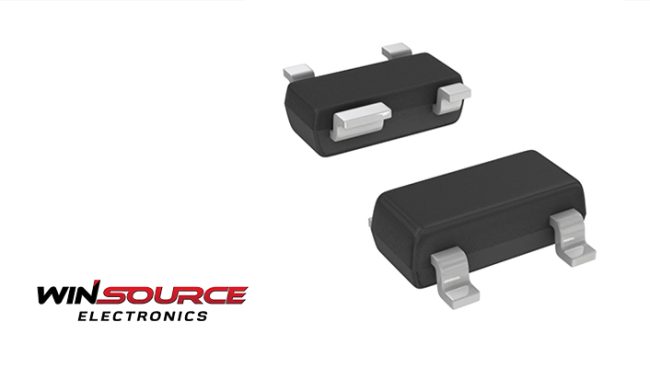
Engineers should employ advanced layout optimization techniques, considering the compact SOT-143-4 package, to unleash the full potential of the diode in RF front-end applications.
Temperature-Dependent Biasing Strategies
The BAT 17-07 E6327’s performance is influenced by temperature variations, necessitating careful consideration of biasing strategies. Engineers must implement temperature-dependent biasing to ensure the diode operates within its specified voltage range across diverse operating conditions. This proactive approach contributes to the stability and reliability of RF front-end circuits, even in environments with fluctuating temperatures.
In the pursuit of high-performance RF front-ends, the strategic integration of BAT 17-07 E6327 Schottky diodes proves to be a valuable approach for engineers. The diode’s impressive frequency range, low forward voltage drop, and compact SOT-143-4 package make it an attractive choice for a variety of RF applications.
To purchase high-quality BAT 17 Schottky diodes at affordable prices, do check out WIN SOURCE – a leading electronic components distributor that offers a wide array of electronic items.
© 2025 Win Source Electronics. All rights reserved. This content is protected by copyright and may not be reproduced, distributed, transmitted, cached or otherwise used, except with the prior written permission of Win Source Electronics.

COMMENTS