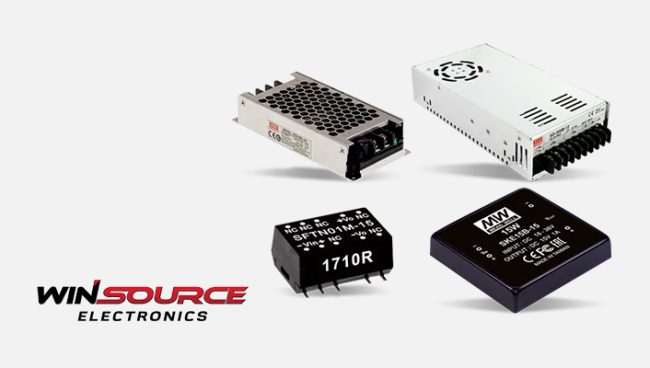
Primary Functionality
The primary function of a DC-to-DC converter is to regulate the output voltage to a desired level while efficiently transforming power from one source to another. This is achieved by controlling the duty cycle of the switching devices, which in turn alters the output voltage and current. The design and operation principles of different DC-to-DC converter topologies vary, but they all aim to achieve efficient voltage regulation and power transformation.
Classification of DC-to-DC Converters
DC-to-DC converters can be broadly classified into six main categories: buck, boost, buck-boost, cuk, flyback, and sepic. Each topology has its own unique operation principles, applications, advantages, and limitations.
1. Buck Converters
Operation Principles: Also known as step-down converters, buck converters use a single inductor and switch to convert a higher DC voltage to a lower one. During the on-time of the switch, the inductor stores energy from the input source. When the switch is turned off, the inductor supplies this stored energy to the output load through a diode. This process creates an average DC output voltage that is lower than the input voltage.
Applications: Buck converters are widely used in applications where a low output voltage with high current is required, such as in portable electronic devices, LED lighting, and motor drives.
Advantages and Limitations: Buck converters offer high efficiency (typically more than 90%) and require a relatively small number of components compared to other converter types. However, they have a limited input voltage range and cannot produce an output voltage higher than the input voltage.
2. Boost Converters
Operation Principles: Also known as step-up converters, boost converters use a single inductor and switch to convert a lower DC voltage to a higher one. During the on-time of the switch, the inductor stores energy from the input source. When the switch is turned off, the inductor supplies this stored energy to the output load through a diode and capacitor. This process creates an average DC output voltage that is higher than the input voltage.
Applications: Boost converters are commonly used in applications where a high output voltage with low current is required, such as in solar power systems, battery charging, and fuel cell systems.
Advantages and Limitations: Boost converters offer high efficiency (typically more than 90%) and can produce an output voltage higher than the input voltage. However, they require a larger number of components and have a limited input current range.
3. Buck-Boost Converters
Operation Principles: Buck-boost converters combine the operation principles of both buck and boost converters to provide both step-up and step-down conversion capabilities. They use two switches (one for buck mode and one for boost mode) and a single inductor to regulate the output voltage.
Applications: Buck-boost converters are commonly used in applications where the input voltage can vary significantly, such as in automotive power systems, renewable energy systems, and portable electronic devices.
Advantages and Limitations: Buck-boost converters offer a wide input voltage range and high efficiency (typically more than 90%). However, they require a larger number of components and have complex control techniques.
4. Cuk Converters
Operation Principles: Cuk converters use two inductors and two capacitors to provide both step-up and step-down conversion capabilities. They work by transferring energy between the input source and output load through the use of an inductor-capacitor network.
Applications: Cuk converters are commonly used in applications where a high voltage gain and galvanic isolation is required, such as in medical equipment, telecommunications, and renewable energy systems.
Advantages and Limitations: Cuk converters offer high efficiency (typically more than 90%) and can provide both step-up and step-down conversion without the need for a transformer. However, they require a larger number of components and have complex control techniques.
5. Flyback Converters
Operation Principles: Flyback converters use two inductors and one switch to provide galvanic isolation between the input source and output load. They operate by storing energy in an inductor during the on-time of the switch and transferring it to the output load during the off-time of the switch.
Applications: They are commonly used in low-power applications, such as in battery chargers, LED lighting, and isolated power supplies.
Advantages and Limitations: Flyback converters offer simple designs, galvanic isolation, and can provide multiple outputs with different voltages. However, they have low efficiency (typically less than 80%) and are limited in their power handling capabilities.
Practical Applications of a DC to DC Converter
1. Automotive Power Systems:
DC to DC converters are widely used in automotive power systems, specifically in electric vehicles and hybrid vehicles. These vehicles require a stable and efficient power supply for their batteries and motors.
Electric Vehicles and Hybrid Vehicles: In an electric vehicle, the DC to DC converter is responsible for converting the high voltage from the battery to lower voltages required for various components such as lights, wipers and entertainment systems. It also plays a crucial role in charging the battery from the regenerative braking system.
In hybrid vehicles, the DC to DC converter is used to step up or step down the voltage as required by the electric motor or internal combustion engine. It also helps in managing power flow between these two sources.
2. Battery Management Systems:
DC to DC converters are also used in battery management systems of electric and hybrid vehicles. These systems monitor the state of charge, voltage, and temperature of each individual battery cell to maintain their health and improve performance. The DC to DC converter helps to balance the charging and discharging of these cells to ensure optimal use.
Renewable Energy Systems: DC to DC converters play a vital role in renewable energy systems, providing efficient and stable power conversion.
Solar Power Inverters: Solar panels generate DC power, but most household appliances require AC power. The DC to DC converter is used to convert the DC output from solar panels into AC power for use in homes and buildings.
3. Wind Power Converters:
Like solar panels, wind turbines also produce DC power. The DC to DC converter is used in wind power converters to change the low voltage, high current output from the turbine into a higher voltage and lower current output for transmission and distribution in the grid.
The DC to DC converter stands as a key enabler in electronics, offering solutions for voltage transformation and power management. Through an exploration of its classification, underlying principles, and real-world applications, it becomes evident that this technology is indispensable in ensuring optimal power delivery and performance in a variety of electronic devices.
Furthermore, with distributors like WIN SOURCE offering a range of components, this technology becomes more accessible, supporting innovation and advancement in the ever-evolving landscape of power electronics.
© 2025 Win Source Electronics. All rights reserved. This content is protected by copyright and may not be reproduced, distributed, transmitted, cached or otherwise used, except with the prior written permission of Win Source Electronics.