A Look Into the DIP Switch
Structural Components
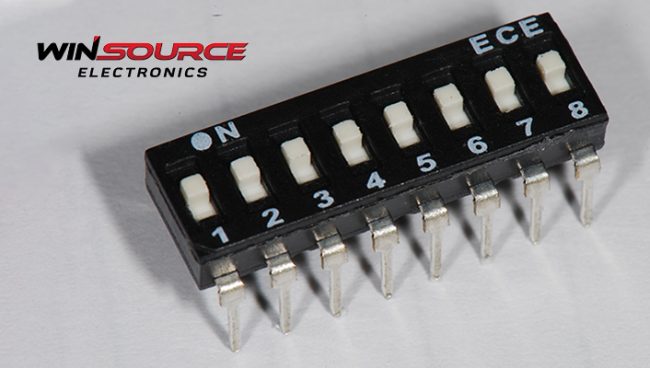
DIP switches are typically made up of an internal mechanism and a casing that holds the switches together. The internal mechanism consists of a series of physical contacts that are controlled by the position of each switch. These contacts allow for the flow of electrical current through the switch, depending on its state (ON or OFF). The material composition of DIP switches also varies, with some using metal contacts while others use conductive plastic.
Form Factors and Package Variations
They come in a variety of sizes and shapes, with the most common being the standard 0.1 inch spacing between each switch. However, there are also miniaturized versions available for use in smaller PCBs. Additionally, DIP switches can be found in different package variations such as through-hole or surface mount, providing flexibility in their integration onto a PCB.
Applications in Modern Electronics
A DIP switch has a long history and was initially used for setting memory addresses in early computers. However, they still have a significant role to play in modern electronics. They are commonly found in embedded systems such as microcontrollers and communication protocols, as well as networking equipment and industrial control systems.
Their use in these applications allows for easy configuration and customization, making them an essential component in many electronic devices.
DIP Switch Configurations
Binary Representation
DIP switches are essentially a physical representation of binary digits (1s and 0s). Each switch corresponds to a specific bit value, with the ON state representing a 1 and the OFF state representing a 0. This binary representation allows for a simple mapping of switch positions to numerical values, making it easier to understand and configure.
Relationship Between Configuration and Device Functionality
The configuration of DIP switches directly affects the functionality of the device they are used in. By changing the position of each switch, specific settings can be applied, such as memory addresses or communication protocols. This relationship between configuration and device functionality is crucial in designing efficient electronic systems.
Impact of Switching Architecture on System Design
The architecture of DIP switches can have a significant impact on the design of an electronic system. The placement and arrangement of switches can affect factors such as signal routing, PCB layout, and overall system performance. As such, careful consideration must be given when integrating DIP switches into electronic designs.
Technical Language of DIP Switches
Positional Significance
The position of a switch in a DIP switch is crucial and has specific significance. The ON and OFF states of each switch are essential for proper functioning and should correspond accurately to the desired binary code.
Banked Switch Configurations
In some cases, multiple switches may be used to configure a single setting or function. These configurations are known as banked switch configurations and can have different interpretations depending on the system design. They often involve multi-bit configurations and memory addressing schemes for efficient use of DIP switches.
Influence on System-level Communication
The configuration of DIP switches can also directly impact communication between different components in a system. By correctly setting communication protocols, devices can communicate seamlessly and efficiently without any conflicts.
DIP Switch Settings for Different Devices
Microcontroller Configurations: DIP switches are commonly used in the initial configuration of microcontrollers. By setting the appropriate switches, various parameters such as clock speed and communication protocols can be defined.
Aerospace Systems: DIP switches are also found in aerospace systems, where they play a crucial role in configuring different subsystems such as navigation and communication systems.
Medical Devices: DIP switches are also used in medical devices for configuring functions such as alarms and recording settings. Their ease of use and reliability make them a preferred choice in these critical applications.
Advancements and Future Developments
As technology continues to evolve, so do DIP switches. With the rise of FPGA integration, DIP switches are becoming more versatile by allowing for dynamic reconfiguration through software control. This advancement eliminates the need for physical manipulation of switches and provides more flexibility in system design.
Additionally, there is a growing trend towards environmentally-friendly materials and processes in manufacturing DIP switches, further improving their sustainability and usability.
Overall, a DIP switch is an integral part of modern electronics with its simple yet powerful function. Its use in various applications continues to evolve, making the component a must-have tool for efficient and customizable electronic systems.
With advancements in technology and materials, the future looks bright for DIP switches as they continue to play a crucial role in shaping our digital world. So, it is important for engineers and designers to understand their capabilities and limitations, allowing for optimal use and integration into electronic designs.
All in all, a DIP switch may seem like a simple component, but its impact on modern electronics is far-reaching. From its humble beginnings in early computers to its role in advanced embedded systems and beyond, the DIP switch remains a valuable tool for engineers and designers. And with reliable distributors such as WIN SOURCE offering a vast selection of high-quality DIP switches, integrating them into your electronic designs has never been easier.
© 2025 Win Source Electronics. All rights reserved. This content is protected by copyright and may not be reproduced, distributed, transmitted, cached or otherwise used, except with the prior written permission of Win Source Electronics.