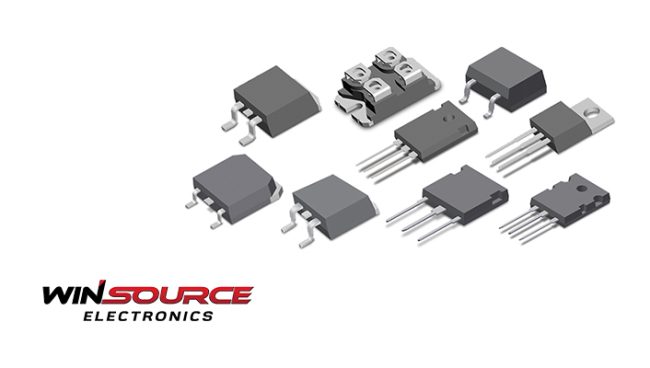
What is a MOSFET?
A MOSFET is a type of field-effect transistor (FET) that uses an insulated gate to control the flow of current between source and drain terminals. It consists of three layers: the source, drain, and gate. The channel between the source and drain is made from a semiconductor material, typically silicon. The gate is separated from the channel by an insulating layer, usually made of silicon dioxide.
Operation of a MOSFET
The operation of a MOSFET can be described in four stages: cutoff, triode, saturation, and breakdown. In the cutoff stage, there is no current flow between source and drain as the gate voltage is below a certain threshold. As the gate voltage increases, the MOSFET enters the triode stage, where a small amount of current flows due to the weak electric field between gate and channel.
In the saturation stage, the gate voltage is high enough to create a strong electric field that allows for a large flow of current between source and drain. Finally, in breakdown, if the gate voltage becomes too high, it can cause permanent damage to the MOSFET.
Types of MOSFETs
CMOS (Complementary Metal-Oxide-Semiconductor) Technology
CMOS technology stands as a cornerstone in the realm of integrated circuits, playing a pivotal role in modern electronic devices. The CMOS configuration utilizes both NMOS (N-channel Metal-Oxide-Semiconductor) and PMOS (P-channel Metal-Oxide-Semiconductor) transistors, working together in a complementary fashion.
Principle of Complementarity: CMOS circuits are designed to have complementary behavior, meaning that while the NMOS transistor is in the “on” state, the PMOS transistor is in the “off” state, and vice versa. This inherent complementarity results in low static power consumption, making CMOS well-suited for battery-powered devices.
Low Power Consumption: One of the key advantages of CMOS technology is its low power consumption during both active and standby states. This characteristic has made CMOS the dominant technology in the fabrication of digital integrated circuits, ranging from microprocessors to memory chips.
Digital Logic Implementation: CMOS is widely employed in the implementation of digital logic gates and flip-flops. The ability to create efficient and low-power digital circuits has contributed significantly to the advancements in computing and information processing.
Different MOSFET Variations: FinFETs, SOI (Silicon-On-Insulator), etc.
Beyond traditional CMOS, several MOSFET variations have emerged to address specific challenges and enhance performance. Two notable examples include FinFETs and SOI technology.
- FinFETs (Fin Field-Effect Transistors): FinFETs are a three-dimensional transistor design where the conducting channel is wrapped around a thin silicon “fin.” This architecture helps control leakage current and improves transistor switching speed, allowing for better scaling to smaller technology nodes.
- SOI (Silicon-On-Insulator): SOI technology involves placing a layer of insulating material (such as silicon dioxide) between the silicon substrate and the transistor. This isolation reduces the parasitic capacitance and enhances the performance of the transistor, leading to improved speed and reduced power consumption.
- High-Frequency Applications: FinFETs and SOI technology find applications in high-frequency circuits, such as radio-frequency (RF) integrated circuits. The improved performance characteristics make these variations suitable for applications where speed and power efficiency are critical.
Advantages of MOSFETs in Integrated Circuits
The use of MOSFETs has numerous advantages in integrated circuits, which is why they have become the primary choice for electronic devices. Some of these include:
High switching speeds: MOSFETs can switch on and off at very high frequencies, making them ideal for applications that require fast operation, such as computers and mobile devices.
Low power consumption: Due to the insulated gate design, MOSFETs have very low leakage currents, resulting in lower power consumption compared to other types of transistors.
Small size: The structure of a MOSFET allows for miniaturization, making them ideal for use in compact electronic devices.
Low cost: MOSFETs are relatively inexpensive to manufacture, making them a cost-effective option for integrated circuits.
Applications of MOSFETs
MOSFETs have a wide range of applications in various electronic devices. Some common uses include:
- Digital logic circuits: MOSFETs are widely used in digital logic circuits, such as flip-flops, NAND gates, and multiplexers.
- Power amplifiers: Due to their high switching speeds and low power consumption, MOSFETs are commonly used in power amplifiers for audio and radio frequency signals.
- Memory devices: MOSFETs are a crucial component in non-volatile memory devices such as flash memories, which are commonly used in smartphones and other portable devices.
- Power supplies: MOSFETs are used in power supplies to regulate voltage and current, making them a vital component in electronic equipment.
- Motor control: The high switching speeds and low power consumption of MOSFETs make them ideal for use in motor control applications, such as in electric vehicles.
Future of MOSFETs
As technology continues to advance, so do the capabilities and applications of MOSFETs. Some potential developments in the future include:
- 3D integration: Researchers are working on developing 3D integrated circuits using MOSFETs, which would allow for even more miniaturization and increased performance.
- Wide bandgap materials: The use of wide bandgap materials such as gallium nitride (GaN) and silicon carbide (SiC) in MOSFET design could result in higher efficiency and faster switching speeds.
- Quantum computing: MOSFETs could play a significant role in the development of quantum computers, which would offer significantly higher processing power than traditional computers.
- Biomedical applications: Researchers are exploring the potential use of MOSFETs in biomedical devices, such as implantable sensors and prosthetics, thanks to their small size and low power consumption.
The widespread adoption of MOSFETs in integrated circuits has transformed the electronics landscape, enabling the development of more powerful, energy-efficient, and compact devices.
As the demand for these components continues to grow, turning to trusted distributors like WIN SOURCE can prove to be a wise choice. They ensure a seamless supply of high-quality MOSFETs to support ongoing advancements in technology.
© 2025 Win Source Electronics. All rights reserved. This content is protected by copyright and may not be reproduced, distributed, transmitted, cached or otherwise used, except with the prior written permission of Win Source Electronics.