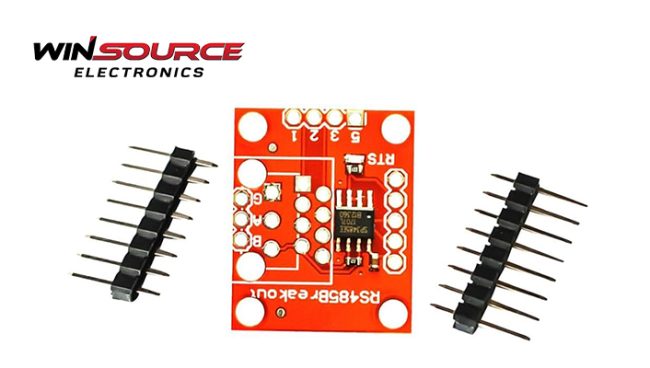
Fault-Tolerant RS 485 Transceiver Design Principles
1. Fault Detection: Vigilant Monitoring for Anomalies
Fault detection, the first line of defense in fault tolerance, entails the continuous monitoring of various parameters to identify deviations from normal operation or impending faults. This proactive approach enables timely intervention and prevents system failures from cascading.
Signal Quality Surveillance: Maintaining Signal Integrity
Signal quality parameters, such as signal-to-noise ratio (SNR), bit error rate (BER), and jitter, are continuously monitored to detect anomalies in the communication link. Sudden drops in SNR, spikes in BER, or excessive jitter indicate potential faults in the transceiver, cabling, or network environment.
Error Detection Codes: Sentinels Against Data Corruption
Error detection codes, such as cyclic redundancy check (CRC) or Hamming codes, are embedded in transmitted data packets. These codes provide a mechanism to identify corrupted data packets, triggering error correction or recovery processes to maintain data integrity.
Watchdog Timers: Guardians of Network Responsiveness
Watchdog timers are hardware or software mechanisms that monitor the responsiveness of transceivers and network nodes. A timeout condition, indicating a lack of response from a node, suggests a potential fault or communication stall.
Status Register Surveillance: Unveiling Internal Device Health
Transceiver status registers and network management protocols provide valuable insights into device health and network status. Monitoring these registers can reveal faults, such as overvoltage or undervoltage conditions, driver output failures, and receiver input errors.
2. Fault Isolation: Containing the Fault’s Impact
Once a fault is detected, the system must effectively isolate the faulty component or segment of the network to prevent further disruptions and confine the impact of the fault. Isolation mechanisms act as firewalls, protecting the rest of the system from cascading failures.
Transceiver Shutdown: Disabling Faulty Nodes
Faulty transceivers are gracefully disabled to prevent erroneous data transmission and reduce the load on the network. This isolation step minimizes the impact of a faulty node and prevents it from disrupting communication on the entire network.
Network Segmentation: Dividing and Conquering
Network segmentation techniques, such as isolation switches or media access control (MAC) address filtering, are employed to divide the network into smaller, manageable segments. In the event of a fault, the affected segment can be isolated without disrupting communication on other segments.
Fail-Safe Mode: A Safety Net for Faulty Devices
Transceivers and network devices are designed with fail-safe modes that maintain a predefined state or default configuration in the event of a fault. This ensures that even in the face of a fault, the system remains in a controlled state, preventing unpredictable behavior.
Redundant Network Paths: Alternative Communication Routes
Redundant network paths provide alternative communication channels in case of primary path failures. This redundancy ensures that communication can continue even if a portion of the network is affected by a fault.
3. Fault Recovery: Restoring Communication Integrity
Fault recovery mechanisms enable the system to restore normal communication after a fault has been detected and isolated. These mechanisms aim to minimize downtime and restore system functionality as quickly as possible.
Transceiver Reinitialization: A Fresh Start for Faulty Devices
Faulty transceivers are reinitialized to reset their internal states and restore normal operation. This process involves restarting the transceiver’s internal circuitry and reloading its configuration parameters.
Communication Session Restart: Re-establishing Data Exchange
Communication sessions with faulty nodes or segments are restarted to re-establish data exchange. This involves resetting the communication protocols and negotiating new parameters to ensure synchronized communication.
Redundant Path Activation: Switching to Backup Channels
Redundant network paths are activated to bypass faulty segments or nodes and maintain communication continuity. This activation process involves switching the communication traffic to the backup paths, ensuring seamless communication without interruption.
4. Graceful Degradation: Ensuring Critical Functions Continue
Graceful degradation ensures that critical functions continue to operate even with reduced performance or limited network connectivity in the face of faults. This principle enables the system to maintain a certain level of functionality while minimizing the impact of faults on overall system operation.
Prioritized Communication: Data Prioritization for Critical Tasks
Implement prioritized communication schemes to ensure that critical data packets are transmitted even with reduced bandwidth or limited network capacity. This prioritization ensures that essential information is delivered even in degraded network conditions.
Degraded Mode Operation: Adapting to Fault-Induced Limitations
Implement degraded mode operation for non-critical functions, reducing their resource consumption or performance to prioritize critical functions. This adaptation ensures that critical tasks continue to operate while non-essential functions may experience temporary slowdowns or limitations.
Partial Network Availability: Maintaining Communication When Possible
Maintain partial network availability by isolating faulty segments or nodes while allowing communication between remaining functional nodes. This partial availability ensures that communication can continue between unaffected parts of the network, even if some segments are down.
Failover to Local Control: Ensuring Local Operation in Case of Network Disruptions
In case of network disruptions, provide failover mechanisms to switch critical functions to local control, ensuring continued operation without network dependencies. This local control ensures that essential tasks can continue even if the network is unavailable.
Fault-Tolerant RS 485 Transceiver Techniques
Various techniques can be employed to implement fault-tolerant RS 485 transceiver systems. These techniques address different aspects of fault detection, isolation, and recovery:
- Redundancy: Redundant transceivers, network paths, or entire network segments can be implemented to provide backup communication in case of failures. This ensures that data transmission can continue even if one or more components fail.
- Error Detection and Correction (EDC/EC): EDC/EC codes, such as CRC or Hamming codes, can be used to detect and correct transmission errors, preventing data corruption and maintaining data integrity.
- Echo Cancellation: Echo cancellation techniques can suppress echoes and reflections on the communication line, reducing noise and improving signal quality.
- Ground Loop Isolation: Ground loop isolators can eliminate ground loop currents, which can induce noise and interference in the communication signal.
- Watchdog Timers: Watchdog timers can monitor the status of transceivers and network nodes, detecting unresponsive devices or communication stalls.
- Fault Management Protocols: Fault management protocols, such as Modbus/TCP or IEC 61850, can provide standardized mechanisms for fault detection, isolation, and recovery.
Implementation Considerations
Implementing fault-tolerant RS 485 transceiver systems requires careful consideration of various factors:
- Application Requirements: The specific fault tolerance requirements depend on the criticality of the application and the potential consequences of system failures.
- Cost-Benefit Analysis: The additional cost of fault-tolerant features should be balanced against the potential benefits in terms of improved reliability and reduced downtime.
- Network Topology: The network topology and the number of nodes influence the complexity and cost of implementing fault-tolerant mechanisms.
- Environmental Factors: Environmental conditions, such as electromagnetic interference and harsh physical environments, may necessitate additional fault protection measures.
Fault-tolerant RS 485 transceiver systems are crucial for maintaining the reliability and availability of critical applications in various industries. By employing redundancy, error detection and correction techniques, and fault management protocols, these systems can effectively detect, isolate, and recover from faults, maintaining communication integrity and preventing system downtime.
To purchase top-quality RS 485 transceivers, visit WIN SOURCE – a leading electronic components distributor in the field that offers premium products at reasonable rates.
© 2025 Win Source Electronics. All rights reserved. This content is protected by copyright and may not be reproduced, distributed, transmitted, cached or otherwise used, except with the prior written permission of Win Source Electronics.