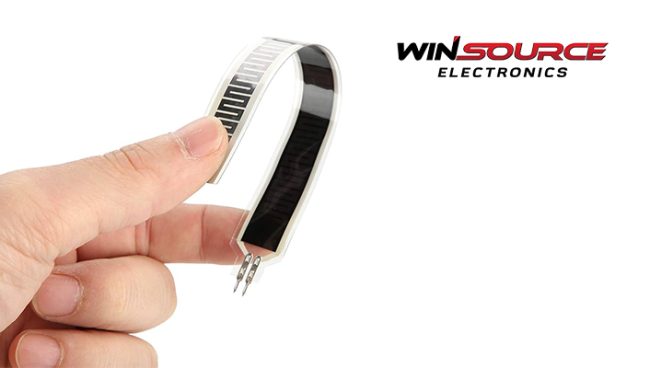
SF15 Force Sensor Overview
The SF15 force sensor is a miniature force transducer that utilizes a strain gauge to measure applied force. The strain gauge is a resistive element that changes its resistance when subjected to mechanical stress. Apart from that, note that the change in resistance is proportional to the applied force, and this relationship can be used to calibrate the sensor.
Theory of Operation
The strain gauge in the SF15 force sensor is composed of a thin layer of conductive material that is bonded to a flexible substrate. When the substrate is subjected to mechanical stress, the strain gauge is deformed. This deformation causes the resistance of the strain gauge to change.
Specifications
The SF15 force sensor has the following specifications:
- Full scale force range: 0 to 500 N
- Resolution: 0.01 N
- Accuracy: ±0.5% of full scale
- Operating temperature range: -20 to 80 degrees Celsius
Applications
The SF15 force sensor is used in a variety of applications, including:
- Industrial automation
- Robotic systems
- Medical devices
- Load cells
- Force measurement
- Weighing systems
- Torque measurement
Calibration Equipment Required
The following equipment is required for the calibration of SF15 force sensors:
Calibration load cell: A calibration load cell serves as a reference force source, providing known forces to the SF15 sensor. Its accuracy directly impacts the overall calibration accuracy, hence, a calibration load cell with an accuracy of at least 0.1% is recommended.
Digital multimeter: The digital multimeter performs the crucial task of measuring the resistance of the strain gauge in the SF15 sensor. Its precision plays a pivotal role in ensuring accurate calibration results.
Computer: The computer serves as the data acquisition and processing hub. It records and interprets the calibration data, allowing for the calculation of calibration coefficients.
Calibration software: Calibration software orchestrates the entire procedure, controlling the calibration sequence and calculating the calibration coefficients. It seamlessly integrates with the hardware, ensuring a smooth and efficient calibration experience.
Calibration Procedure
Step#1 – Preparation: Setting the Stage
- Cleanliness is Key: To ensure optimal performance, the SF15 force sensor and the calibration load cell must undergo a thorough cleaning process to remove any contaminants that could interfere with the calibration.
- Zeroing Out: Before embarking on the calibration journey, it is essential to zero the digital multimeter, ensuring the starting point is free from any errors or biases.
- Connecting the Dots: Establishing a robust connection between the SF15 force sensor, the digital multimeter, and the calibration load cell is crucial for seamless data transmission and accurate measurements.
Step#2 – Data Acquisition: Capturing the Essence
- Applying Force with Precision: Using the calibration load cell, a series of known forces are applied to the SF15 force sensor, covering the sensor’s entire force range.
- Measuring Resistance with Precision: At each applied force level, the resistance of the strain gauge in the SF15 force sensor is meticulously measured using the digital multimeter.
- Data Recording: The recorded resistance values, corresponding to each applied force level, are carefully documented, forming the foundation for the calibration process.
Step#3 – Data Processing: Unveiling the Coefficients
- Calibration Software: Leveraging the capabilities of the calibration software, the recorded resistance data is fed into the software’s algorithms.
- Unveiling the Coefficients: Through mathematical calculations, the calibration software extracts the calibration coefficients, the numerical representations of the sensor’s sensitivity and offset.
- Storing the Coefficients: The extracted calibration coefficients are carefully stored in the SF15 force sensor’s memory, enabling the sensor to provide accurate force measurements.
Calibration Considerations
The following factors should be considered when calibrating SF15 force sensors:
Accuracy of the calibration load cell
The accuracy of the calibration load cell is critical for the overall accuracy of the calibration. It is recommended to use a calibration load cell that has an accuracy of at least 0.1%.
Temperature
The resistance of the strain gauge in the SF15 force sensor is temperature-dependent. Therefore, it is important to calibrate the sensor at the same temperature at which it will be used. If the sensor is used at a different temperature, its accuracy will decrease.
Linearity
The linearity of the SF15 force sensor is the degree to which the output of the sensor is proportional to the applied force. A non-linear sensor will require more frequent calibration.
Additional Considerations
Mounting
The SF15 force sensor should be mounted securely to prevent it from moving. Movement of the sensor can affect the accuracy of the calibration.
Electrical noise
Electrical noise can interfere with the calibration process. It is important to use shielded cables and connectors to minimize electrical noise.
Calibration frequency
The frequency of calibration depends on the use of the SF15 force sensor. Sensors that are used in applications with high accuracy requirements may need to be calibrated more frequently than sensors that are used in applications with lower accuracy requirements.
Calibration is an essential part of maintaining the accuracy of SF15 force sensors. By following the calibration procedures outlined above, you can ensure that their SF15 force sensors are providing accurate measurements. Moreover, if you want to purchase good quality force sensors, WIN SOURCE can help!
© 2025 Win Source Electronics. All rights reserved. This content is protected by copyright and may not be reproduced, distributed, transmitted, cached or otherwise used, except with the prior written permission of Win Source Electronics.