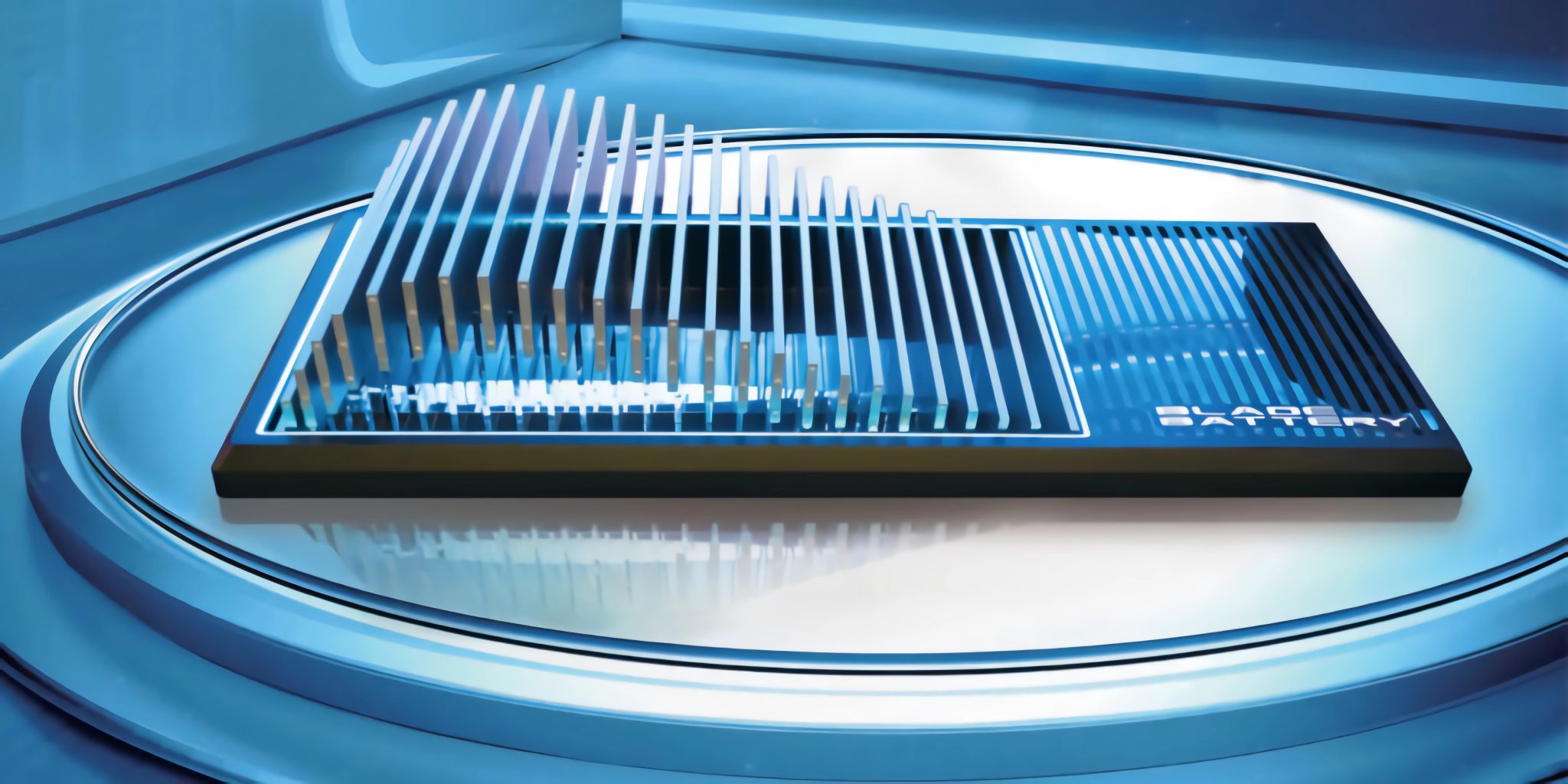
*Image from the internet; all rights belong to the original author, for reference only.
BYD’s Second-Generation Blade Battery: Could Ultra-Fast Charging Make EV Charging as Fast as Refueling?
As the global electric vehicle industry continues to evolve, charging speed is becoming a new focal point of technological competition. Over the past decade, battery capacity and vehicle driving range have improved significantly. However, charging time remains one of the key factors affecting wider EV adoption.
Recently, BYD unveiled its second-generation Blade Battery together with a new “flash-charging” architecture designed to dramatically shorten EV charging times. The announcement has attracted widespread attention across both the automotive and battery industries, as it signals a shift in the sector—from simply extending driving range to improving energy replenishment efficiency.
To better understand what this development means for EV battery design and charging infrastructure, the following questions explore several key aspects of BYD’s new battery system.
Q1: What is BYD’s second-generation Blade Battery, and how does it differ from the first generation?
BYD’s second-generation Blade Battery is an upgraded version of the original Blade Battery introduced in 2020.
The first generation gained attention for its long, blade-shaped cell design. Compared with conventional prismatic battery layouts, this structure improves space utilization within the battery pack while offering stronger thermal stability and safety performance. The battery system is based on lithium iron phosphate (LFP) chemistry, which provides advantages in both safety and cost.
The new generation focuses primarily on improving charging capability. When paired with high-voltage EV platforms and high-power charging infrastructure, the upgraded battery system is designed to support higher charging power while maintaining the safety benefits of LFP chemistry.
This development also reflects a broader trend in EV battery technology: innovation is gradually shifting from simply increasing driving range to improving charging efficiency.
Q2: How fast could BYD’s flash-charging technology theoretically charge an EV?
The goal of flash-charging technology is to deliver faster energy replenishment through higher charging power.
Under ideal conditions, some technical demonstrations suggest that just a few minutes of charging could provide several hundred kilometers of driving range. This would bring the EV charging experience closer to the refueling experience of conventional gasoline vehicles.
However, real-world charging performance can vary depending on several factors, including:
- charging station power capacity
- battery temperature conditions
- battery management system strategies
As a result, actual charging times may differ under different operating conditions.
Even so, the development of ultra-fast charging technology reflects a shared industry goal: minimizing the waiting time required for vehicle energy replenishment.
Q3: Why are high-voltage EV platforms important for ultra-fast charging?
Ultra-fast charging relies not only on advanced battery technology but also on the vehicle’s electrical architecture.
Many next-generation EV platforms are moving toward 800V or even 1000V high-voltage systems. Higher system voltage allows charging power to increase without significantly raising current levels. This reduces energy losses in cables and connectors while lowering the risk of overheating.
Within such high-voltage architectures, the efficiency and voltage tolerance of power electronic components become particularly important. For example, some onboard inverters and high-power charging systems are beginning to adopt SiC MOSFET wide-bandgap semiconductor devices (such as Infineon’s IMZ120R045M1) to reduce switching losses and improve overall system efficiency.
When high-voltage platforms are combined with high-rate batteries and advanced thermal management systems, vehicles can absorb large amounts of energy in a relatively short time.
Q4: What technical challenges must be addressed to achieve ultra-fast charging?
Although ultra-fast charging offers significant potential, several engineering challenges remain.
The first is thermal management. During high-power charging, a large amount of heat is generated inside the battery. If heat dissipation is insufficient, it can affect battery lifespan or even system safety. As a result, high-rate batteries typically require more advanced liquid-cooling or hybrid thermal management solutions.
Another challenge is lithium plating. At extremely high charging rates, lithium ions may deposit on the anode surface rather than properly intercalating into the material structure. This can lead to capacity degradation and reduced cycle life.
Meanwhile, the battery management system (BMS) must continuously monitor battery temperature, voltage, and current to ensure safe operation during high-rate charging. For example, some systems use high-precision current-sensing amplifiers (such as TI’s INA240 series) for real-time current monitoring.
Temperature monitoring is also critical. In many battery pack designs, digital temperature sensors (such as TMP117) are used to track the temperature of battery modules in real time, enabling the BMS to dynamically adjust charging strategies.
Q5: How does this technology compare with CATL’s Shenxing battery or Tesla’s 4680 cells?
Battery manufacturers around the world are pursuing different technological paths to enable faster charging.
CATL’s Shenxing battery focuses on optimizing lithium iron phosphate chemistry by improving material structures and ion transport efficiency, enabling higher charging rates.
Tesla’s 4680 cylindrical battery, on the other hand, places greater emphasis on increasing energy density and structural battery design, allowing the battery pack to become part of the vehicle’s body structure.
BYD’s Blade Battery takes a different approach. Through its distinctive cell geometry and battery pack architecture, it seeks to balance safety, cost control, and charging performance.
Although these three technologies emphasize different design priorities, their ultimate goal is the same: achieving an optimal balance between energy density, charging speed, safety, and cost.
Conclusion
The launch of BYD’s second-generation Blade Battery highlights the growing importance of ultra-fast charging technology in the EV industry. As battery materials, structural designs, and charging infrastructure continue to evolve, the energy replenishment experience of electric vehicles may gradually approach that of traditional refueling.
In the long run, the coordinated development of battery technology, vehicle platforms, and energy infrastructure will remain a key driver of innovation in electric mobility.
© 2026 Win Source Electronics. All rights reserved. This content is protected by copyright and may not be reproduced, distributed, transmitted, cached or otherwise used, except with the prior written permission of Win Source Electronics.