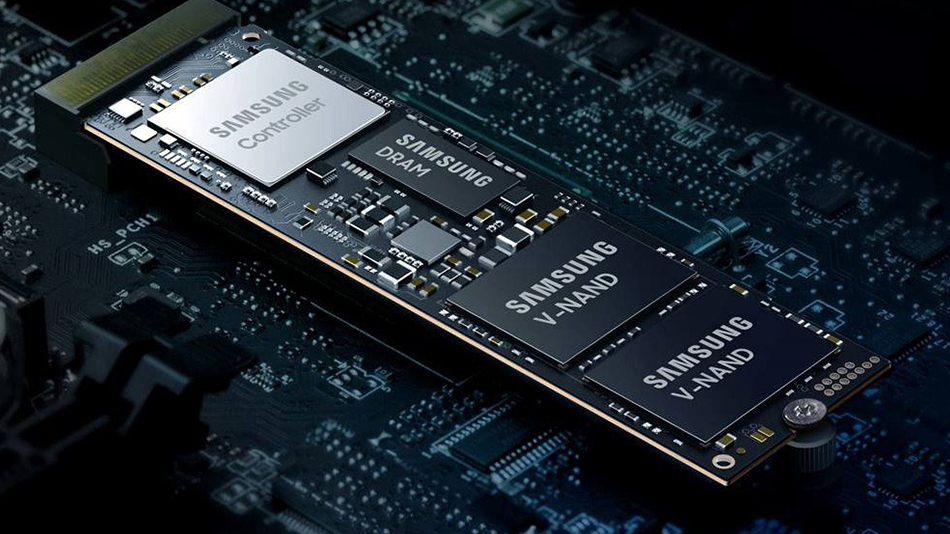
*Image from the internet; all rights belong to the original author, for reference only.
South Korea’s Semiconductor Expansion and What It Means for AI Memory Supply Chains
South Korea has announced a large-scale semiconductor investment plan involving major players such as Samsung Electronics, SK hynix, and Amkor Technology, with a strong focus on memory manufacturing, advanced packaging, and supporting semiconductor infrastructure. Official information from Korea.net states that these companies plan a combined investment of KRW 896 trillion in the country’s southwest region, which is expected to become South Korea’s second national semiconductor production hub.
For the global electronics supply chain, the key question is not only how much capacity will be added, but how this expansion may affect AI memory demand, component availability, and BOM planning for OEM and EMS manufacturers.
Q1: What is South Korea’s latest semiconductor investment plan?
South Korea’s latest semiconductor plan is designed to expand the country’s chip production capacity beyond its existing semiconductor base near the Seoul metropolitan area. The new southwest region hub is expected to include memory chip manufacturing, advanced packaging, data infrastructure, and supporting semiconductor ecosystem development.
According to Yonhap, Samsung Group and SK Group pledged a combined KRW 896 trillion investment in the southwest region, while other reports indicate that Samsung Electronics and SK hynix plan to invest around KRW 800 trillion to build four new memory fabs, with each company expected to construct two fabs.
For the semiconductor industry, this is not only a factory expansion plan. It is a long-term capacity signal for memory ICs, advanced packaging, AI infrastructure, and the broader electronic component supply chain.
Q2: Why is this investment closely connected to AI memory demand?
AI servers, high-performance computing systems, and data centers require much higher memory bandwidth and larger memory capacity than traditional computing systems. This is why advanced DRAM, HBM, and related memory chips have become critical to AI hardware development.
Samsung Electronics and SK hynix are two of the most important players in the global memory market. AP reported that the two companies together produce about two-thirds of the world’s memory chips, which means their capacity decisions can influence long-term supply expectations across the AI hardware ecosystem.
The impact of AI demand is not limited to GPUs or processors. As AI infrastructure expands, demand can also rise for power management ICs, voltage regulators, MOSFETs, connectors, MLCCs, inductors, timing devices, and other supporting components used in servers, storage systems, networking equipment, and test platforms.
Q3: Will new semiconductor fabs immediately ease component shortages?
Not immediately.
Large semiconductor fabs and packaging facilities require long construction, qualification, and production ramp-up cycles. Even after equipment is installed, stable output depends on process qualification, yield improvement, packaging capacity, and customer validation.
This means the investment should be viewed as a long-term supply signal rather than an immediate solution to component availability pressure. In fact, before new memory output becomes stable, related demand may increase earlier across equipment, power systems, test systems, passive components, connectors, and industrial control systems.
For procurement teams, the important point is clear: a capacity expansion announcement does not automatically mean short-term supply relief. BOM visibility, lifecycle tracking, and approved alternative planning remain essential.
Q4: Which component categories may be affected by semiconductor capacity expansion?
Large-scale semiconductor capacity expansion usually affects more than memory chips alone. New fabs, packaging lines, AI data centers, and test infrastructure require a wide range of supporting electronic components.
The following categories may see stronger attention as AI memory and semiconductor infrastructure projects continue to expand:
Memory and storage components
DRAM, NAND Flash, EEPROM, memory modules, and storage-related ICs are directly connected to AI servers, data centers, embedded systems, and industrial computing platforms.
Power and energy management components
AI infrastructure and semiconductor equipment require stable power delivery. This can increase demand for power management ICs, voltage regulators, DC-DC converters, MOSFETs, power modules, and protection components.
Passive components
High-density electronic systems rely heavily on MLCCs, resistors, inductors, tantalum capacitors, and aluminum electrolytic capacitors for filtering, decoupling, signal stability, and power integrity.
Interconnect and signal components
As servers, storage systems, and test equipment become more complex, connectors, cables, relays, crystal oscillators, clock generators, and timing devices remain important for signal transmission and system reliability.
Testing, control, and industrial support components
Semiconductor fabs and packaging facilities also depend on MCUs, sensors, interface ICs, optocouplers, isolation components, and test-equipment-related parts for automation, monitoring, and process control.
For electronic manufacturers, the supply chain impact may appear first in these supporting categories before new memory capacity reaches stable mass production.
Q5: What does this mean for OEM and EMS procurement teams?
For OEM and EMS procurement teams, semiconductor capacity expansion can create both opportunities and risks.
In the long term, new fabs and packaging facilities may improve capacity visibility for memory and AI-related hardware. In the short and medium term, however, large infrastructure projects can increase demand for surrounding components used in servers, power systems, automation equipment, testing systems, and industrial control platforms.
Procurement teams should pay attention to several areas:
BOM exposure across memory, power, passive, and interconnect categories.
Lifecycle status for components used in long-life industrial, telecom, server, and embedded systems.
Date code requirements, especially for customers with strict production or reliability standards.
Packaging consistency, such as reel, tray, tube, cut tape, and original label requirements.
Approved alternatives for high-risk or long-lead-time components.
Multi-source planning to reduce dependence on a single supply channel.
For projects involving AI infrastructure, industrial systems, data centers, or long-life electronic equipment, component availability should be reviewed earlier in the design and production cycle rather than only after shortages appear.
Q6: What should procurement teams watch as semiconductor capacity expands?
Procurement teams should watch for changes in lead times, allocation risk, price movement, date code availability, and supply-demand imbalance across related component categories.
A semiconductor investment plan is a positive long-term signal, but its effect is not immediate. Before new production capacity becomes stable, demand may shift quickly across AI server components, memory ICs, power components, passive components, connectors, and testing-related parts.
For procurement and supply chain teams, the practical response is not to wait for new fabs to solve every availability issue. Instead, teams should strengthen BOM-level visibility, identify high-risk parts earlier, review lifecycle-sensitive components, and prepare alternative sourcing options where possible.
In this environment, working with a sourcing partner that can support regular components, hard-to-find parts, obsolete components, lifecycle-sensitive items, and BOM-level visibility may help procurement teams respond more flexibly as supply conditions change.
Conclusion
South Korea’s semiconductor expansion highlights the growing importance of memory capacity, advanced packaging, and AI infrastructure in the global electronics industry. While the investment may improve long-term supply expectations, its impact will not be limited to memory chips alone.
As new fabs, packaging lines, data centers, and semiconductor infrastructure projects move forward, demand may spread across power, passive, interconnect, timing, control, and testing-related components. For OEM and EMS procurement teams, the key is not only to follow capacity announcements, but also to understand how these changes may affect BOM planning, component availability, lifecycle risk, and sourcing flexibility.
© 2026 Win Source Electronics. All rights reserved. This content is protected by copyright and may not be reproduced, distributed, transmitted, cached or otherwise used, except with the prior written permission of Win Source Electronics.