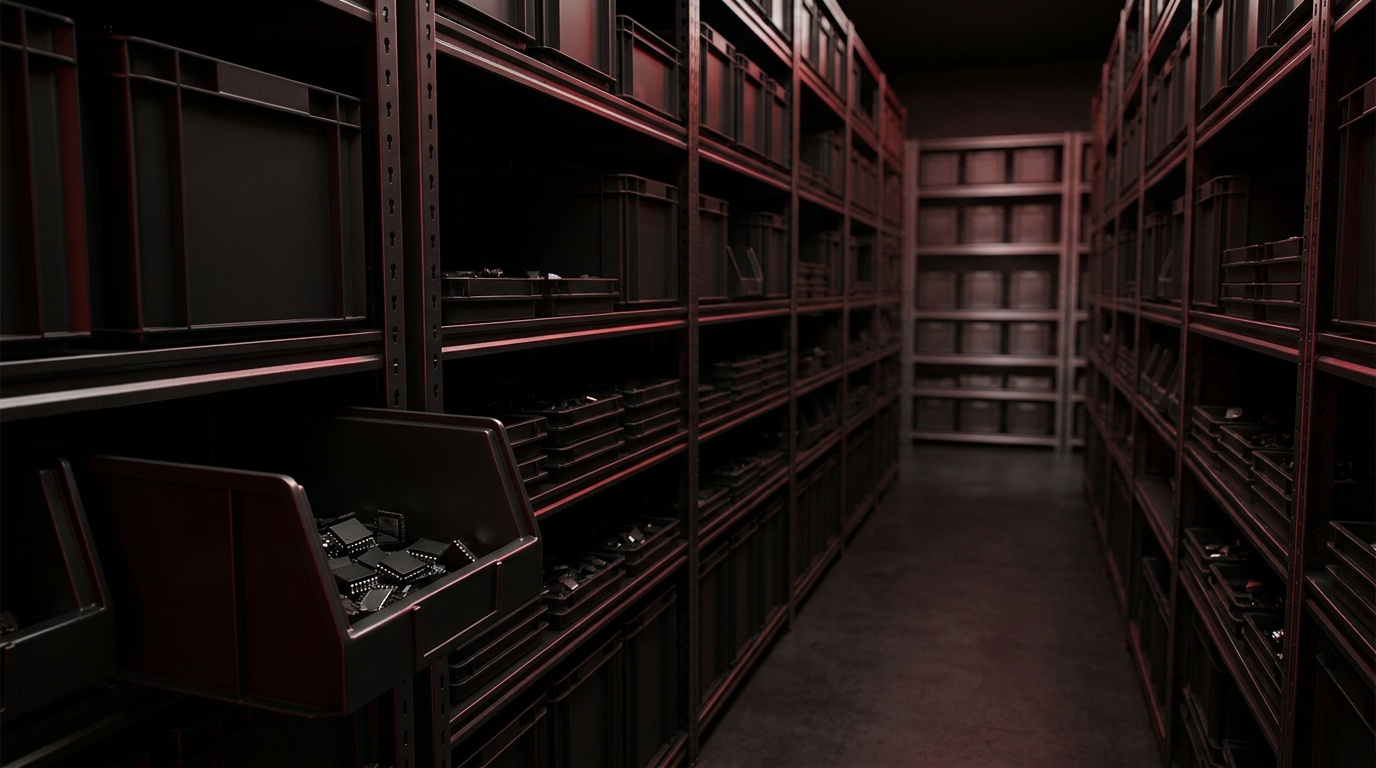
Every year, hundreds of thousands of electronic components reach end-of-life status — discontinued by their original manufacturers and no longer available through standard distribution channels. For engineers, procurement teams, and supply chain managers who depend on those parts, this is more than a minor inconvenience. It can halt production lines, delay product launches, and generate costly redesigns.
Finding a reliable obsolete electronic component distributor is one of the most important decisions a procurement team can make. The right partner doesn’t just locate the part — they verify its authenticity, ensure traceability, and offer forward-looking solutions like alternative components or long-term inventory banking. The wrong choice, on the other hand, can expose your supply chain to counterfeit parts, unreliable lead times, and compliance failures.
This guide compares seven obsolete electronic component distributors, examining what each one does well, who they are best suited for, and what to look for when making your decision. One disclosure up front: WIN SOURCE publishes this comparison and appears in it. Each entry is placed by what it is best suited to rather than by an overall score, capability and certification details are as each company publishes them, and you should confirm current status directly with any supplier before placing an order.
What Are Obsolete>What Are Obsolete Electronic Components?
mily:Arial,Helvetica,sans-serif;font-size:12pt">An obsolete electronic component is a part that has been discontinued by its original manufacturer and is no longer in active production or official distribution. These parts are commonly labeled EOL (End-of-Life), NRND (Not Recommended for New Designs), or simply obsolete on distributor platforms. Despite being out of production, they remain critical for maintaining, repairing, or continuing to manufacture legacy systems — particularly in industries like aerospace, defense, medical equipment, industrial automation, and telecommunications, where hardware lifecycles can span 15 to 30 years.It’s important to note that obsolete does not mean defective or unusable. Many discontinued components are perfectly functional and available through secondary market channels, authorized continuation sources, or excess inventory held by other manufacturers. The challenge is finding them from a distributor you can trust.
Why Sourcing from t>Why Sourcing from the Right Distributor Matters
ly:Arial,Helvetica,sans-serif;font-size:12pt">The scale of component obsolescence is significant, and it grows every year as manufacturers retire mature process nodes and consolidate product families. For companies operating in regulated industries, a single discontinued part can trigger a redesign that carries non-recurring engineering cost, re-qualification work and schedule impact well beyond the price of the part itself. The pressure to find a reliable source quickly is real — but speed cannot come at the expense of quality.Counterfeit risk is a particularly serious concern in the secondary market, and it concentrates on obsolete and end-of-life parts for the simple reason that scarcity is what creates the opportunity. When you are sourcing discontinued components, working with a certified, reputable distributor isn’t a nice-to-have — it’s a necessity. Traceability documents, quality certifications, and anti-counterfeit testing protocols are what separate a trustworthy partner from a risky open-market gamble.
What to Look for in an >What to Look for in an Obsolete Component Distributor
rial,Helvetica,sans-serif;font-size:12pt">Before reviewing the top distributors, it helps to understand the criteria that matter most when evaluating a supplier for obsolete or hard-to-find parts. Not all distributors are created equal, and the right choice will depend heavily on your industry, volume requirements, and risk tolerance.- Quality certifications and memberships: Look for ISO 9001 and AS9120 certification as baseline indicators of a structured quality management system, and check ERAI membership separately — ERAI is a reporting and monitoring organization rather than a certification body. The certifications confirm that the distributor has documented processes for supplier vetting, inspection, and traceability.
- Inventory Breadth: A deep, diverse inventory reduces lead times and gives you more options for a given part number or manufacturer family.
- Traceability and Documentation: Reliable distributors provide date codes, lot codes, and chain-of-custody records. Without these, you cannot confirm part authenticity — a serious issue in regulated industries.
- Alternative Solutions: The best distributors don’t just say “sorry, out of stock” — they offer cross-reference tools, functional equivalents and technical support to keep your project moving. Whatever a distributor proposes, final approval of a substitute belongs to your own engineering team.
- Global Sourcing Network: Obsolete parts can surface in any geography. A distributor with an international network of offices, warehouses, and supplier relationships is far better positioned to locate hard-to-find inventory.
- Digital Tools and BOM Support: Modern procurement workflows benefit from BOM management tools, API integrations, and real-time inventory data — capabilities that save significant time at scale.
With these criteria in mind, here are the seven distributors that stand out in the obsolete components space.
The 7 Best Obsolete Electronic >The 7 Best Obsolete Electronic Component Distributors
-family:Arial,Helvetica,sans-serif;font-size:14pt;margin-top: 30px;margin-bottom: 15px">1. WIN SOURCE – Best Overall fo>1. WIN SOURCE – Best Overall for Global Obsolescence Managementvetica,sans-serif;font-size:12pt">Founded: 1999 | Headquarters: SingaporeWIN SOURCE has been an independent global electronic component distributor since 1999 — not a franchised or authorized distributor for any manufacturer — specializing in both commonly used and end-of-life (EOL) components across a catalog of 1 Million+ components from 3,000+ manufacturers. What sets WIN SOURCE apart from most competitors isn’t just inventory size — it’s the company’s integrated approach to supply chain problem-solving. Rather than simply filling a purchase order, WIN SOURCE positions itself as a full-spectrum procurement partner.
The company holds AS9120, ISO 9001:2015 and ISO 14001 certifications and is a member of ERAI. In its 2026 rankings, Supply Chain Connect placed WIN SOURCE at #15 on its Top 50 Global Electronics Distributors list, #2 among Top European Distributors and #4 in its Top 50 Asia Pacific Distributors.
For procurement teams managing component obsolescence, WIN SOURCE offers dedicated solutions that go well beyond reactive sourcing. Its WinLink BOM tool allows customers to upload entire bills of materials and receive real-time availability and pricing data, while the WinConnect API enables enterprise-level integration for high-volume buyers. For teams dealing with excess stock on the other side of the equation, WIN SOURCE also provides excess inventory management solutions.
The distributor’s product coverage is particularly strong across integrated circuits, discrete semiconductors, memory, embedded components (MCU, MPU, FPGA), sensors and transducers, optoelectronics, circuit protection, connectors and interconnects, and passive components including parts originally made by Texas Instruments, STMicroelectronics, Analog Devices, Infineon, Microchip, NXP, and Micron. Those manufacturer names identify the parts only — WIN SOURCE is not an authorized, franchised or appointed distributor for any of them.
WIN SOURCE also distinguishes itself with a dedicated alternative solutions program — a critical capability when an exact obsolete part is truly unavailable. Engineers often need a validated functional equivalent, not just a dead end. Additionally, the company’s shortage management and cost control management services address two of the most common pressures facing procurement teams today.
Key Strengths:
- AS9120, ISO 9001:2015 and ISO 14001 certified; ERAI member
- 1 Million+ components from 3,000+ manufacturers, including hard-to-find and EOL parts
- WinLink BOM tool and WinConnect API for digital procurement workflows
- Dedicated obsolescence management, shortage management, and cost-down programs
- Around 450 people across 16 countries and regions
- Cost-effective alternative component solutions with engineering support
- #15, Top 50 Global Electronics Distributors — Supply Chain Connect, 2026
Best For: Companies of any size seeking a certified, full-service procurement partner for obsolete, hard-to-find, and EOL components — especially those with complex BOMs or global supply chain requirements.
2. Rochester Electronics – Best for Authorized EO>2. Rochester Electronics – Best for Authorized EOL Semiconductors
font-size:12pt">Founded: 1981 | Headquarters: Newburyport, Massachusetts, USARochester Electronics occupies a unique position in the obsolete components market as both a distributor and a licensed manufacturer of discontinued semiconductors. Rochester states that it is authorized by more than 70 semiconductor manufacturers, which means the parts it supplies carry a level of traceability and authenticity that open-market brokers cannot match, and it publishes a large inventory covering both end-of-life and active semiconductors.
What makes Rochester particularly valuable for high-stakes industries is its licensed manufacturing capability. When a part goes EOL and stock is exhausted, Rochester can manufacture replacements using the original manufacturer’s intellectual property, die, and test programs — producing parts that are identical in form, fit, and function. This is a significant advantage for aerospace, defense, and medical programs that cannot tolerate functional substitutions.
Key Strengths:
- States authorization by 70+ semiconductor manufacturers
- Licensed EOL manufacturing capability
- Large published inventory of EOL and active semiconductors
- Ideal for aerospace, defense, and medical supply chains
Best For: Engineers and procurement teams in regulated industries who require fully authorized, manufacturer-traceable EOL semiconductors with zero tolerance for gray-market risk.
3. 4 Star Electronics – Best for OEM Marketplace Connec>3. 4 Star Electronics – Best for OEM Marketplace Connectivity
ize:12pt">Headquarters: Camarillo, California, USA4 Star Electronics has carved out a strong niche as a marketplace-style distributor connecting OEMs, contract manufacturers, and franchise distributors to allocated, discontinued, and hard-to-find components. Rather than operating purely as a stocking distributor, 4 Star functions as a hub that bridges supply and demand across the electronics ecosystem. This model gives buyers access to a broad pool of available inventory from multiple sources, often surfacing parts that are difficult to find through traditional channels.
The company has built a reputation for responsive customer service and strong product knowledge, which is especially valuable when navigating the complexities of obsolete part sourcing. 4 Star states that it holds ISO 9001 certification and maintains quality standards consistent with the demands of its aerospace and defense customer base.
Key Strengths:
- Marketplace model connecting OEMs and CMs to allocated and obsolete parts
- Strong track record with aerospace and defense customers
- ISO 9001 certified
- Positive reviews for product knowledge and customer service
Best For: OEMs and contract manufacturers that need a flexible sourcing connector for hard-to-find and allocated parts across multiple supplier relationships.
4. Smith – Best for Large-Scale Independent Distribution4. Smith – Best for Large-Scale Independent Distribution
12pt">Founded: 1984 | Headquarters: Houston, Texas, USASmith is one of the largest independent distributors in the world and consistently places at the top of published independent-distributor rankings. That scale is what it brings to the challenge of sourcing obsolete components. Smith’s open-market network spans key electronics hubs across the Americas, Europe, and Asia, enabling it to locate difficult inventory with a reach that few independent distributors can match.
Smith’s quality control capabilities are a particular differentiator. The company states that it operates in-house testing laboratories equipped for X-ray analysis and decapsulation — methods that can detect counterfeit or nonconforming parts that pass visual inspection. Its Intelligent Distribution model uses data analytics to help customers anticipate and plan for obsolescence before it becomes a crisis.
Key Strengths:
- Consistently ranked among the largest global independent distributors
- In-house X-ray and decapsulation testing labs
- Broad global open-market sourcing network
- Data-driven obsolescence forecasting tools
Best For: Large manufacturers and enterprises that need high-volume independent distribution support with structured quality assurance for obsolete and allocated components.
5. Vyrian – Best for Aerospace, Defense, and Medical
5. Vyrian – Best for Aerospace, Defense, and MedicalFounded: 2011 | Headquarters: Houston, Texas, USA
Vyrian Electronics is an independent distributor focused specifically on hard-to-find, end-of-life, and obsolete electronic components for some of the most demanding industries in the market: aerospace, defense, and medical manufacturing. What distinguishes Vyrian is its rigorous approach to component authentication. Every part goes through advanced testing procedures designed to verify both authenticity and performance, and the company states that it holds AS9120, AS6081 (the anti-counterfeit standard for independent distributors) and ESD S20.20 certifications.
For industries where a failed component can have life-safety consequences, Vyrian’s certification stack and testing protocols provide a level of assurance that many brokers don’t offer. The company has also built strong relationships with original component suppliers across America, Europe, Japan, South Korea, and Singapore, giving it access to well-sourced inventory across global markets.
Key Strengths:
- AS9120, AS6081, and ESD S20.20 certified
- Advanced testing protocols for counterfeit detection
- Deep specialization in aerospace, defense, and medical sectors
- Strong global supplier relationships
Best For: Companies in high-reliability industries where component authentication and compliance with aerospace-grade quality standards are non-negotiable.
6. Cyclops Electronics – Best for Day-to-Day Hard-to-Find Sourcing6. Cyclops Electronics – Best for Day-to-Day Hard-to-Find Sourcing
ong>Founded: 2015 | Headquarters: Hong KongCyclops Electronics operates as a global distributor specializing in the full range of sourcing challenges: day-to-day supply, shortage situations, hard-to-find parts, and obsolete components. The company’s global network allows it to respond quickly to urgent procurement needs, and customer reviews consistently highlight fast response times and part quality as standout strengths. Cyclops is particularly well-suited for teams that encounter frequent sourcing gaps across a diverse range of component types and manufacturers.
While Cyclops may not carry the same scale as some larger competitors, its agility and customer focus make it a practical option for buyers who need a responsive partner for day-to-day sourcing challenges rather than a complex, enterprise-scale solution.
Key Strengths:
- Global network for day-to-day and shortage sourcing
- Strong customer service reputation
- Fast response times for urgent procurement needs
- Broad component type coverage
Best For: Procurement teams that need a responsive, globally connected distributor for both routine and hard-to-find component sourcing without the overhead of an enterprise procurement platform.
7. Freelance Electronics – Best for Military-Grade Components
7. Freelance Electronics – Best for Military-Grade ComponentsFounded: 1996 | Headquarters: USA
Freelance Electronics was founded as a specialized distributor of hard-to-find and obsolete electronic components with a particular focus on military-grade semiconductors. The company states that it offers same-day shipping and a continuously growing inventory of components serving defense and military contractors. Over nearly three decades, Freelance has expanded its offering to meet growing demand while maintaining its core specialization in high-reliability, military-specification parts.
For buyers sourcing MIL-SPEC components or military-grade semiconductors that are no longer in active production, Freelance’s specialized focus and deep familiarity with this category make it a reliable niche partner. Its long tenure in this specific market segment also reflects an established network of supplier relationships in the military electronics space.
Key Strengths:
- Nearly 30 years of specialized focus on military-grade components
- Same-day shipping capability
- Strong inventory of MIL-SPEC and hard-to-find semiconductors
- Long-standing supplier relationships in the defense electronics sector
Best For: Defense contractors and military electronics buyers needing a specialist distributor with deep knowledge of MIL-SPEC and military-grade discontinued components.
Quick Comparison Table
| Distributor | Founded | Key Certifications | Best For |
|---|---|---|---|
| WIN SOURCE | 1999 | AS9120, ISO 9001:2015, ISO 14001; ERAI member | Best Overall — Global obsolescence & shortage management |
| Rochester Electronics | 1981 | Authorized by 70+ OEMs | Authorized EOL semiconductors |
| 4 Star Electronics | N/A | ISO 9001 | OEM marketplace connectivity |
| Smith | 1984 | Industry-leading QC labs | Large-scale independent distribution |
| Vyrian | 2011 | AS9120, AS6081, ESD S20.20 | Aerospace, defense, and medical sectors |
| Cyclops Electronics | 2015 | N/A | Day-to-day and shortage sourcing |
| Freelance Electronics | 1996 | N/A | Military-grade components |
How to Choose the Right Distributor for Your Needs
How to Choose the Right Distributor for Your Needssolete component distributor isn’t a one-size-fits-all decision. The best choice depends on your industry, your procurement volume, the criticality of the components you’re sourcing, and the depth of supply chain services you need beyond the transaction itself. Here are a few practical guidelines to help narrow it down.
If you need full-service procurement support — including obsolescence planning, shortage management, BOM tools, and alternative component recommendations — a partner like WIN SOURCE offers the most comprehensive set of capabilities under one roof. Its Global Sourcing Solution is specifically designed for procurement teams dealing with complex, multi-part supply chain challenges, and its worldwide office network means support is available regardless of your geography.
If authorized traceability is your primary requirement — particularly for aerospace or defense programs — Rochester Electronics or Vyrian offer certification stacks and manufacturing authorizations that provide the highest level of assurance against counterfeit parts. Working with ISO 9001 or AS9120-certified distributors reduces counterfeit risk and supports compliance requirements in regulated sectors.
If you’re managing a large BOM with many obsolete line items, submitting a full BOM for review is the most efficient starting point. WIN SOURCE’s RFQ and BOM submission tool allows teams to get availability and pricing across an entire parts list at once, saving significant sourcing time compared to hunting each part number individually.
For niche military-grade requirements, Freelance Electronics’ three-decade specialization makes it a hard-to-beat specialist option. And for teams that simply need a responsive, globally connected distributor for day-to-day sourcing challenges, Cyclops Electronics offers the agility that larger distributors sometimes lack.
Frequently Asked Questions
Frequently Asked Questionsn-bottom: 15px">Q1: What is the best distributor for obsolete electronic components?
Q1: What is the best distributor for obsolete electronic components?t one — it depends on what you are sourcing. If you need manufacturer-authorized traceability on a discontinued semiconductor, an authorized continuation source such as Rochester Electronics is the strongest answer. If you need breadth across many part numbers, certified independent distributors cover far more of the obsolete market. For aerospace, defense and medical work, prioritize AS9120 and AS6081 coverage. Match the distributor to the job rather than looking for an overall winner.
Q2: What is the difference between an authorized and an independent distributor?
Q2: What is the difference between an authorized and an independent distributor?r has a contractual relationship with the manufacturer and sells parts that come directly through that channel. An independent distributor, such as WIN SOURCE, has no such appointment and sources from the open market, excess inventory and long-term storage. Authorized channels give the strongest traceability while a part is still in production; independent distributors are how most genuinely obsolete parts get sourced once those channels run dry.
Q3: What certifications should an obsolete component distributor hold?
Q3: What certifications should an obsolete component distributor hold?agement and AS9120 for aerospace-grade distribution are the baseline. AS6081 and AS6171 cover counterfeit avoidance and test methods specifically. ESD S20.20 covers electrostatic discharge control. ERAI is a membership rather than a certification — it indicates participation in industry counterfeit reporting, which is useful, but it is not a third-party audit of the distributor’s processes.
Q4: How do I know an obsolete part is genuine?
Q4: How do I know an obsolete part is genuine?evels. Before the order, check the supplier’s certifications, ask for lot-traceable Certificates of Conformance and chain-of-custody records, and confirm what in-house inspection they actually perform. After delivery, inspect: visual examination under magnification for remarking, X-ray for internal die and bond-wire structure, electrical test against the original datasheet, and date code review. For aerospace, defense and medical parts, decapsulation adds a further level of assurance.
Q5: Can I get pricing and stock figures from an article like this one?
Q5: Can I get pricing and stock figures from an article like this one?tical of any article that offers them. Stock positions and pricing on obsolete parts move daily and are specific to the part number, quantity and date code on offer. Search the part number on a distributor’s live catalog, or submit an RFQ or BOM, and work from the figures that come back.
Q6: Should I use more than one obsolete component distributor?
Q6: Should I use more than one obsolete component distributor?ntory is scattered, and no single distributor sees all of it. Many procurement teams keep a small approved panel — an authorized continuation source, one or two certified independent distributors, and a specialist for their regulated-industry needs — rather than relying on a single supplier for every discontinued line item.
Final Thoughts
Sourcing o>Final Thoughtsomponents requires more than tracking down a part number — it demands a distributor that can verify authenticity, provide traceability documentation, and ideally offer proactive solutions for the next obsolescence challenge on the horizon. Each of the seven distributors covered here brings distinct strengths to the table, from Rochester Electronics’ authorized manufacturing capabilities to WIN SOURCE’s end-to-end procurement ecosystem.
For most procurement teams and engineers, the ideal partner is one that combines deep inventory, robust quality certifications, digital procurement tools, and genuine expertise in obsolescence management. That combination is rare, but it’s what separates a true supply chain partner from a simple transactional vendor. Whether you’re managing a single hard-to-find component or overhauling your entire EOL sourcing strategy, the distributors on this list represent the most reliable options available today.
Part discontinued, obsolete or hard to find?
Part discontinued, obsolete or hard to find?>WIN SOURCE is an independent stocking distributor of EOL, hard-to-find and discontinued components, holding AS9120, ISO 9001:2015 and ISO 14001 certifications and a member of ERAI, in business since 1999. Search a part number against live stock, or upload a full BOM to get availability across the whole list at once. Incoming batches go through visual, X-ray and electrical inspection, and orders are backed by the published return policy and a 3-year warranty on eligible components. Stock and pricing live on the part page and move daily, so we do not quote either here.
© 2026 Win Source Electronics. All rights reserved. This content is protected by copyright and may not be reproduced, distributed, transmitted, cached, or otherwise used without the prior written permission of Win Source Electronics.