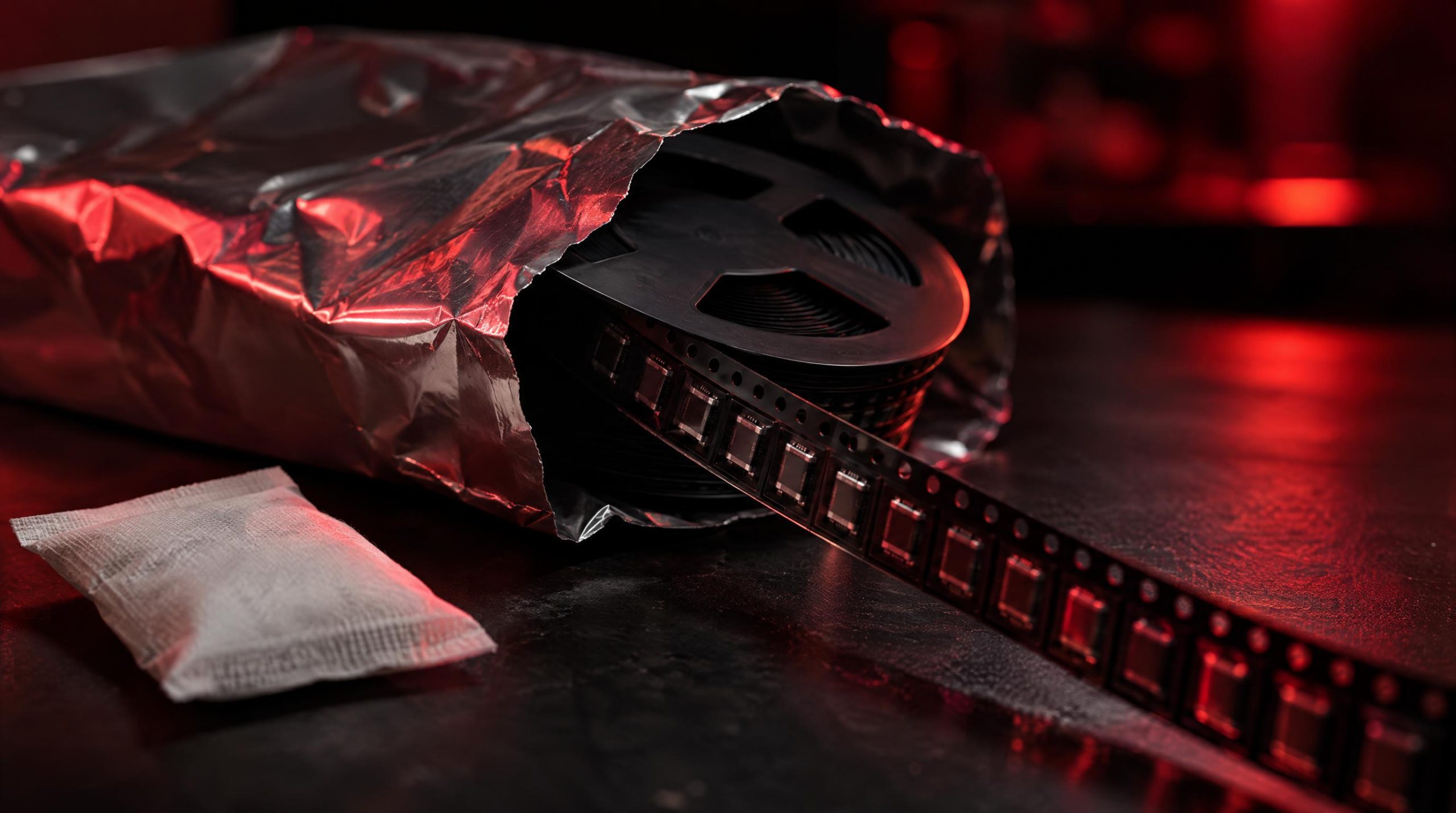
A component can pass all incoming quality checks, get placed correctly, and still cause a field failure months later — because of moisture it absorbed while sitting on a shelf or production floor. Moisture Sensitivity Level (MSL) is the classification system that tells you exactly how much ambient exposure a non-hermetic surface-mount package can tolerate before it becomes a reliability risk during reflow soldering.
This article explains the full MSL framework: what each level means, how floor life is measured and tracked, when baking is necessary and how to do it correctly, and how to store moisture-sensitive devices to avoid reaching that point. It also covers a practical angle that many MSL guides overlook: how MSL considerations apply at incoming inspection and during procurement, especially when sourcing components that have been warehoused for extended periods.
Explained
Handling · Baking · Floor Life · Storage — Everything You Need to Know
| Key Standards: | J-STD-020 — Classification | J-STD-033 — Handling |
MSL classifies how susceptible a plastic surface-mount device is to moisture damage during reflow soldering. Absorbed water converts to steam at reflow temperatures, building internal pressure that can crack or delaminate the package.
|
The Problem
Plastic packages absorb moisture from ambient air
|
The Risk
Steam pressure during reflow causes cracking or delamination
|
|
The Solution
MSL rating defines safe exposure window before assembly
|
⚠️
Lead-Free Risk
SAC alloy reflow peaks at 245–260 °C — higher stress than tin-lead
|
|
Shelf Life
Sealed Bag Clock
Starts from seal date. Typically 12 months for a properly sealed MBB with active desiccant. Floor-life clock stays at zero while sealed. |
Starts the moment the bag is opened. Cumulative exposure budget at ≤30 °C / 60% RH. These two clocks run independently. |
Key insight: An MSL 3 reel stored sealed for 8 months has zero floor-life elapsed — the clock hasn’t started yet.
Per J-STD-033 — choose based on carrier compatibility and time available
|
125°CFastest
|
High-Temperature Tray Required
Fastest moisture removal. Standard tape-and-reel cannot withstand this temperature — transfer parts to rated bake trays first.
|
|
Hours
not days |
|
90°CModerate
|
Still Needs Rated Carriers
Gentler than 125 °C but much slower; low-temperature carriers are limited to 40 °C.
|
Medium
duration |
|
40°CSafe
|
Carrier-Safe Option
Standard tape, reels, tubes, and trays are compatible. Tradeoff: bake times of days to weeks depending on MSL and package thickness.
|
Days to
weeks |
|
⚠️ Bake Limit
Cumulative bake time above 90 °C limited to 96 hours (up to 125 °C) unless the supplier says otherwise. Excess baking oxidizes terminations and degrades solderability.
|
⚠️ Special Parts
LEDs, MEMS, and PoP assemblies may have lower max bake temperatures — always check the datasheet first.
|
|
Bake When…
✕Floor life has been exceeded
✕HIC shows humidity exceeded threshold
✕Exposure history is unknown
✕MSL 6 — mandatory before any use
|
Use Dry Storage When…
✓Floor life is within limits — pause the clock
✓≤5% RH cabinet: pauses clock for MSL 2–5a
✓≤10% RH cabinet: pauses clock for MSL 2–3
✓Properly sealed MBB with fresh desiccant + HIC
|
Rule of thumb: Dry storage is prevention. Baking is recovery. A standard 10–15% RH dry cabinet does not reset accumulated exposure — only a qualified J-STD-033 bake does that.
|
Popcorning
Package physically cracks or bulges as vapor pressure vents. The most visible failure mode.
|
Delamination
Internal separation with no external cracks. Only detectable by acoustic microscopy (C-SAM). Causes latent field failures.
|
|
⚡
Oxidized Joints
Moisture oxidizes solder balls and terminations, producing voided or cold-looking solder joints.
|
Head-in-Pillow
BGA incomplete solder coalescence. Moisture history compounds board warpage and thermal profile issues.
|
⚡ Critical: Moisture damage is often latent — boards can pass AOI, ICT, and functional test immediately after reflow. Failure emerges during thermal cycling in the field.
|
1
|
Incoming Inspection
Verify MBB is intact → Check HIC (sealed) → Confirm seal date vs. shelf life → Record MSL rating and label info.
|
|
2
|
Opening the Bag
Check HIC immediately → Mark reel with date & time of opening → Start floor-life tracking log or MES entry.
|
|
3
|
During Production
Track cumulative exposure — dry cabinet pauses but does not reset the clock. Return to ≤5% RH storage between shifts.
|
|
4
|
Decision Point
Floor life OK? → Assemble. Floor life exceeded or unknown? → Bake per J-STD-033 at appropriate temperature/duration for carrier type.
|
|
5
|
After Baking
Move promptly to assembly line or return to compliant dry storage immediately — leaving baked reels on an open bench restarts the exposure clock.
|
|
01
|
MSL Rates the Package, Not the Device Quality
An MSL 5 part is not inferior to an MSL 2 part — it just has different moisture diffusion characteristics based on geometry and mold compound.
|
|
02
|
Two Standards, Two Jobs: J-STD-020 Classifies; J-STD-033 Handles
Referencing J-STD-020 in a bake record is a documentation error. All production baking and handling records cite J-STD-033.
|
|
03
|
Shelf Life and Floor Life Are Independent Clocks
A sealed reel can sit for 11 months without floor-life impact. Floor life only begins when the bag is opened.
|
|
04
|
Baking Is Recovery — Good Storage Is Prevention
Every unnecessary bake adds thermal history and risks oxidizing terminations. Dry storage discipline eliminates the need to bake in the first place.
|
|
05
|
Moisture Damage Is Mostly Latent — Not Immediate
Boards often pass all post-reflow testing. Internal delamination only manifests during thermal cycling in the field — making MSL discipline non-negotiable.
|
WIN SOURCE — Global Independent Distributor of Electronic Components
AS9120 · ISO 9001 · ISO 14001 Certified · Founded 1999
What Is Moisture Sensitivity Level (MSL)?
Moist>What Is Moisture Sensitivity Level (MSL)?ification defined under IPC/JEDEC J-STD-020 that describes how susceptible a non-hermetic surface-mount device (SMD) is to moisture-induced damage during reflow soldering. The rating runs from MSL 1 (essentially unlimited floor life under standard conditions) through MSL 6 (mandatory baking before any use), with intermediate levels at 2, 2a, 3, 4, 5, and 5a each defining a progressively shorter allowable exposure window.
The classification exists because most modern semiconductor packages are encapsulated in molded plastic, and that plastic absorbs water vapor from the surrounding air. This is not a defect — it is a material property of epoxy mold compounds. The MSL rating quantifies how quickly a specific package geometry and compound combination reaches a moisture level that becomes dangerous during the thermal excursion of reflow.
An important point from the start: MSL does not describe the quality or reliability of the device itself. A component rated MSL 5 is not inferior to one rated MSL 2. The rating simply reflects the package’s moisture diffusion characteristics — typically a function of geometry, thickness, and mold compound formulation — and tells you how carefully it needs to be handled once the dry pack is opened.
Why Moisture Matters: The Popcorn Effect and Hidden Failures
>Why Moisture Matters: The Popcorn Effect and Hidden Failuresperatures climb above 200 °C, the absorbed water rapidly converts to steam. The resulting vapor has nowhere to go — it is trapped inside the package. Internal pressure builds at the boundaries between the die, the lead frame, the die-attach adhesive, and the surrounding mold compound. If that pressure exceeds the adhesive strength of those interfaces, the damage begins.
The most dramatic outcome is popcorning: the package physically bulges or cracks with an audible pop as the pressure vents catastrophically. More common, however, are invisible failures. Internal delamination — separation of the mold compound from the die or substrate — can occur without any external cracking, leaving a package that looks intact and even passes post-reflow electrical testing. The damage manifests later, during thermal cycling, vibration, or normal field operation, as the weakened internal bonds fail progressively. Moisture exposure also contributes to wire-bond damage, die-surface oxidation, and reduced solderability on terminations.
Lead-free assembly has made this more consequential. Traditional tin-lead reflow profiles typically peaked around 220–230 °C; lead-free SAC alloy profiles routinely reach 245–260 °C. That additional thermal load means faster vapor expansion, greater internal stress, and a narrower margin for error. Packages that tolerated marginal moisture levels under leaded processes may not survive the same conditions under lead-free ones. This is why some components that appeared robust under older processes were reclassified to stricter MSL ratings as lead-free adoption became widespread.
Fine-pitch packages — BGAs, QFNs, CSPs, and similar high-density formats — deserve particular attention. Their compact geometry concentrates thermal stress, and their internal structure provides more interfaces where delamination can initiate. For these package types, disciplined floor-life tracking and proper dry storage are not optional best practices; they are prerequisites for consistent assembly yield.
MSL Levels and Floor Life Reference
The table below summarizes the standard MS>MSL Levels and Floor Life Referencelimits. The reference environment for all levels except MSL 1 is ≤30 °C at 60% RH. MSL 1 uses a less restrictive 85% RH reference condition because the package is designed to be immune to moisture-induced damage under normal handling.
| MSL Level | Floor Life (≤30 °C / 60% RH) | Notes |
|---|---|---|
| MSL 1 | Unlimited | No floor-life restriction; reference condition is 30 °C / 85% RH. |
| MSL 2 | 1 year | Typical for many standard plastic packages. |
| MSL 2a | 4 weeks | Intermediate tier between MSL 2 and MSL 3. |
| MSL 3 | 168 hours (7 days) | Common for MCUs, memory, logic ICs, BGAs, and QFNs. |
| MSL 4 | 72 hours | Thin or highly moisture-sensitive packages. |
| MSL 5 | 48 hours | Tight floor-life control required. |
| MSL 5a | 24 hours | Very short allowable exposure. |
| MSL 6 | Mandatory bake before use | Must be reflowed within the time stated on the caution label after baking. |
The ‘a’ designations (2a, 5a) provide intermediate handling tiers and are assigned when a package falls between the moisture absorption thresholds of two main levels. The time moisture takes to diffuse through a package scales roughly with the square of the diffusion distance, which is why package thickness is one of the strongest predictors of MSL rating.
J-STD-020 vs. J-STD-033: Classification vs. Handling
IPC/JEDEC J-STD-020J-STD-020 vs. J-STD-033: Classification vs. Handlingrs use it to precondition packages under controlled moisture and then subject them to defined reflow stress. Based on the results, the package receives its MSL rating and package classification temperature. This is the standard that answers: how sensitive is this package, and under what reflow conditions was it tested? The MSL number printed on the component’s caution label comes from this process.
IPC/JEDEC J-STD-033 is the handling standard. It takes the classification established by J-STD-020 as its input and then defines everything that happens downstream: dry packing requirements, desiccant and HIC specifications, floor-life limits, dry storage options, and the baking procedures used to recover components whose floor life has been exceeded. This is the standard that answers: given this component’s MSL rating, how should I pack, store, track, and dry it?
The two standards are complementary but distinct, and that distinction matters in practice. If a process traveler records that a component was “baked per J-STD-020,” that is a documentation error — J-STD-020 defines the classification test, not the production bake. Baking and handling records should reference J-STD-033, specifying the applicable handling condition, bake temperature, duration, and the current revision of the standard required by the customer or device manufacturer.
Shelf Life vs. Floor Life: An Important Distinction
These two terms are frequently conf>Shelf Life vs. Floor Life: An Important Distinctionse and procurement operations. Shelf life is the total time a properly sealed, dry-packed component can remain in storage while still being suitable for use. A sealed moisture barrier bag (MBB) with intact desiccant and an uncompromised seal typically provides 12 months of sealed shelf life under defined storage conditions, though extended-life packaging and manufacturer-specific guidance can alter this. Shelf life is a property of the sealed package.
Floor life is entirely different. It begins the moment the MBB is opened and the device is exposed to factory ambient conditions. It is a cumulative exposure budget measured in hours or weeks, depending on MSL level, at the reference condition of ≤30 °C / 60% RH. A component can sit in a sealed bag for 11 months without any floor-life impact, and then have only 48 hours of usable floor time once that bag is cut open. These two clocks run independently.
Understanding the difference matters for procurement teams managing component inventory. A reel of MSL 3 microcontrollers that has been warehoused in a properly sealed MBB for eight months is not “eight months closer to expiring” in floor-life terms — the floor-life clock has not started yet. Conversely, a reel whose MBB was opened and then carelessly resealed without fresh desiccant may have accumulated significant moisture regardless of how recent the seal date appears.
How the Floor-Life Clock Works
Floor life is a cumulative budget, not a single countdown. If>How the Floor-Life Clock Worksr 40 hours, then placed back into a dry cabinet at ≤10% RH, the previous 40 hours of exposure remain on the record — the cabinet pauses further accumulation, but it does not erase what has already occurred. Whether stored time in a dry cabinet can be excluded from the running total depends on the RH level maintained, the exposure history, and the applicable J-STD-033 procedure.
Under J-STD-033, storage at ≤10% RH pauses the floor-life clock for MSL 2, 2a and 3 components, and after an exposure of no more than 12 hours, desiccating for at least five times the exposure time resets it. MSL 4, 5 and 5a components need ≤5% RH, and only exposures of no more than 8 hours can be reset that way, with at least ten times the exposure time. Beyond those limits, only a qualified bake resets accumulated exposure. A standard 10–15% RH dry cabinet slows moisture uptake significantly but does not provide the same reset that baking does.
In production, this means tracking the open date and time on every partially used reel. An operator who finds an unmarked partial reel of MSL 5a material with no exposure record faces a straightforward decision: treat the history as unknown and bake before use, or scrap if baking is not appropriate for that component. Ambiguity in floor-life records consistently leads to either unnecessary baking cycles (which add thermal history and can degrade solderability) or, worse, to components being used past their safe exposure limit.
How to Identify a Component’s MSL
The primary source is the moisture barrier bag itself. A compl>How to Identify a Component’s MSLing the MSL rating, floor life, the open date if applicable, and relevant reflow classification information. The label format follows JEP113, the JEDEC labeling standard for moisture-sensitive devices.
Inside the bag, a humidity indicator card (HIC) and desiccant should be present. The HIC contains color-change spots calibrated to indicate whether the internal humidity has exceeded defined thresholds — typically 5%, 10%, and 60% RH per current J-STD-033 requirements. Check the HIC as soon as the bag is opened. If the 10% spot has changed color, the internal environment has exceeded its intended limit and the parts should be handled conservatively — bake or engineer disposition, rather than assuming they are dry.
If the bag label is missing or damaged, the next source is the component manufacturer’s datasheet or product page. Most semiconductor manufacturers include MSL classification in the packaging or environmental/quality section of their documentation. Major component distributors also typically include MSL data in their product records. For integrated circuits, memory devices, and embedded processors and FPGAs, the MSL is a standard field in the manufacturer’s packaging specification.
Baking Guide: When, How, and at What Temperature
Baking drives absorbed moisture out of the package before>Baking Guide: When, How, and at What Temperatureprocess is governed by J-STD-033, which defines bake conditions based on three temperature tiers. The correct time and temperature for any specific component depends on its MSL rating, package thickness, how far the floor-life limit was exceeded, and the maximum temperature the component and its carrier can safely sustain.
When to Bake
Baking is required in three situations: the specified floor life has been exceeded; the HIC i>When to Bakeinternal bag humidity rose above its threshold; or the exposure history is simply unknown. For MSL 6 components, baking before any use is mandatory — the part must then be reflowed within the time stated on its label after baking is complete.
Do not bake unnecessarily as a precaution when the moisture history is known and within limits. Each bake cycle adds thermal history. Repeated high-temperature baking accelerates oxidation of lead terminations and solder balls, and can degrade intermetallic structures, ultimately reducing solderability. J-STD-033 limits cumulative bake time above 90 °C (up to 125 °C) to 96 hours unless the device manufacturer specifies otherwise.
Baking Temperature Tiers
J-STD-033 defines three practical temperature options, each with different tradeoffs >Baking Temperature Tierser compatibility:
- 125 °C: The fastest option for moisture removal, but it requires carriers (trays) that are rated for high-temperature use. Standard tape-and-reel packaging cannot withstand 125 °C and must not be placed in an oven at this temperature. Parts on standard tape should first be transferred to high-temperature bake trays.
- 90 °C: A moderate option that offers gentler conditions while still drying reasonably quickly, but requires significantly longer bake times than 125 °C. Low-temperature carriers are still limited to 40 °C, so parts on standard tape and reel must be transferred to rated carriers first.
- 40 °C: The carrier-safe option. Standard tape, reels, plastic tubes, and most shipping trays can tolerate 40 °C. The tradeoff is drying time — at this temperature, a bake may run for 192 hours (8 days) or more depending on MSL level and package thickness.
The J-STD-033 drying tables, which many device manufacturers reproduce in their handling notes, show that required bake time can range from a few hours at 125 °C to multiple days at 40 °C, varying with package thickness and how severely floor life was exceeded. Never apply a bake duration from one package type to a different one — the times are not interchangeable. After baking, move components promptly to the assembly line or return them to compliant dry storage; leaving freshly baked reels on an open bench restarts the exposure clock immediately.
Key Cautions for Baking
- Verify that the oven is vented and capable of maintaining stable, uniform temperature through>Key Cautions for Baking overstress some components while leaving others under-baked.
- Components such as LEDs, MEMS sensors, and package-on-package assemblies may have lower maximum bake temperatures specified in their datasheets. Check before setting the oven temperature.
- Transferring parts from tape to bake trays introduces ESD and handling risk. Use appropriate ESD controls and document the transfer.
- Keep a bake record: lot, quantity, carrier, temperature, duration, start and finish time, and operator. This is the traceability that quality audits and engineering dispositions rely on.
Dry Storage: The Better First Line of Defense
Preventing moisture uptake is preferable to recovering from it. Good dry stor>Dry Storage: The Better First Line of Defensebaking in the first place, and it does so without adding any thermal history to the component.
Two compliant storage approaches are recognized in J-STD-033. The first is a properly sealed moisture barrier bag with fresh desiccant and an HIC. The seal must be genuine — folding or taping the bag closed does not reproduce the moisture-blocking performance of a heat-sealed MBB. The desiccant must be active (not saturated), and the HIC provides the ongoing verification that the internal environment remains within its intended humidity range. The second approach is a controlled dry cabinet maintained at ≤5% RH, which provides an equivalent level of protection for higher-MSL devices and allows easier component access without repeatedly opening and resealing bags.
Under J-STD-033, storage in a ≤5% RH dry cabinet is generally treated as equivalent to sealed MBB storage, allowing the floor-life clock to be paused or, in specific cases, slowly reversed through a passive bake-out effect. Storage at ≤10% RH pauses the clock for MSL 2, 2a, and 3 components, and resets it after exposures of up to 12 hours when held for at least five times the exposure time. Neither option erases prior exposure history for higher-MSL parts or after longer exposures — baking remains the only qualified reset procedure in those cases.
In warehouse and production environments, practical discipline matters as much as the equipment. Open partial reels of MSL 2a and above only when reasonably close to use. Mark every opened reel with the date and time of opening. Track exposure through an MES system or a simple log tied to the reel. If exposure records are lost, treat the part conservatively — unknown history is functionally equivalent to exceeded floor life for process decision-making purposes.
MSL at Incoming Inspection and Procurement
MSL handling does not begin on the production floor — it begins when a shipment arrives and >MSL at Incoming Inspection and Procurementisture-sensitive parts should include: verifying that the MBB is intact (no punctures, tears, or failed seals); checking the HIC while the bag is still sealed; confirming the seal date against the component’s rated sealed shelf life; and recording the MSL rating and any pre-opened floor-life exposure noted on the label.
Procurement source matters here. Components sourced through well-managed supply chains arrive with intact dry packing, valid seal dates, and accessible MSL documentation. Stock that has been warehoused for a long time — common for hard-to-find, end-of-life, or long lead-time parts — can vary in how its MBBs have been maintained during warehousing and transit, whoever supplies it. Parts that have been repackaged without fresh desiccant, or stored in conditions that compromised the original seal, may show a failed HIC on arrival even if the bag appears intact externally.
For procurement teams managing end-of-life components or hard-to-find parts, factoring in MSL handling quality as part of supplier evaluation is worthwhile, and the questions are the same whoever is quoting: how dry packs are stored, whether opened bags are resealed with fresh desiccant, and how HIC readings are recorded at receipt and dispatch. A supplier with documented storage practices reduces the likelihood of arriving at the baking step unnecessarily.
WIN SOURCE is a global independent distributor of electronic components, supporting component supply, shortage sourcing, lifecycle management and alternative solutions, and holds AS9120, ISO 9001:2015 and ISO 14001 certifications.
One additional consideration for long-lifecycle programs: components destined for extended storage before assembly — such as strategic safety stock built ahead of an expected shortage or end-of-life buy — benefit from being stored in properly managed dry conditions from the moment they arrive. Absorbing moisture over 18 months of warehouse storage only to need an intensive bake before assembly is avoidable with the right incoming handling procedures in place.
Common Moisture-Related Assembly Defects
Understanding what moisture damage looks like in finished assemblies helps connect MSL handling discipli>Common Moisture-Related Assembly Defectsefects are all associated with inadequate moisture management, though none of them are caused exclusively by moisture — other process variables can contribute as well.
- Popcorning and package cracking: The most visible failure mode. Packages physically crack or bulge during reflow as internal vapor pressure exceeds the strength of package interfaces. Visible cracking requires replacing affected components; invisible cracking may only appear as a latent reliability problem.
- Internal delamination: Separation of the mold compound from the die, substrate, or lead frame without external cracking. Typically detectable only by acoustic microscopy (C-SAM). Can cause intermittent electrical failures during thermal cycling or vibration in the field.
- Weak or voided solder joints and oxidized terminations: Prolonged uncontrolled storage allows moisture to contribute to oxidation on solder balls and lead terminations, reducing wettability and producing voided or cold-looking joints. Often attributed to paste or profile issues before storage history is investigated.
- Head-in-pillow defects on BGAs: While primarily associated with board warpage and thermal profile issues, BGA packages with compromised moisture histories may exhibit unstable wetting behavior that contributes to incomplete solder coalescence. Always investigate storage history alongside profile and paste condition when diagnosing this defect.
A consistent observation across all these defects: moisture damage is often latent. A board may pass automated optical inspection, in-circuit test, and functional test immediately after assembly. The internal damage from marginal moisture exposure may not manifest as an observable failure until the product has been in the field through multiple thermal cycles. This is the core reason MSL discipline matters even when initial yields look acceptable.
Frequently Asked Questions
Can components be used directly if floor life has not expired?
Frequently Asked Questions>Can components be used directly if floor life has not expired?sture and exposure conditions have been controlled. There is no need to bake parts whose moisture history is known and within the allowed floor life. Unnecessary baking adds thermal history and can incrementally reduce solderability on lead terminations and solder balls over repeated cycles.
Does a dry cabinet reset the floor-life clock?
Not automatically, and not for all MSL levels. A ≤5% RH dry cabinet can pause further moisture accum>Does a dry cabinet reset the floor-life clock?y count as a passive drying step that restores some floor-life credit. A standard 10–15% RH cabinet does not provide a reset. Only a qualified bake according to J-STD-033 fully resets accumulated floor-life exposure. The specific rules depend on MSL level, prior exposure duration, and applicable handling condition.
Can components be baked while on tape and reel?
Only at temperatures the carrier can safely withstand. Standard tape, reels, and most plastic tubes are>Can components be baked while on tape and reel?imately 40 °C. Baking at 90 °C or 125 °C generally requires transferring parts to high-temperature bake trays first. Always verify the carrier’s temperature rating before placing any packaged components in an oven.
What does MSL 6 mean in practice?
MSL 6 is the strictest classification. Unlike other MSL levels which define an allowable exposure window, MSL 6 indicate>What does MSL 6 mean in practice?meaningful ambient exposure without baking first. The component must be baked and then reflowed within the specific time window printed on its caution label.
Should boards be checked for moisture before a second reflow pass?
Yes, in many cases. Components can re-absorb moisture between the first and second refl>Should boards be checked for moisture before a second reflow pass?d. For assemblies containing sensitive BGAs, QFNs, LEDs, or modules with high MSL ratings, define a maximum inter-process storage time rather than assuming that completing the first reflow eliminates moisture risk for all subsequent thermal processes.
Is vacuum sealing alone sufficient protection for moisture-sensitive parts?
No. Vacuum sealing indicates low internal pressure at the time of sealing, but>Is vacuum sealing alone sufficient protection for moisture-sensitive parts?permeability materials, active desiccant to maintain dry conditions over time, an HIC to verify that the internal environment stayed within limits, and a reliable heat seal. A bag can feel tight and have no residual vacuum if the seal has degraded or if the desiccant has become saturated.
Summary
Moisture Sensitivity Level is a straightforward classification system once the underlying logic is clear: MSL tells you how quickly a specific pac>Summaryenough moisture to become dangerous during reflow, and floor life translates that sensitivity rating into a practical handling deadline. The two governing standards divide the work cleanly — J-STD-020 assigns the rating, J-STD-033 defines what to do with it.
The practical workflow is direct: know each component’s MSL before opening any bag; track cumulative floor-life exposure from the moment the bag is opened; use proper dry storage to pause that clock; and bake when the floor-life budget is genuinely exceeded or the exposure history is unknown. Baking should be the recovery tool, not the default process. Good storage discipline is less disruptive, adds no thermal history, and keeps yield predictable.
For procurement and engineering teams managing components across their full lifecycle — including integrated circuits, discrete semiconductors, sensors, and optoelectronics — MSL handling is one part of a broader component quality and supply-chain management picture. Sourcing from suppliers with verified storage practices, maintaining proper incoming inspection procedures, and building MSL tracking into production floor workflows together remove one of the more preventable causes of latent assembly failures.
Part discontinued, obsolete or hard to find?
WIN SOURCE is a global independent distributor of electronic components, supporting component supply, shortage sour>Part discontinued, obsolete or hard to find?ns. Visual inspection, non-destructive testing and electrical testing are applied according to material risk, customer requirements and the applicable quality process, and orders are covered by the published return policy and a 3-year warranty on eligible components.
Stock and pricing are updated daily — search a part number or contact us for current availability, lead time and a quote.
© 2026 Win Source Electronics. All rights reserved. This content is protected by copyright and may not be reproduced, distributed, transmitted, cached, or otherwise used without the prior written permission of Win Source Electronics.