* Question
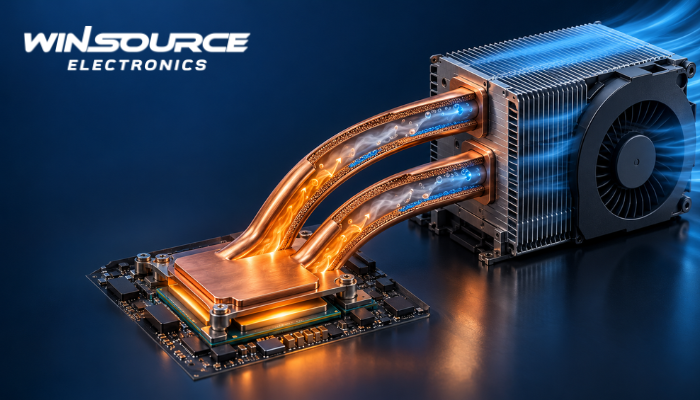
What Are the Components of a Dual Heat-Pipe System?
* Answer
A dual heat-pipe system uses two sealed heat pipes to transfer heat from one or more heat sources to a cooling area. It is commonly used in computers, power electronics, LED equipment, and other compact thermal-management systems.
Its main components include:
- Two heat pipes:Sealed metal tubes, usually made of copper or aluminum, that transport heat through evaporation and condensation.
- Working fluid:A small quantity of liquid sealed inside each pipe. Water is commonly used in electronics applications, although other fluids may be selected for different temperature ranges.
- Internal wick structure:A porous lining, mesh, grooves, or sintered metal that returns condensed liquid to the hot end through capillary action.
- Evaporator section:The portion attached to the heat source, where the working fluid absorbs heat and vaporizes.
- Adiabatic section:The intermediate region that carries vapor and returning liquid with minimal heat exchange.
- Condenser section:The cooler portion where the vapor releases heat and condenses back into liquid.
- Heat spreader or baseplate:Provides thermal contact between the heat source and the two heat pipes.
- Heat-dissipation fins:Increase the surface area available for transferring heat to the surrounding air.
- Cooling fan:Forces air through the fin stack when passive cooling is insufficient.
- Mounting and interface materials:Brackets, spring screws, thermal paste, pads, or solder joints ensure reliable mechanical and thermal contact.
The two pipes may operate in parallel to increase heat-transfer capacity or connect separate heat sources to a shared fin stack. Their arrangement depends on the available space, heat load, airflow, and required temperature uniformity.