* Question
What Are the Key Characteristics of Wi-Fi Technology?
* Answer
Wi-Fi technology is a wireless communication technology that enables electronic devices to exchange data over a local area network (LAN) using radio frequency signals. Based on IEEE 802.11 standards, Wi-Fi is widely used in consumer electronics, industrial equipment, smart home devices, and IoT applications.
The key characteristics of Wi-Fi technology include high-speed wireless connectivity, flexible deployment, wide compatibility, and support for multiple devices. These features make Wi-Fi one of the most widely adopted wireless communication solutions today.
What Are the Main Features of Wi-Fi Technology?
High-Speed Wireless Data Transmission
One of the primary advantages of Wi-Fi is its ability to provide high-speed data communication without physical cables. Depending on the Wi-Fi generation, frequency band, and network conditions, Wi-Fi can support different data rates suitable for applications such as video streaming, cloud services, and industrial data transfer.
Newer Wi-Fi standards, such as Wi-Fi 6 and Wi-Fi 7, further improve throughput, latency, and network efficiency, especially in environments with many connected devices.
Wireless Connectivity and Flexible Deployment
Wi-Fi eliminates the need for wired connections, allowing devices to connect and communicate more conveniently.
This flexibility makes Wi-Fi suitable for:
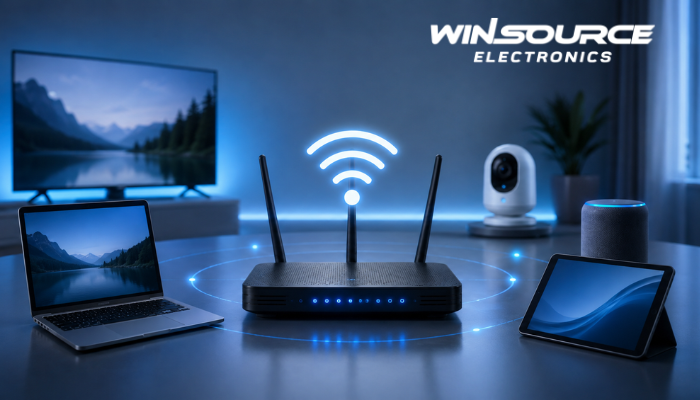
- Smartphones, tablets, and computers
- Smart home devices
- Industrial automation systems
- Wireless sensors and IoT devices
Compared with wired networks, Wi-Fi systems are easier to install and expand, particularly in locations where cable installation is difficult.
Wide Compatibility and Standardization
Wi-Fi is based on internationally recognized IEEE 802.11 standards, which ensures compatibility among devices from different manufacturers.
This standardization allows users to connect various products, including:
- Wireless routers
- Embedded modules
- Network adapters
- Smart electronic devices
The widespread adoption of Wi-Fi standards has contributed to its large ecosystem and long-term availability.
Multi-Device Support
Modern Wi-Fi networks are designed to support communication with multiple connected devices simultaneously.
Technologies such as MU-MIMO (Multi-User Multiple Input Multiple Output) and OFDMA (Orthogonal Frequency Division Multiple Access) improve network efficiency by allowing more devices to share wireless resources.
This capability is especially important for smart homes, offices, and IoT environments where many devices may operate at the same time.
Security and Data Protection
Wi-Fi technology includes various security mechanisms to protect wireless communication.
Common security standards include:
- WPA2
- WPA3
- Encryption and authentication protocols
These technologies help protect data transmission and reduce the risk of unauthorized network access.
What Are the Limitations of Wi-Fi Technology?
Although Wi-Fi provides convenient wireless connectivity, it also has some limitations:
- Signal strength decreases with distance and physical obstacles.
- Performance may be affected by interference from other wireless devices.
- Power consumption can be higher compared with some low-power wireless technologies.
- Network performance depends on factors such as bandwidth, environment, and device density.
For applications requiring extremely low power consumption or long-range communication, technologies such as Bluetooth Low Energy (BLE), Zigbee, or LoRa may be more suitable.
Why Is Wi-Fi Important for Modern Electronics?
Wi-Fi technology provides a reliable and scalable solution for connecting electronic devices and enabling data communication. Its combination of speed, compatibility, and ease of deployment makes it an essential technology in modern connected systems.
With the continued growth of IoT, smart home applications, industrial automation, and intelligent devices, Wi-Fi will remain a key wireless communication technology for future electronic designs.