* Question
What functions does the logic control module implement?
* Answer
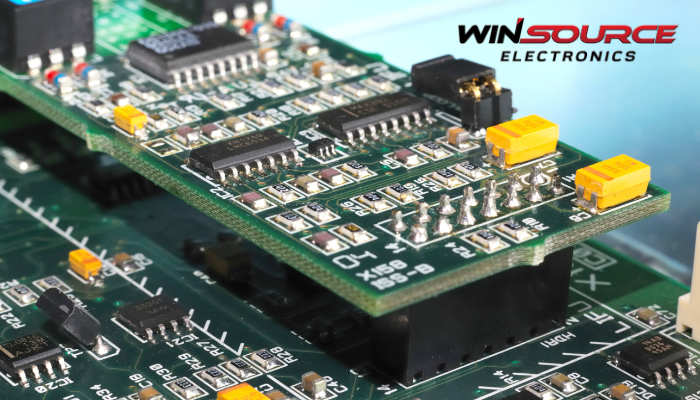
A logic control module is an integrated functional block used in electronic systems to coordinate operations, manage signal flow, and ensure that different subsystems work together according to predefined rules.
It is commonly found in power management circuits, embedded systems, industrial controllers, motor drivers, and digital communication interfaces.
At its core, a logic control module processes input signals, executes logical decisions, and produces appropriate output actions.
1. Signal Interpretation and Decision-Making
The module receives various digital or analog input signals and interprets their states.
It then applies predefined logical rules—such as AND, OR, NOT, NAND, timing conditions, or state machines—to determine the required output behavior.
Example:
In a DC-DC converter, the logic module ensures switching MOSFETs (e.g., IRLZ44N) operate in the correct sequence to prevent shoot-through.
2. Sequencing and Timing Control
Many systems require events to occur in a precise order.
The logic control module manages:
- Power-up and power-down sequencing
- Clocking or timing-based operations
- Delay control
- Interrupt handling and prioritization
For instance, a processor’s PMIC uses logic control to ensure rails such as 1.0 V core, 1.8 V IO, and 3.3 V peripheral power on in a safe and predefined sequence.
3. State Machine Execution
Logic control modules often implement finite state machines (FSMs) to manage complex workflows.
These FSMs define system behavior across states such as:
- Idle
- Active
- Error
- Protection mode
Motor drivers like the TI DRV8825 rely on FSM-based logic to manage stepping resolution, overcurrent protection, and fault recovery.
4. Protection and Safety Management
Logic control modules frequently embed protection logic to safeguard the system, including:
- Overvoltage or undervoltage protection
- Overcurrent detection
- Thermal shutdown logic
- Fault flag generation
- Safe-mode switching
For example, power controllers such as LM3478 incorporate logic that disables switching when protection thresholds are exceeded.
5. Coordination of Subsystem Operations
In larger systems, the logic module coordinates how different hardware blocks interact:
- Synchronizing communication between MCU and peripherals
- Managing enable/disable signals
- Integrating control signals from sensors
- Handling mode switching (low power, standby, active)
Wireless modules like ESP32 include an internal logic controller to manage radio operation, sleep states, and digital I/O behavior.
Engineering Insight
A logic control module is sometimes implemented using:
- Dedicated logic ICs (e.g., 74HC series)
- CPLDs or FPGAs
- MCU firmware
- Mixed-signal PMIC blocks
The choice depends on system complexity, speed requirements, and integration level.
Understanding its function is essential for debugging system behavior, optimizing power control, and ensuring stable operation in high-reliability environments.
Conclusion
The logic control module implements critical functions including signal interpretation, timing and sequencing, state machine execution, subsystem coordination, and system protection.
It acts as the decision-making hub that keeps electronic systems operating predictably and safely across various conditions.