
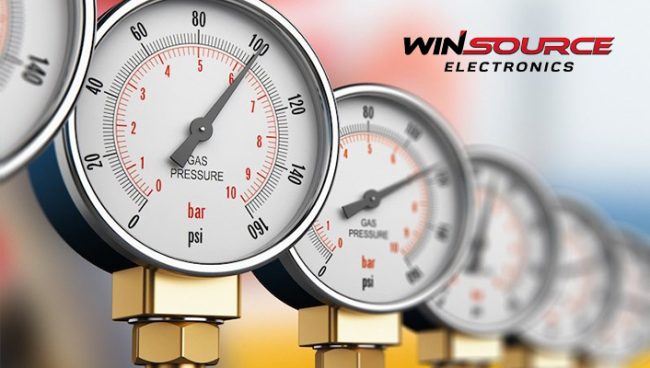
Understanding Pressure Units
Before we dive into the conversion process, let’s familiarize ourselves with some of the most frequently used pressure units and their definitions:
1. Pascal (Pa)
Pascal is the fundamental unit of pressure in the International System of Units (SI). It’s defined as 1 newton per square meter (N/m²), meaning that one pascal is the pressure applied by a force of one newton distributed over an area of one square meter.
2. Kilopascal (kPa)
The kilopascal is a widely used pressure unit, especially in scientific and engineering contexts. It’s equivalent to 1000 pascals, which means that 1 kPa equals 1000 N/m².
3. Megapascal (MPa)
The megapascal is another commonly used unit in engineering. It’s equivalent to 1,000,000 pascals or 1000 kilopascals. This unit is particularly useful when dealing with high-pressure systems.
4. Pound per Square Inch (psi)
The pound per square inch is a unit of pressure primarily used in the United States and other countries that haven’t adopted the metric system. It’s defined as the pressure exerted by one pound-force applied to an area of one square inch.
5. Torr (mmHg)
Torr is a unit of pressure that’s often used in vacuum physics and chemistry. It’s defined as the pressure needed to support a column of mercury 1 millimeter high in a standard gravity environment. One torr is approximately equal to 133.3224 pascals.
6. Atmosphere (atm)
The atmosphere is a unit of pressure that’s used to describe atmospheric pressure at sea level and a temperature of 15 degrees Celsius. One atmosphere is roughly equivalent to 101.325 kPa.
7. Bar
The bar is a metric pressure unit and is widely used in many parts of the world. It’s defined as 100 kilopascals and is close to atmospheric pressure.
8. Inch of Mercury (inHg)
‘Inch of Mercury’ is a unit of pressure used mainly in the United States and in some aviation applications. It represents the pressure exerted by a column of mercury 1 inch (25.4 mm) in height.
Now that we’ve covered the basics of these pressure units let’s move on to the exciting part—converting between them!
Pressure Unit Conversion Made Easy
Converting between different pressure units can be a daunting task, especially when you’re dealing with complex values. Luckily, there are online tools that simplify the process and ensure accuracy in your calculations.
Pressure Unit Conversion Table
To make your pressure unit conversions even more convenient, we’ve prepared a handy Pressure Unit Conversion Table that you can refer to whenever you need to switch between different units.
This table will help you understand the relationships between various pressure units and easily perform conversions in your head or with a calculator.
From/To | Pascal (Pa) | Kilopascal (kPa) | Megapascal (MPa) | Psi (pound per square inch) | Torr (mmHg) | Atmosphere (atm) | Bar | Inch of Mercury (inHg) |
Pascal (Pa) | 1 | 0.001 | 0.000001 | 0.0001450377377 | 7.5006156 | 0.00000986923267 | 0.00001 | 0.0075006156 |
Kilopascal (kPa) | 1000 | 1 | 0.001 | 145.0377377 | 7500.6156 | 9.86923267 | 10 | 7500.6156 |
Megapascal (MPa) | 1000000 | 1000 | 1 | 145037.7377 | 7500615.6 | 9869.23267 | 1000 | 7500615.6 |
Psi (psi) | 6894.76 | 6.89476 | 0.00689476 | 1 | 51.71493 | 0.06804596 | 68.9476 | 51.71493 |
Torr (mmHg) | 0.1333224 | 0.0001333224 | 0.0000001333224 | 0.01933677475 | 1 | 0.001315789474 | 0.001333224 | 1 |
Atmosphere (atm) | 101325 | 101.325 | 0.101325 | 14.696 | 760 | 1 | 1.01325 | 760 |
Bar | 100000 | 100 | 0.1 | 14.50377377 | 750.06156 | 0.986923267 | 1 | 750.06156 |
Inch of Mercury (inHg) | 133.3224 | 0.1333224 | 0.0001333224 | 19.33677475 | 1000 | 1.315789474 | 1.333224 | 1 |
Now that you have this handy table, you can easily perform pressure unit conversions.
For example: if you have a pressure value in Pascals and need to convert it to pounds per square inch (psi), you can simply multiply the Pascal value by 0.00014503773773375 to get the equivalent value in psi.
Practical Applications
Understanding pressure units and being able to convert between them is crucial in various fields, including the following:
1. Engineering
Engineers often deal with pressure measurements in various systems, such as hydraulic systems, HVAC systems, and fluid dynamics. Being able to convert between pressure units is essential for designing and maintaining these systems.
2. Medicine
In medical applications, pressure measurements are critical for tasks like monitoring blood pressure, ventilator settings, and oxygen delivery. Medical professionals must be able to work with different units of pressure to ensure patient safety.
3. Weather Forecasting
Meteorologists use pressure readings to forecast weather patterns. Understanding and converting between pressure units helps in interpreting data from weather instruments.
4. Aviation
Pilots and aviation professionals use pressure measurements for altitude and airspeed calculations. Converting between units is essential for safe flying.
5. Scuba Diving
Divers use pressure measurements to calculate their depth and air consumption. Understanding pressure units is vital for planning and executing safe dives.
Converting Between Pressure Units – To Finish Up
Pressure is a fundamental concept that finds applications in diverse fields. Being able to convert between different pressure units is a valuable skill.
Whether you’re working with pascals, kilopascals, pounds per square inch, or any other unit, you can confidently make conversions with the help of the Pressure Unit Conversion Table.
So, the next time you encounter pressure measurements in a unit you’re not familiar with, don’t fret. You have the knowledge and tools at your disposal to make accurate and convenient conversions.
Whether you’re an engineer, a medical professional, a meteorologist, or someone with a general interest in the world of pressure, mastering these conversions is a valuable skill that will serve you well in your endeavors.
© 2025 Win Source Electronics. All rights reserved. This content is protected by copyright and may not be reproduced, distributed, transmitted, cached or otherwise used, except with the prior written permission of Win Source Electronics.

COMMENTS