
1. From Distributed ECUs to Domain Control: The True Value of MCU Integrability
Automotive electronics are rapidly evolving from distributed ECUs toward domain-controlled and centralized E/E architectures. As software complexity grows, heterogeneous networks coexist, and product lifecycles extend, even minor hardware changes can trigger cascading system recalibrations.
In this context, the MCU’s role extends far beyond pure computational performance — it has become a key integration node in system engineering. Under strict power and cost constraints, it must reliably handle real-time multitasking, cross-domain communication, and diagnostic functions.
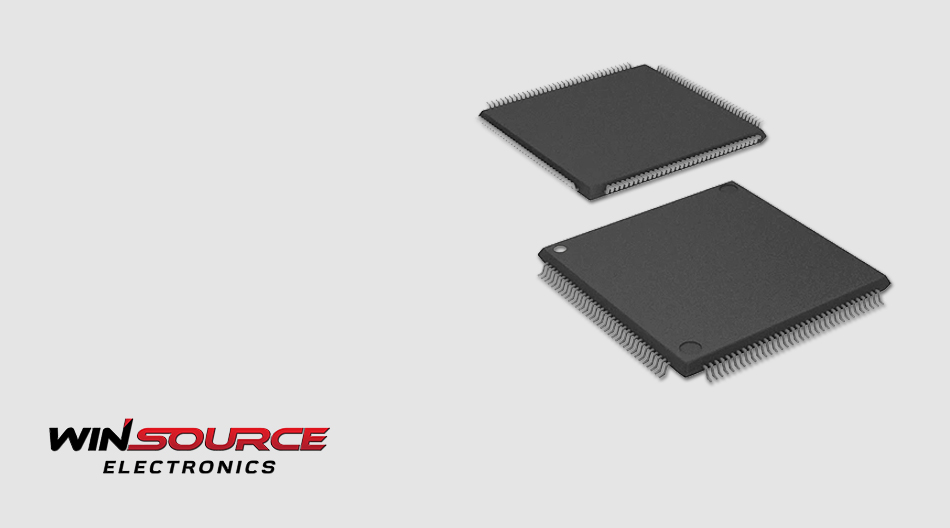
The S912XDP512J1VAGR excels in this role. Built on a mature automotive-grade platform, it combines deterministic real-time performance with a comprehensive set of peripheral interfaces, effectively shifting and consolidating system complexity to the device level. This architectural approach reduces coupling risks between upper-layer software and peripheral hardware, improving overall design stability and integration efficiency.
2. HCS12X Architecture and Backward Compatibility: Preserving Existing Assets with Minimal Migration Cost
The S912XDP512J1VAGR is based on the HCS12X core, designed to balance performance with development convenience.
Compared with traditional 8-bit MCUs, the HCS12X architecture offers three key enhancements:
Higher execution efficiency — Operating at a 40 MHz bus frequency, it easily manages multitasking and real-time response requirements.
Larger memory capacity — Featuring 512 KB of Flash and 32 KB of RAM, it supports complex automotive software such as body control, powertrain management, and communication modules.
Backward-compatible development environment — Engineers can continue using the S12 family’s software framework and toolchain without rewriting code, significantly reducing migration effort and risk.
This continuity-oriented design protects existing software investments while enabling more efficient engineering management during platform transitions and parallel program development.
3. Balanced Peripheral Design: Enabling Modular Integration through Timing, Networking, and I/O Resources
System integrability largely depends on the rational design of MCU peripherals.
The S912XDP512J1VAGR demonstrates a strong engineering-oriented peripheral architecture. Its timer, PWM, and input capture/output compare modules cover key control paths for motors, pumps, and lighting systems. These modules deliver both high-resolution duty cycle control and precise time-stamping and edge-detection capabilities for real-time applications.
In addition, the integrated CAN and LIN interfaces allow seamless connection to mainstream in-vehicle networks without additional controllers, reducing both BOM complexity and EMC exposure. Flexible GPIO multiplexing and port protection strategies provide greater design freedom, simplifying schematics and PCB layouts while shortening validation and compliance cycles.
Equally important, the timing coordination and interrupt mechanisms between peripherals can be consistently modeled, enabling engineers to break down vehicle-level functional requirements into independent, reusable modules — such as motor control, lighting management, and seat/window systems. This modular design approach facilitates rapid platform derivation and reuse across multiple vehicle configurations, improving system integration efficiency and verification consistency.
4. From Calibration to Supply Chain: Achieving End-to-End Engineering Efficiency
In practical engineering, bottlenecks often arise in closing the development loop. The S912XDP512J1VAGR benefits from a mature development ecosystem covering toolchains, online debugging, and hardware-in-the-loop (HIL) testing. From IDE integration and hardware emulation to calibration scripting and mass-programming workflows, every stage is standardized — helping shorten the overall development cycle from requirement definition to software design, hardware integration, and mass production validation. Its multi-level interrupt mapping and modular register structure enhance team collaboration and code review efficiency, improving maintainability and regression control. Coupled with its diagnostic and self-test mechanisms and nonvolatile memory endurance strategy, the MCU aligns closely with automotive functional safety practices, supporting compliance with ASPICE assessments, functional safety audits, and EOL (End-of-Line) factory testing.
At the project management level, these advantages translate into measurable outcomes: fewer integration reworks, more stable vehicle performance, and lower lifecycle maintenance costs. Furthermore, long-term automotive applications depend heavily on supply continuity and quality traceability. In a market characterized by component shortages and extended lifecycles, supply reliability and lot consistency have become critical factors affecting total cost of ownership (TCO).
As a global distributor of electronic components, WIN SOURCE provides integrated support from selection advice and incoming material inspection to inventory strategies, helping teams maintain control and efficiency at every stage from prototype verification to mass production ramp-up.
© 2025 Win Source Electronics. All rights reserved. This content is protected by copyright and may not be reproduced, distributed, transmitted, cached or otherwise used, except with the prior written permission of Win Source Electronics.

COMMENTS