
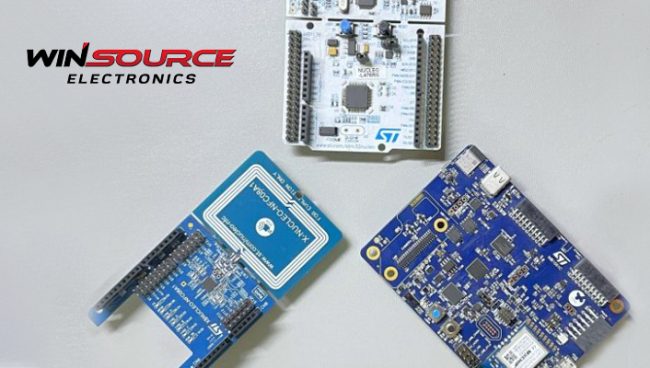
Introduction to STM32:
The STM32 microcontrollers, developed by STMicroelectronics, are based on the ARM Cortex-M processor architecture. They come in various series, each catering to different requirements in terms of performance, peripherals, and power consumption.
The STM32 family is divided into several series, such as:
STM32F0 | STM32F7 |
STM32F1 | STM32L0 |
STM32F2 | STM32L1 |
STM32F3 | STM32L4 |
STM32F4 | And more. |
Each series presents a unique set of features and capabilities.
Architecture and Features:
Here are more specifics about the architecture and features behind the STM32 Microcontroller range.
ARM Cortex-M Core:
The heart of STM32 microcontrollers is the ARM Cortex-M core. The Cortex-M series cores are known for their high performance, low power consumption, and scalability.
These cores offer a variety of features, including a nested vector interrupt controller (NVIC) for efficient interrupt handling, multiple low-power modes …and a high level of energy efficiency.
Peripherals:
One of the key strengths of STM32 microcontrollers is their extensive range of peripherals.
These include:
- GPIO (General Purpose Input/Output) pins
- USART (Universal Synchronous Asynchronous Receiver Transmitter)
- SPI (Serial Peripheral Interface)
- I2C (Inter-Integrated Circuit)
- ADC (Analog to Digital Converter)
- DAC (Digital to Analog Converter)
- Timers, and more.
The availability of diverse peripherals enables developers to create complex and feature-rich embedded applications.
Memory:
STM32 microcontrollers come with different memory configurations, including Flash memory for program storage, SRAM for data storage, and EEPROM for non-volatile data.
Generally speaking, the memory sizes vary across different series and models, providing options that suit various application requirements.
Power Efficiency:
Efficiency in power consumption is crucial for many embedded applications, especially in battery-powered devices and IoT.
The STM32 series offers multiple low-power modes, enabling developers to optimize power consumption based on the specific needs of their applications. This feature is vital for extending battery life in portable devices.
Development Ecosystem:
Now we’ll dive into the development ecosystem behind STM32 Microcontrollers.
Integrated Development Environments (IDEs):
STMicroelectronics provides the STM32CubeIDE, a comprehensive and user-friendly Integrated Development Environment for STM32 microcontrollers.
It integrates various tools, including a code editor, compiler, debugger, and configurator, streamlining the development process. Additionally, the STM32CubeMX tool helps in configuring pinouts and generating initialization code.
Software Libraries:
STMicroelectronics offers a rich set of software libraries, including the STM32Cube HAL (Hardware Abstraction Layer) and LL (Low-Level) libraries.
These libraries simplify software development by providing reusable functions for handling the microcontroller’s peripherals and other hardware features.
Support and Community:
The STM32 community is vibrant and supportive. Online forums, user groups, and resources like application notes and technical documents are available, providing assistance and sharing knowledge.
This ecosystem fosters collaboration and aids developers in overcoming challenges during their projects.
Applications
The versatility of STM32 microcontrollers makes them suitable for a wide array of applications:
IoT Devices:
STM32 microcontrollers are extensively used in IoT devices due to their low power consumption, wide range of communication interfaces, and ability to process data efficiently.
These capabilities are crucial in IoT applications such as smart home devices, wearables, and sensor nodes.
Industrial Automation:
In industrial settings, STM32 microcontrollers play a vital role in automation and control systems.
Their robustness, reliability, and support for various communication protocols make them an ideal choice for controlling machinery, monitoring processes, and handling data in industrial environments.
Consumer Electronics:
From smart appliances to gaming peripherals, STM32 microcontrollers find applications in a variety of consumer electronics.
Their capabilities in handling user interfaces, sensors, and connectivity contribute to the seamless functioning of these devices.
Automotive Systems:
The automotive industry benefits from STM32 microcontrollers in various applications, including engine control units, dashboard systems, and safety features.
The reliability and real-time processing capabilities of these microcontrollers are instrumental in ensuring the proper functioning of automotive systems.
Future Trends and Developments:
The STM32 series continues to evolve, adapting to the changing landscape of technology.
Future trends may include enhancements in security features, further reduction in power consumption, integration of AI (Artificial Intelligence) capabilities, and the expansion of IoT-related functionalities.
STM32 Microcontrollers – Conclusion and Next Steps
The STM32 series of microcontrollers has established itself as a cornerstone in the embedded systems industry.
Its robust architecture, extensive feature set, and wide range of applications make it a preferred choice for developers and engineers.
With a vibrant ecosystem, strong community support, and continuous innovation, the STM32 microcontrollers are destined to remain at the forefront of embedded system development, powering the devices that shape our modern world.
If you’re looking for the best supplier for your STM32 Microcontroller needs, then WIN SOURCE can help. Check out our range of STM32 products here, or for more information simply contact us here and we’ll be happy to help.
© 2025 Win Source Electronics. All rights reserved. This content is protected by copyright and may not be reproduced, distributed, transmitted, cached or otherwise used, except with the prior written permission of Win Source Electronics.

COMMENTS