
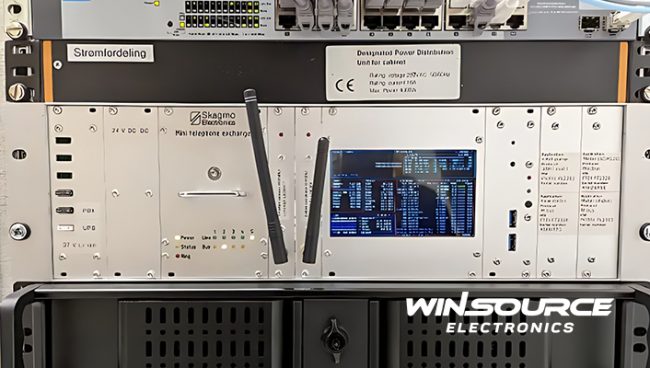
What is DTMF Hardware?
DTMF hardware consists of electronic components such as resistors, capacitors, amplifiers, and filters. These components work together to generate and decode the two-tone signals used in DTMF communication. Let’s take a closer look at each of these components and their role in the DTMF hardware.
Resistors
Resistors are one of the fundamental components used in electronic circuits. In DTMF hardware, resistors play a crucial role in generating the two-tone signals. These two tones represent high and low frequencies that are transmitted simultaneously to encode a specific number or symbol. The values of the resistors used determine the frequency of these tones.
Capacitors
Capacitors are another essential component in DTMF hardware. They are used to store electrical charge and play a significant role in generating and filtering the two-tone signals. In simple terms, capacitors act as filters that allow specific frequencies to pass through while blocking others. When it comes to DTMF, capacitors are used to filter out the high and low frequencies, ensuring that only the desired tones are transmitted.
Amplifiers
Amplifiers are electronic devices that increase the strength of a signal. They are used to amplify the two-tone signals generated by resistors and capacitors. This process is necessary to ensure that the signals have enough strength to be transmitted through telephone lines or other communication channels.
Filters
Filters are electronic circuits that allow certain frequencies to pass through while blocking others. In DTMF hardware, filters play a crucial role in decoding the two-tone signals received from the communication channel. These filters are designed to only allow specific frequencies that correspond to a particular number or symbol.
This process ensures that the correct numbers or symbols are decoded.
Decoders
Decoders are electronic devices that interpret and decode signals received from a communication channel. In DTMF, decoders play a critical role in interpreting the two-tone signals transmitted. They use algorithms to analyze the frequencies of the tones and determine which number or symbol they represent.
Techniques for DTMF Signal Recognition
There are several techniques used for DTMF signal recognition. In this section, we will discuss two of the most commonly used methods.
Goertzel Algorithm
The Goertzel algorithm is a digital signal processing technique that uses a digital filter to identify specific frequencies in a signal. It utilizes a mathematical formula to calculate the energy at a particular frequency and determine its presence in the signal. This technique is commonly used for DTMF detection as it provides fast and accurate results.
Fast Fourier Transform (FFT)
FFT is another digital signal processing technique that is widely used for DTMF signal recognition. It works by breaking down a complex signal into its individual frequency components, making it easier to analyze and identify specific frequencies. FFT is a more computationally intensive method compared to the Goertzel algorithm, but it provides higher accuracy in DTMF detection.
DTMF Hardware Components
DTMF hardware consists of various components, including tone generators, microcontrollers/DSP chips, filters, and decoders. Let’s take a closer look at each of these components and their role in the DTMF hardware.
1. Tone Generators
Tone generators are electronic circuits that generate the two-tone signals used in DTMF communication. There are two types of tone generators used in DTMF hardware: analog and digital.
Analog Tone Generators
Analog tone generators use resistors, capacitors, and other electronic components to produce the two-tone signals. These signals are then amplified and sent through the communication channel.
Digital Tone Generators
Digital tone generators use microcontrollers or DSP (Digital Signal Processor) chips to generate the two-tone signals. These chips have built-in algorithms that allow them to produce precise tones at the desired frequencies.
2. Microcontrollers/DSP Chips
Microcontrollers and DSP chips play a crucial role in DTMF hardware. They control the entire process of generating, transmitting, and decoding the two-tone signals. These chips have built-in programs that allow them to perform complex calculations and algorithms necessary for DTMF communication.
3. Filters
Filters are essential components in DTMF hardware as they ensure that only the desired frequencies are transmitted and decoded. As mentioned earlier, filters can be both passive (using capacitors and resistors) or active (using operational amplifiers). The type of filter used depends on the specific application.
4. Decoders
Decoders in DTMF hardware are responsible for interpreting and decoding the two-tone signals received from the communication channel. These decoders use algorithms to analyze the frequencies present in the signal and determine which number or symbol they represent.
How Does DTMF Hardware Work?
Now that we have a basic understanding of the components used in DTMF hardware let’s take a step-by-step look at how this technology works.
- Input: The first step in the process is inputting the number or symbol you want to transmit. This can be done through a keypad, touch-tone phone, or any other device equipped with DTMF technology.
- Generation of Tones: Once the input is received, DTMF hardware generates two simultaneous tones that represent the number or symbol entered. These tones are generated using a combination of resistors and capacitors with specific values.
- Amplification: The two-tone signals are then amplified through amplifiers to ensure they have enough strength to be transmitted through the communication channel.
- Transmission: The amplified signals are transmitted through telephone lines or other communication channels to the receiving end.
- Decoding: Once these signals reach the destination, they are decoded using filters. These filters only allow specific frequencies that correspond to the number or symbol entered, and the output is displayed accordingly.
The process of DTMF hardware working in reverse is the same. When receiving signals, they are filtered and decoded to display the corresponding number or symbol.
So, you see, DTMF hardware plays a crucial role in modern communication systems, particularly in touch-tone phones and other devices. The components used in DTMF hardware work together to ensure accurate and reliable transmission of signals.
If you are interested in purchasing DTMF hardware components, turn to WIN SOURCE for a wide selection of electronic components options.
© 2025 Win Source Electronics. All rights reserved. This content is protected by copyright and may not be reproduced, distributed, transmitted, cached or otherwise used, except with the prior written permission of Win Source Electronics.

COMMENTS