
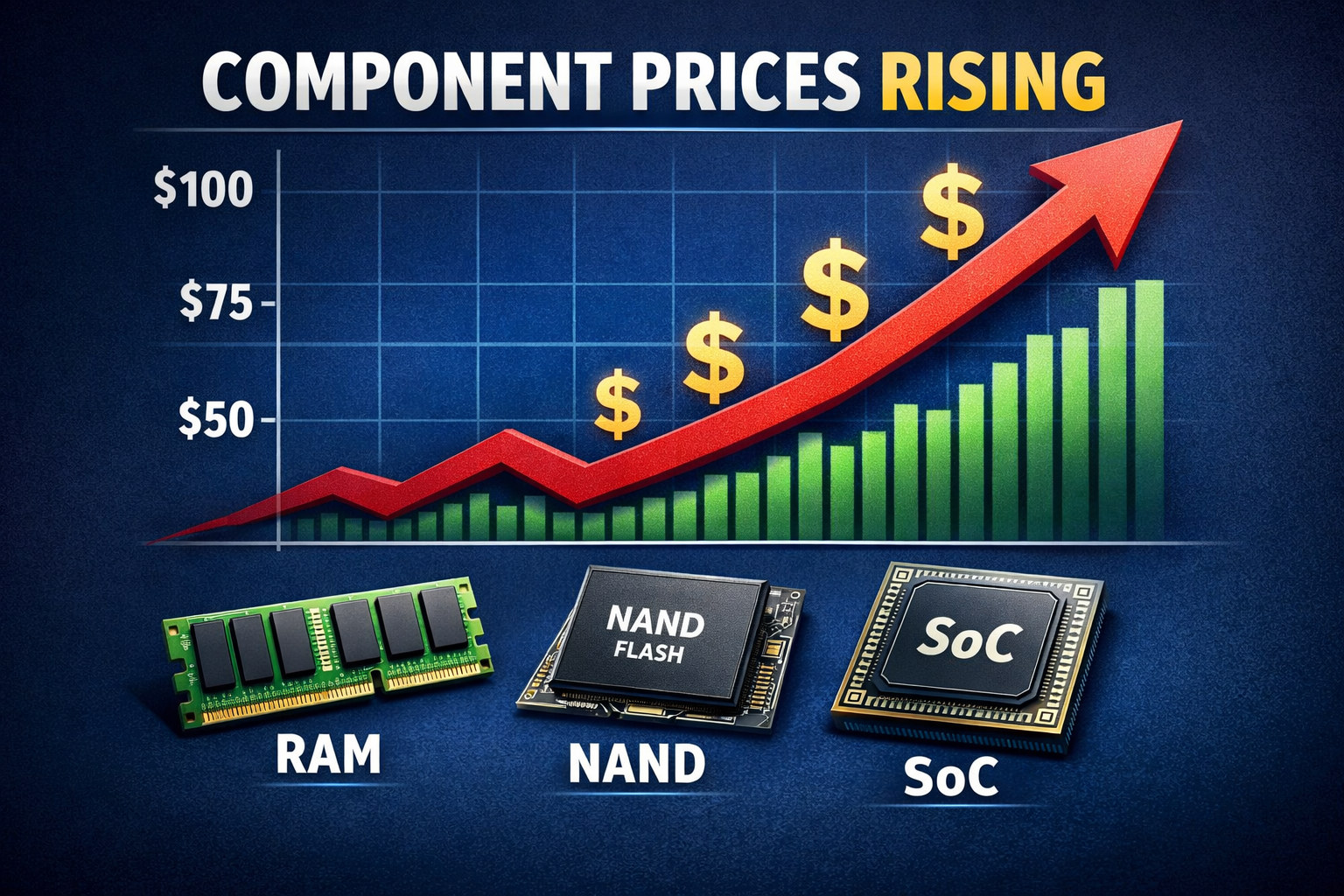
*Image from the internet; all rights belong to the original author, for reference only.
2026 Semiconductor Price Adjustment Analysis: Industry Drivers, Price Impact, and Coping Strategies
As the global semiconductor market undergoes supply and demand shifts, several semiconductor manufacturers have announced price hikes for 2026. These adjustments affect a range of products, from power management ICs to automotive electronics. This article analyzes the reasons behind this price surge, its impact, and how customers can respond.
Q1: Which major suppliers have recently announced price adjustments?
At the beginning of 2026, multiple global semiconductor suppliers announced price hikes, including major companies like onsemi, Infineon, and NXP Semiconductors. According to their price adjustment notices, these increases are primarily focused on power ICs, power management chips, and related components, reflecting the combined impact of rising industry costs and changing demand patterns.
Additionally, Murata Manufacturing confirmed that its MLCC (Multilayer Ceramic Capacitor) products will see a price increase starting on April 1, 2026.
Q2: What are the main drivers behind this price increase?
The main drivers behind this round of price hikes include:
- Rising raw material and manufacturing costs: Global increases in energy prices, transportation costs, and raw materials (such as rare metals) have led to rising semiconductor production costs, particularly for upstream wafer foundries.
- Demand structure changes: The rapid growth of AI data centers, automotive electronics, 5G base stations, and industrial automation applications has driven demand for semiconductor products, leading to supply shortages, especially for high-performance power management ICs and automotive chips.
- Capacity expansion pressure: To meet growing market demand, semiconductor manufacturers are making significant capital expenditures (CAPEX) in wafer fabs, packaging, and advanced process technologies, which need to be covered by price adjustments.
- Logistics cost pressures: Rising global logistics costs, particularly for long-distance transportation and international warehousing in the semiconductor supply chain, have also contributed to price increases.
Q3: What is the timeline for these price adjustments? Do all suppliers choose April 1 as the effective date?
The majority of suppliers have set April 1, 2026 as the effective date for their price adjustments. The details are as follows:
- onsemi will implement price adjustments for all new orders and existing orders with shipping dates after April 1, 2026.
- Infineon has also confirmed that its price changes will take effect from April 1, 2026, primarily affecting power ICs and power management products.
- NXP similarly announced that its price changes will take effect from April 1, 2026, with increases mainly in automotive electronics and industrial chips.
- Murata will implement price increases on its MLCC products starting April 1, 2026, particularly affecting high-end and high-frequency products, which are expected to see the most significant increases.
Overall, the majority of major suppliers have chosen April 1 as the starting point for price adjustments, but specific product categories and the degree of price increases will vary. Customers should carefully review official announcements from suppliers to make informed adjustments based on product type and demand.
Q4: Which product categories are affected? Will all products see price increases?
Price increases are concentrated in product categories most impacted by cost pressures and demand growth, including:
- onsemi: Price adjustments are primarily focused on power management chips, semiconductor devices, and related components.
- Infineon: Price increases are concentrated in power ICs, power switches, and products related to automotive and power management.
- NXP: The price hikes mainly affect automotive electronics and industrial chips.
- Murata: Price increases are focused on high-frequency MLCC components, particularly those used in high-end applications.
Price Increase Range:
- For Infineonand NXP, the reported price increase is generally in the 5% to 10% range, although specific increases will vary based on product type and market demand fluctuations.
- Murata‘s MLCC products are expected to see higher increases, with some key products experiencing price hikes of up to 15%, particularly in high-frequency and high-capacitance categories.
Q5: Why does the demand for AI, automotive, and other applications drive chip price increases?
As demand for AI data centers, smart vehicles, 5G communication, and industrial automation continues to surge, the need for high-performance and high-reliability chips grows substantially. For example, AI data centers require power ICs, power management chips, and compute accelerators, which drives up prices for these chips. Furthermore, the demand for chip reliability, performance, and long-term supply in these sectors further encourages manufacturers to invest in production capacity and technology.
Q6: Will this price increase trend continue?
Industry analysts suggest that this round of price increases is not a short-term phenomenon. Due to the long-term demand for AI, automotive electronics, 5G, and electric vehicles, semiconductor manufacturers will continue to face significant capital expenditure pressures. This suggests that price increases may become a regular trend, especially in high-end semiconductors and power management areas, as these sectors are expected to experience persistent high demand.
Q7: How will this price increase affect procurement and supply chain management?
This price adjustment will have the following impacts on procurement and supply chains:
- Increased procurement costs: The rising costs, especially for long-term projects and high-spec products, will affect product pricing and profit margins.
- Inventory pressure: As chip prices increase, customers may face inventory backlog issues, particularly those relying heavily on a single supplier.
- Supply chain risks: Customers will need to assess alternative suppliers or multi-source procurement strategies to mitigate the risks associated with price increases from a single supplier.
Q8: How can customers respond to these price adjustments?
Customers can take the following measures to cope with the price increases:
- Confirm orders and lead times in advance: By securing orders early, customers can lock in prices and avoid future price hikes.
- Maintain communication with suppliers: Stay in close contact with suppliers to understand which products will be affected by the price hikes, allowing for better procurement planning.
- Optimize inventory management: Reduce inefficient inventory accumulation by optimizing inventory structure to remain flexible amidst market fluctuations.
- Adopt a multi-source procurement strategy: Avoid over-relying on a single supplier by exploring alternative suppliers or substitute products, reducing the associated risks.
Procurement and supply chain strategies:
- Strategic procurement: Consider purchasing core products before the price announcement, especially those expected to see higher price increases, to lock in lower prices.
- Negotiation opportunities: For long-term partners, try negotiating price protection agreements to secure discounts or locked-in prices even with future price adjustments.
Q9: Will this price increase affect customers in all regions?
Yes, this price increase will affect global customers. As semiconductor suppliers have a global customer base and unified pricing mechanisms, the price adjustments will have an impact on customers across Europe, North America, Asia, and other regions. While supply chain response times may differ between regions, the overall trend of price increases will be consistent across major markets.
Q10: Why is this price increase noteworthy?
This price increase is not merely a cyclical market fluctuation but a reflection of structural changes in the semiconductor industry’s supply and demand dynamics. With the continued growth of AI, automotive electronics, and 5G, this price adjustment may signal that the semiconductor market will experience prolonged supply-demand tensions, influencing procurement and supply chain strategies in the coming years.
Summary
In response to rising prices in the semiconductor industry, procurement professionals, engineers, and supply chain managers should adopt proactive strategies to mitigate the impact of cost increases. By optimizing inventory management, leveraging multi-supplier sourcing, and securing long-term agreements with suppliers, companies can better navigate price fluctuations and maintain stable supply chains.
For suppliers, maintaining transparent communication with customers during price adjustments is essential to ensure mutually beneficial agreements and to stay competitive in the market.
© 2026 Win Source Electronics. All rights reserved. This content is protected by copyright and may not be reproduced, distributed, transmitted, cached or otherwise used, except with the prior written permission of Win Source Electronics.

COMMENTS