In automotive electronic systems, power design is no longer only about providing the correct voltage rail. Many modules need to remain partially active when the vehicle is powered off or in standby mode, such as waiting for wake-up signals, monitoring system status, or supporting backup power for memory and microcontrollers. Under these operating conditions, every microampere of standby current can affect overall vehicle battery management. A regulator that performs well under full-load conditions may not be suitable for an always-on power rail if its own quiescent current is too high.
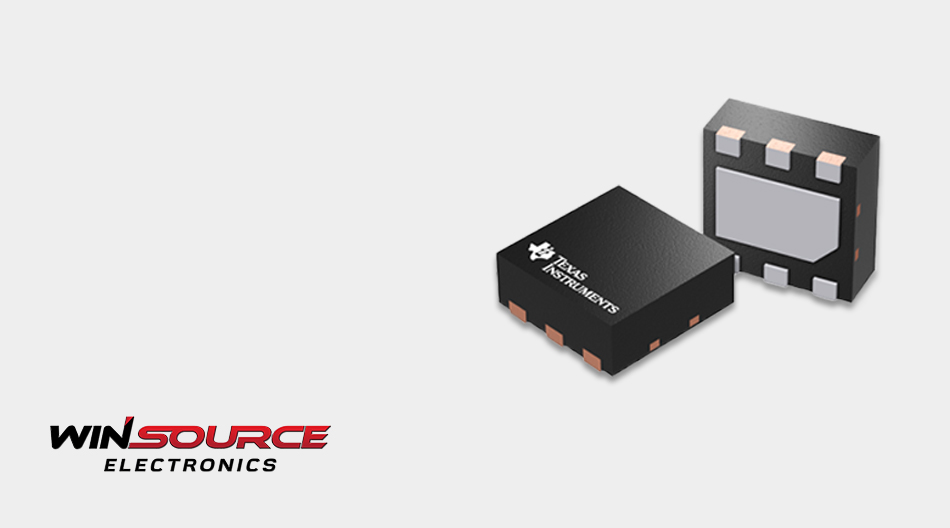
TPS70950QDRVRQ1 is a fixed 5V low-dropout linear regulator from Texas Instruments’ TPS709-Q1 family. The device is designed for power-sensitive automotive applications and supports an input voltage range of 2.7V to 30V. It features 1µA low quiescent current, reverse current protection, thermal shutdown, and overcurrent protection, and is qualified to AEC-Q100 automotive standards. Supplied in a 6-pin WSON package, it operates across the automotive temperature range of –40°C to 125°C.
1. Why Low-Quiescent-Current LDOs Matter in Automotive Systems
Quiescent current, commonly written as IQ, refers to the current consumed by the regulator itself during operation. In high-current power rails, this parameter may not dominate the overall power budget. In low-power automotive subsystems, however, IQ is often a key selection criterion. Body control modules, infotainment standby circuits, telematics units, keyless entry systems, navigation modules, sensor interfaces, and microcontroller backup rails may all need to remain powered for extended periods when the vehicle is not running, making standby power consumption especially important.
For these systems, a low-IQ LDO helps reduce battery drain during standby or sleep operation. TPS70950QDRVRQ1 combines a fixed 5V output with extremely low operating current, making it suitable for low-power rails where the load current is modest but a stable auxiliary supply is required. It is not intended to replace switching regulators in high-power conversion. Instead, it is better suited to providing a simple, compact, and relatively low-noise supply for local control circuits, mixed-signal circuitry, or backup power paths.
The device’s wide input voltage range also fits well with automotive environments. A vehicle power system is not a perfectly stable DC source. Input conditions may be affected by battery status, startup behavior, load changes, and upstream protection circuitry. Although the actual design must still comply with the device’s absolute maximum ratings and recommended operating conditions, the 2.7V to 30V input range gives engineers greater flexibility when building low-power 5V rails from automotive supply paths.
2. Key Design Considerations for TPS70950QDRVRQ1
When using TPS70950QDRVRQ1, the first step is to confirm whether the load profile is a proper match. The device belongs to a 150mA LDO family and is better suited for low-power control, standby, and auxiliary circuits than for high-current power rails. Engineers should evaluate both steady-state load and short-duration peak current, especially during startup, wake-up, communication bursts, or sensor activation, rather than relying only on typical operating current.
Thermal performance and output stability should also be assessed at the system level. The power dissipation of an LDO is mainly determined by the input-to-output voltage difference multiplied by the load current. In automotive designs, high ambient temperatures and limited PCB space can reduce available thermal margin. While the WSON-6 package supports compact layouts, PCB copper area, heat dissipation paths, and overall layout quality still affect real-world performance. At the same time, the TPS709-Q1 family provides 2% output accuracy across temperature, helping maintain a stable 5V power rail. In practical design, engineers should still consider the supply tolerance requirements of downstream microcontrollers, sensors, transceivers, analog front ends, and reference circuits, while accounting for temperature drift, load variation, and transient response.
Protection features are an important advantage of this device in automotive and multi-rail power systems. TPS70950QDRVRQ1 integrates thermal shutdown, overcurrent protection, and reverse current protection, helping improve power-rail robustness under abnormal operating conditions. Reverse current protection is particularly useful in designs involving output-side energy storage, backup supplies, or power-sequencing changes, where current may otherwise flow back into the regulator. These protection features do not replace a complete system-level protection strategy, but they can serve as part of a more reliable power architecture.
In automotive power design, choosing the right LDO requires looking beyond nominal voltage and output current. Standby power, thermal margin, output accuracy, protection behavior, package constraints, and supply-chain availability can all influence the final decision. TPS70950QDRVRQ1 is well suited for low-power automotive rails that require low quiescent current, compact size, and stable 5V output. For engineering teams comparing power management devices or planning procurement of automotive-grade components, WIN SOURCE can support component availability checks, alternative part evaluation, and application-oriented sourcing decisions.
© 2026 Win Source Electronics. All rights reserved. This content is protected by copyright and may not be reproduced, distributed, transmitted, cached or otherwise used, except with the prior written permission of Win Source Electronics.