*Image from the internet; all rights belong to the original author, for reference only.
Apple-Intel Chip Deal: Implications for Supply Chain Resilience
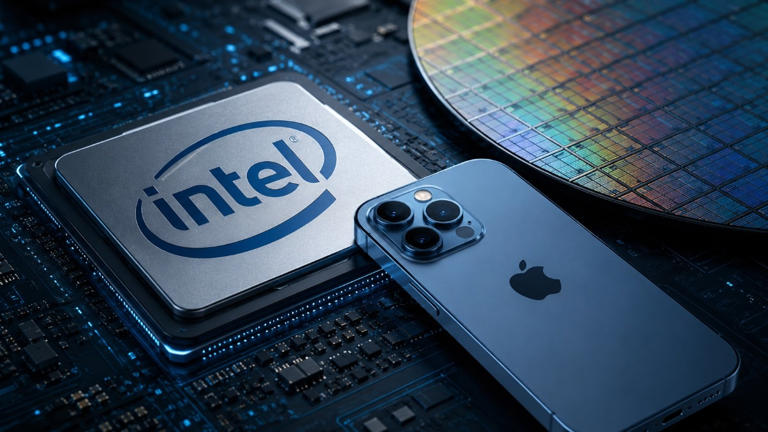
Recently, Apple and Intel reached a preliminary agreement in which Intel will manufacture certain Apple-designed chips, while Apple retains full control over chip design. This cooperation model is similar to Apple’s partnership with TSMC and is considered a key step in Apple’s strategy to diversify its supply chain. Below, we analyze this development from a supply chain perspective through a series of questions and answers.
Q1: Why did Apple choose Intel as a chip manufacturing partner?
Apple’s choice of Intel primarily reflects its goal of diversifying its supply chain and increasing strategic flexibility. Historically, Apple’s in-house chips have relied heavily on a single foundry, making the supply chain vulnerable to production fluctuations. Partnering with Intel provides additional manufacturing capacity, helping to ensure supply stability. Intel has also been steadily enhancing its foundry capabilities, offering reliable production for high-performance chips.
In the initial phase, the partnership may focus on low-power M2 chips and certain A16/A17 chips used in iPhones and iPads, which directly affect Apple’s supply chain stability and product delivery.
Q2: What is the scope and technology roadmap of this collaboration?
The preliminary agreement appears to target low-power or entry-level Mac and iPad chips, easing the production load on TSMC. High-performance M-series Pro chips and key A-series chips will continue to be manufactured by TSMC. Intel is expected to use its advanced process nodes, such as Intel 20A or 18A, to meet Apple’s stringent performance and power efficiency requirements.
Q3: How does this agreement impact supply chain resilience?
By adding Intel as a manufacturing partner, Apple significantly enhances the resilience of its supply chain. This move helps mitigate potential risks associated with wafer capacity constraints and allows for better coordination of critical raw materials and packaging processes. The collaboration may also indirectly influence certain component suppliers, such as power management ICs (PMICs) and high-performance memory chips like LPDDR5, which are essential for stable device production.
Q4: What potential impact does this have on other foundries and suppliers?
For TSMC, a partial shift of orders to Intel may require capacity adjustments, although high-end chip production remains secure. For Intel, successfully meeting Apple’s manufacturing requirements strengthens its competitiveness in the foundry market and may attract additional mid- to low-end chip orders. Other smaller foundries may face order adjustments, but the overall global supply chain is expected to benefit from improved flexibility.
Q5: What does this mean for electronics manufacturers and end customers?
For OEMs and ODMs, Apple’s diversified supply chain improves order stability and offers greater flexibility. For end customers, short-term product pricing and performance may remain unchanged, but long-term risks of stock shortages are reduced, enhancing product delivery reliability. Manufacturers should closely monitor key component availability, such as PMICs and LPDDR5 memory, to maintain stable device production and supply chain operations.
Q6: What are the potential future trends?
Apple and Intel’s cooperation may expand to additional chip models, including more A-series iPhone chips. The Apple supply chain could continue evolving toward decentralization and diversification, strengthening overall resilience. If Intel establishes a long-term manufacturing partnership, it may influence the global wafer foundry landscape and encourage optimization across upstream and downstream supply chain partners.
Conclusion
The Apple-Intel agreement represents a clear strategy to diversify Apple’s supply chain and reduce reliance on a single foundry. It has potential implications for the global semiconductor foundry market, the supply of key chips, and related electronic components. This collaboration strengthens Apple’s ability to mitigate supply risks, secure production capacity, and enhance strategic flexibility.
© 2026 Win Source Electronics. All rights reserved. This content is protected by copyright and may not be reproduced, distributed, transmitted, cached or otherwise used, except with the prior written permission of Win Source Electronics.