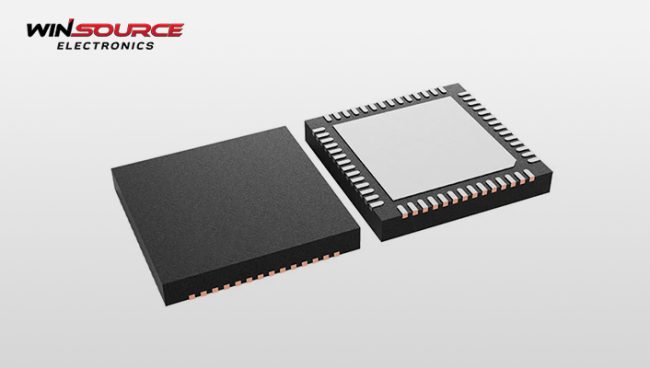
Recent activity around TI TPS65987 suggests that USB-C PD buyers may need to review lifecycle status, lead-time visibility, replacement complexity, and BOM exposure earlier. The signal does not need to be framed as a confirmed shortage, but it does highlight why proactive BOM review and supplier communication matter for USB-C PD designs.
Key Takeaways
- Visible inventory does not remove the need to review lifecycle status, lead time, and replenishment visibility.
- USB-C PD controllers are harder to replace because they involve firmware, power-path design, PD profiles, and system validation.
- Procurement teams should coordinate with engineering earlier to review BOM exposure, approved alternatives, and project timing.
Why Is TPS65987 Worth Watching Now?
The TPS65987 is a USB-C and USB Power Delivery controller from Texas Instruments, widely used in applications ranging from laptop chargers and docking stations to industrial equipment, power adapters, and other USB-C power systems. Its role in these designs goes well beyond simple component sourcing. The TPS65987 is tightly integrated into system-level architecture — it manages power negotiation, handles PD profiles, and interfaces with firmware and protection circuitry. That deep integration is precisely what makes it worth monitoring.
Even if public distribution channels still show available stock, the more important question for buyers is whether the part can support stable production over the next several purchasing cycles. A component that is orderable today but faces uncertain replenishment timelines or lifecycle transitions creates a different kind of risk — one that doesn’t show up in a simple stock check but can disrupt production planning weeks or months later.
What Supply Risks Should Buyers Look Beyond Current Stock?
Visible inventory can support short-term purchasing needs, but it does not fully reflect future supply confidence. Buyers should also be reviewing factory lead times, replenishment expectations, supplier visibility into upcoming allocations, and — critically — the part’s lifecycle status.
If a component is marked as “not recommended for new designs” (NRND), it may still be available to support existing customers and active production runs. However, it becomes a less ideal foundation for new projects, and its long-term availability becomes harder to guarantee. Lifecycle transitions like these can quietly erode BOM stability, limit sourcing flexibility, and eventually force redesign efforts that carry their own costs and timelines.
The safest characterization of TPS65987 right now is “worth monitoring” rather than “in shortage.” For procurement teams, TPS65987 is a reminder that supply risk is not always defined by zero stock. It can also come from longer replenishment cycles, lifecycle changes, and limited replacement flexibility. The distinction matters because it changes the appropriate response from urgent spot buying to structured, cross-functional planning.
How Difficult Is It to Evaluate Alternatives?
Replacing a USB-C PD controller is not a matter of matching a few basic specifications and swapping in a new part number. The evaluation process touches multiple layers of the design:
- Package and pinout compatibility— physical board layout may need modification.
- Firmware— PD controllers often run device-specific firmware that cannot simply be ported.
- PD configuration and power roles— source, sink, and dual-role power behavior must be validated against the application’s requirements.
- Protection features— overvoltage, overcurrent, and thermal protection implementations vary between controllers.
- Certification requirements— USB-IF compliance and safety certifications may need to be re-evaluated with a new controller.
Parts like the Infineon CYPD3177 may be evaluated in selected USB-C power sink or barrel connector replacement applications, but they should not be described as universal or fully compatible replacements for TPS65987. The CYPD3177 addresses a narrower use case, and its suitability depends entirely on the specific design context and validation results.
For USB-C PD designs, the real challenge is not simply finding another controller, but confirming whether the alternative fits the system architecture, power requirements, firmware strategy, and validation process. Any alternative must be confirmed by engineering before procurement commits to volume purchasing.
What Should Procurement Teams Do Next?
Rather than waiting for supply pressure to become urgent, procurement teams should take a series of concrete steps now:
- Review demand coveragefor the next 8–14 weeks or longer, depending on production schedules and order visibility.
- Confirm available stock and lead timewith approved suppliers, not just public aggregator listings.
- Assess single-source exposure— determine whether the current BOM depends on TPS65987 as the sole option or a hard-to-replace component.
- Engage engineering teamsto find out whether approved alternatives already exist or whether evaluation needs to begin.
- Initiate alternative evaluation earlyif no backup option is currently qualified, before supply constraints force rushed decisions.
- Consider architectural simplificationfor projects still in the design phase — a simpler or lower-power USB-C architecture may meet actual application needs without the sourcing complexity of a full-featured PD controller.
- Build a risk listfor key ICs that share similar concerns: lifecycle uncertainty, long lead times, or high replacement complexity.
The best procurement response is not panic buying, but earlier coordination between sourcing, engineering, and project teams. Structured communication across these functions is what turns a supply signal into actionable planning rather than reactive cost escalation.
TPS65987 does not need to be framed as an immediate shortage story. The more accurate and more useful message is that USB-C PD controllers require proactive supply review because lifecycle status, lead-time visibility, and replacement complexity can all affect production planning in ways that simple stock availability does not reveal. Buyers who act early will have more flexibility in both inventory planning and alternative validation — and that flexibility is the real competitive advantage in a constrained component environment.
TPS65987 does not need to be framed as an immediate shortage story. A more useful message is that USB-C PD controllers require proactive supply review because lifecycle status, lead-time visibility, and replacement complexity can all affect production planning. Buyers who act early will have more flexibility in inventory planning, supplier communication, and alternative validation.
Frequently Asked Questions
Does visible stock mean TPS65987 has no supply risk?
No. Visible stock may support short-term purchasing, but buyers should still review lead time, replenishment visibility, lifecycle status, and forecasted demand. Available inventory today does not guarantee stable supply over multiple production cycles.
Why are USB-C PD controllers harder to replace?
They often involve firmware, power negotiation protocols, package constraints, protection design, and system-level validation. This makes replacement significantly more complex than matching basic electrical parameters like voltage and current ratings.
Can CYPD3177 replace TPS65987?
It should not be described as a universal replacement. CYPD3177 may be evaluated for certain USB-C power sink or barrel connector replacement applications, but suitability depends on the actual design requirements and engineering validation results.
What should buyers do if TPS65987 is already on their BOM?
They should check current inventory levels, confirm supplier lead times, review forecasted demand against coverage, ask engineering about approved alternatives, and begin replacement evaluation early if no backup option currently exists.
Supply observations referenced in this article should be treated as directional only. Buyers should verify real-time stock, factory lead time, lifecycle status, and technical compatibility with approved suppliers and engineering teams before making procurement or design decisions.
© 2026 Win Source Electronics. All rights reserved. This content is protected by copyright and may not be reproduced, distributed, transmitted, cached or otherwise used, except with the prior written permission of Win Source Electronics.