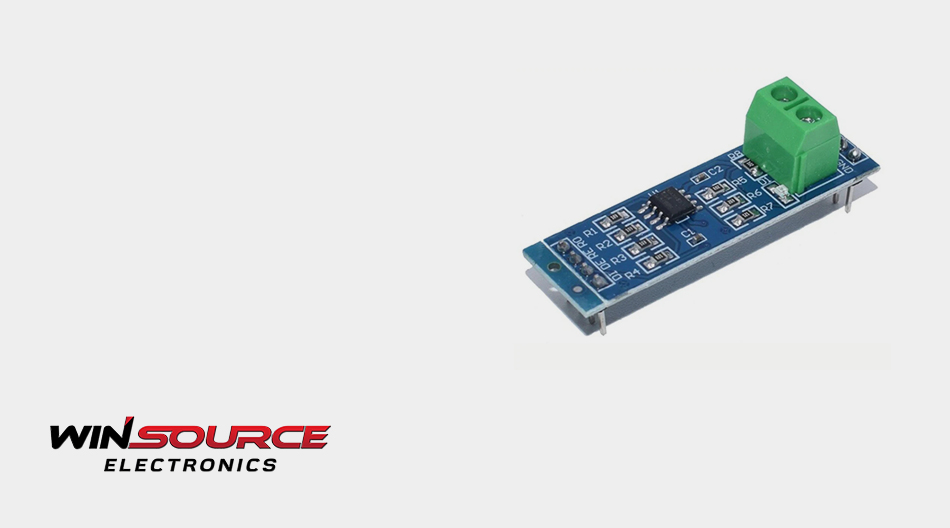
In industrial communication systems, RS-485 is widely used to connect field devices, controllers, sensor nodes, and remote I/O modules. Although differential signaling provides good noise immunity and supports long-distance, multi-node communication, ground potential differences, surges, electrical fast transients, and common-mode noise can still affect bus stability. As an isolated RS-485 / RS-422 transceiver, ISO1176DWR helps establish an electrical isolation boundary between the logic-side circuitry and the field bus. Therefore, the decision to use this type of isolated solution usually depends on an engineering trade-off among system reliability, field safety, and long-term maintenance cost.
What Applications Are Suitable for Non-Isolated RS-485?
Non-isolated RS-485 transceivers are suitable for short-distance communication in relatively stable electrical environments. Typical applications include board-to-board connections inside equipment, module communication within the same control cabinet, and local node interconnection in small systems. In these scenarios, the ground potential difference between nodes is usually limited. Cable length is also relatively short, and the coupling path for external transient interference is more controllable. A non-isolated solution can help reduce BOM cost, save PCB space, and simplify auxiliary power and isolation layout design.
From a system boundary perspective, non-isolated RS-485 is better suited for communication links within the same power domain or under a similar ground reference. When the bus needs to cross different devices, different cabinets, or connect to remote field nodes, differential signaling alone cannot cover all risks. Common-mode voltage, surges, electrical fast transients, and noise coupled through long cables can all affect interface stability. In many cases, communication issues are not caused by insufficient signal amplitude. They are caused by inconsistent electrical references at both ends of the interface, or by external interference energy entering the bus-side circuitry.
For this reason, non-isolated RS-485 is more suitable for low-noise, short-distance systems with a shared ground reference and manageable maintenance risk. If the communication interface needs to connect external field devices, or if the bus wiring passes near motors, relays, variable frequency drives, or other high-interference sources, engineers should include isolation design in the system-level selection process. The decision should not be based only on transceiver cost or data rate.
When Does an Industrial RS-485 Design Need Isolation?
When RS-485 nodes are distributed across different devices, cabinets, or power systems, isolation design should usually be included in the system evaluation. Such scenarios are common in factory automation lines, PLC-to-remote I/O communication, industrial drive interfaces, building automation control, energy management systems, and long-distance field buses. In these systems, communication cables are not only used for data transmission. They may also become paths for common-mode noise, ground potential differences, and transient interference to enter the control circuitry.
From an engineering selection perspective, isolated RS-485 transceivers are more suitable in the following situations:
- Communication nodes are distributed across different devices or cabinets.
- The bus cable is relatively long, and field grounding conditions are not consistent across the installation.
- Communication cables are routed near motors, relays, variable frequency drives, or other interference sources.
- Interface faults may lead to equipment downtime, unintended operation, or higher maintenance costs.
- The system requires a clearer separation between the logic-side circuitry and the field bus-side circuitry.
The main function of an isolated RS-485 transceiver is to establish an electrical isolation boundary between the bus side and the logic side. ISO1176DWR, for example, is an isolated RS-485 / RS-422 transceiver designed for industrial communication applications such as PROFIBUS. Its isolation structure helps reduce the impact of ground loops, common-mode voltage differences, and external transient interference on the logic-side circuitry. For long-distance transmission or high-noise industrial environments, this type of design can improve the communication interface’s adaptability to complex field conditions.
During component selection, engineers should not only determine whether the interface can communicate. They also need to evaluate the system impact of communication faults. If occasional bus errors only trigger a retry mechanism, a non-isolated solution may already be sufficient. However, if communication interruption may cause equipment downtime, unintended operation, increased maintenance cost, or impact a critical control link, isolated RS-485 transceivers such as ISO1176DWR are more worthy of consideration in the design comparison.
Node count and bus state are also important factors. Multi-node RS-485 networks place higher requirements on bus loading, termination matching, biasing design, and fail-safe protection. ISO1176DWR supports half-duplex communication and provides fail-safe protection for idle, open, and shorted bus conditions. In complex industrial buses, these features help reduce the risk of misinterpretation under abnormal bus states. However, they still need to be combined with proper termination resistors, biasing networks, surge protection, and PCB layout design to form a complete interface reliability solution.
Selection Logic for Isolated RS-485 Based on ISO1176DWR
Choosing ISO1176DWR does not mean that every RS-485 design must use an isolated solution. A more reasonable approach is to first define the system boundary. Engineers should determine whether the communication interface crosses different power domains, whether it connects to external field cabling, whether it operates in a high-EMI environment, and whether communication faults may affect equipment operation or maintenance cost. If these factors exist at the same time, an isolated RS-485 transceiver should not be treated merely as additional protection. It should be considered part of the system architecture.
In practical design, ISO1176DWR still needs to work together with a complete interface protection scheme. Engineers should first evaluate the key parameters of the device itself, including data rate, isolation voltage, CMTI, ESD rating, operating temperature, and package size. They also need to confirm whether the device is compatible with the existing logic levels and bus design. Beyond device parameters, peripheral design is equally important. Power isolation, TVS protection, termination resistors, biasing networks, and PCB layout will all affect the final communication stability.
For engineering and procurement teams, selecting an isolated RS-485 transceiver should not be limited to a comparison of individual parameters or price. The application environment, alternative options, and supply stability also need to be considered. As an electronic components distributor, WIN SOURCE can support selection and supply evaluation around industrial communication devices such as ISO1176DWR, including material availability, alternative part assessment, and project purchasing requirements.
© 2026 Win Source Electronics. All rights reserved. This content is protected by copyright and may not be reproduced, distributed, transmitted, cached or otherwise used, except with the prior written permission of Win Source Electronics.