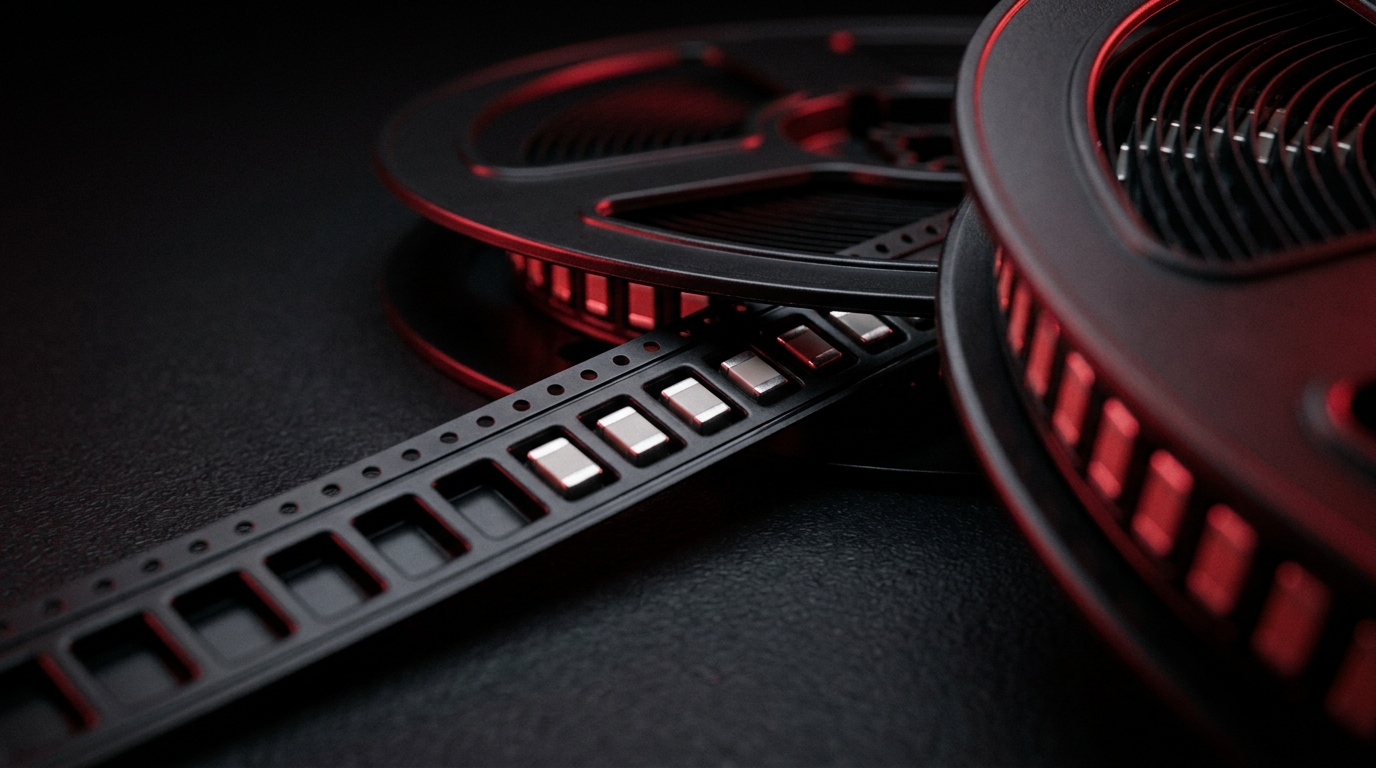
Ceramic capacitors are passive components so common that procurement teams often treat them as commodities. They are not. A specific combination of capacitance value, voltage rating, dielectric class, package size, and temperature grade can transform a straightforward line item on a BOM into a multi-week procurement challenge — or an outright dead end. That is especially true while manufacturing capacity for advanced multilayer ceramic capacitors (MLCCs) is being absorbed by AI server infrastructure, high-voltage electric vehicle platforms, and 5G equipment.
This article is written as a practical reference for engineers and procurement professionals who need to understand why certain ceramic capacitor values and voltages are hard to find, how to read the supply situation accurately, and what sourcing approaches are most effective — whether you’re dealing with a new design in allocation, a legacy product on constrained supply, or a discontinued part with no current equivalent.
Why Certain Ceramic Capacitors>Why Certain Ceramic Capacitors Go Hard to Find
lvetica,sans-serif;font-size:12pt">The MLCC market is large and growing — Research and Markets put the ceramic capacitor market at USD 23.44 billion in 2025, and other firms’ estimates for the same year run several billion higher, which tells you how approximate any single figure is. Either way, aggregate production is increasing. The problem is not aggregate supply; it is the structure of that supply. Manufacturers concentrate capacity on high-volume configurations that serve their largest customers in automotive and AI infrastructure. Mid-tier specifications, niche voltage ratings, and legacy package sizes fall to the bottom of the production queue.There are three broad reasons any particular ceramic capacitor value becomes hard to source: demand-side pressure from growth sectors consuming specific configurations, supply-side prioritization where manufacturers shift lines toward more profitable products, and obsolescence where a part is simply no longer manufactured. Each requires a different response, and conflating them leads to wasted time and poor substitution decisions. Understanding which category you are dealing with is the first step in any sourcing engagement.
Dielectric Class and Sourcing Di>Dielectric Class and Sourcing Difficulty
etica,sans-serif;font-size:12pt">Dielectric class is one of the most underappreciated variables in ceramic capacitor sourcing. It directly affects which values are physically achievable in a given package size, and therefore which parts are manufactured in volume and which are not.Class I dielectrics (C0G / NP0) are paraelectric materials. Their permittivity barely changes with applied field, which means capacitance remains stable under DC bias and across temperature. The trade-off is density: a C0G part is physically large relative to its capacitance value. This limits practical Class I parts to the picofarad to low nanofarad range. If your design specifies a 100 nF C0G in a 0402 package, that combination may simply not exist in a manufacturable form, forcing you toward a larger case size or a different dielectric. For RF circuits, oscillators, and timing applications where the capacitance value directly determines a frequency or filter corner, C0G is not optional — and that inflexibility makes sourcing harder.
Class II dielectrics (X7R, X5R) are ferroelectric, based primarily on barium titanate. They pack far more capacitance into the same volume, which is how microfarad-range values become available in small SMD packages. However, they drift with temperature and voltage, and they age over time. X7R is the most widely specified Class II dielectric for industrial and general-purpose decoupling; X5R is common in consumer designs where the temperature range is narrower. Both are produced in very high volumes and are generally the easiest ceramic capacitors to source at standard values and voltages.
High-K Class II dielectrics (Y5V, Z5U) offer the highest capacitance density but are deeply unstable. Y5V parts can lose a very large fraction of their rated capacitance at temperature extremes and under DC bias. These dielectrics are largely obsolete in modern SMD designs and are rarely the correct answer, even when a high-capacitance value in a small package seems appealing.
The practical sourcing implication: if you are specifying a ceramic capacitor at a value or voltage rating that sits at the edge of what a given dielectric class can physically deliver, expect restricted availability. Those edge-of-range parts are produced in smaller quantities, by fewer manufacturers, and are the first to go into allocation when demand rises.
Voltage Ratings: The Hidden Sourci>Voltage Ratings: The Hidden Sourcing Variable
ica,sans-serif;font-size:12pt">Voltage rating and capacitance are not independent in ceramic capacitors. For a given dielectric and case size, increasing the voltage rating requires thicker dielectric layers, which directly reduces the capacitance that can be packed in. This means that high-capacitance, high-voltage combinations are inherently difficult to manufacture and are therefore made in smaller quantities. A 10 µF X7R at 6.3V in a 0805 package is straightforward to source. A 10 µF X7R at 100V in the same package may not exist at all — the physics of the dielectric don’t allow it at that form factor.This also explains why non-standard voltage ratings are harder to find than standard ones. The industry has converged on a handful of common voltage ratings — 6.3V, 10V, 16V, 25V, 50V, 100V, 250V, 500V, 1kV — because concentrating production on these values allows manufacturers to achieve the economies of scale needed for competitive pricing. Voltage ratings that fall between those standard values, or that represent historical specifications from older designs, are produced in much smaller volumes. A 35V or 63V rating, for example, may have been standard on a legacy product from the 1990s but is a niche item today.
For high-voltage applications — generally above 250V — the supply picture is structurally tighter. Industrial capacitors for motor drives, power conversion, and high-voltage DC link applications sit in a segment where EV infrastructure demand has outpaced new manufacturing capacity, and quoted lead times reflect that. Engineers specifying high-voltage ceramic capacitors in new designs should confirm current availability with the manufacturer or distributor before finalizing the BOM, not after.
The DC Bias Problem: Why Rated Value Isn’>The DC Bias Problem: Why Rated Value Isn’t Working Value
if;font-size:12pt">One of the most common reasons engineers find themselves searching for “more capacitance” is that they are not accounting for DC bias derating. A Class II MLCC marked 10 µF does not deliver 10 µF on a live rail. Apply a working DC voltage across an X7R or X5R ceramic capacitor and the usable capacitance falls, sometimes dramatically. Engineers who size decoupling or filter capacitors from the nameplate value alone can end up with a smaller effective reservoir than intended, more ripple, and filter characteristics that no longer match the simulation.The effect is driven by the crystal structure of the ferroelectric material. As DC voltage increases toward the rated maximum, domain alignment in the dielectric reduces its effective permittivity, and capacitance drops accordingly. The magnitude varies by manufacturer, case size, and the specific dielectric formulation, so the only reliable reference is the manufacturer’s derating curve for the exact part number. Two parts with the same marked capacitance and voltage rating can derate very differently if one achieves its value in a smaller case with thinner dielectric layers.
The practical consequence for sourcing is this: if your circuit needs a given working capacitance at its operating voltage and the part you chose derates below that point, you have not met the design requirement. The correct answer is either to select a part with a significantly higher voltage rating than your operating point (aggressive derating) or to confirm the working capacitance from the manufacturer’s simulation tool before committing to a part number. Getting this wrong during design creates a sourcing problem downstream — you end up specifying an unusual value or voltage combination because you need more rated capacitance than the physics appear to require.
Where MLCC Constraints Are Concentrated
Where MLCC Constraints Are Concentratedont-size:12pt">The MLCC supply environment is not a uniform shortage. It is a structural bifurcation. Standard commodity parts — 0402 to 0805, X5R/X7R, at moderate voltages, in common capacitance values — are the easiest segment of the market to buy, from the widest set of sources. The constraint is concentrated in specific segments where demand growth has outpaced production investment. Because that picture moves quarter to quarter, treat what follows as a map of where to look for trouble, and confirm actual availability for your part numbers at the time you buy.
AI data center infrastructure is one driver. Server boards use MLCCs in bulk for power filtering, decoupling, and signal integrity, and hyperscaler buildouts have pulled hard on high-capacitance parts in small case sizes and advanced dielectric grades. Capacitance values that once needed a larger case now appear in very small packages at the leading edge of the process — but parts at that edge are yield-limited, which is precisely why they are the ones that go on allocation first.
Automotive-grade MLCCs (AEC-Q200 qualified, including soft-termination variants for mechanical reliability) are a second constrained segment. Electric vehicles carry several times as many MLCCs as a comparable combustion vehicle, and that demand is rigid and non-substitutable: automotive applications cannot simply swap in commercial-grade parts, given vibration, thermal cycling, and long-service-life requirements. Supply agreements for automotive-grade passives increasingly extend beyond standard quarterly purchasing horizons as suppliers seek to lock in production commitments.
The categories that remain broadly available are standard consumer and industrial-grade MLCCs in conventional values and voltages. Raw material and capacity costs do get passed through in this market, so procurement budgets built on historical pricing are worth revisiting — but any specific figure you see quoted for a part is only good on the day it was quoted.
Obsolete and EOL Ceramic Capacitors: A Separate Challenge<>Obsolete and EOL Ceramic Capacitors: A Separate Challenge
:12pt">Supply constraints from demand pressure are temporary by nature — eventually, capacity catches up. Obsolescence is a different problem: when a ceramic capacitor part number reaches end-of-life (EOL), production stops and the only remaining stock is whatever is sitting in distributor warehouses or on the open market. This matters for any design with a multi-year production lifecycle, and particularly for products in defense, medical, industrial control, and aerospace applications, where redesigns are expensive and requalification cycles are long.The most common scenario is a legacy product designed around a specific MLCC part number that has since been discontinued, often because the manufacturer consolidated its lineup toward newer dielectric grades or more profitable case sizes. The rated voltage or capacitance value may look unusual by today’s standards — a 35V or 63V rating, a through-hole configuration, or a larger case size like 1812 or 2220 that manufacturers no longer prioritize. In these situations, finding original stock becomes a function of how well connected your sourcing partners are to the global independent distribution network. WIN SOURCE’s end-of-life components inventory and obsolescence management program are built for this case, holding traceable inventory of discontinued parts for customers who cannot redesign around a modern equivalent.
Where a cross-reference to a current-production part is possible, it should be evaluated rigorously. Physical dimensions, capacitance tolerance, voltage rating, temperature coefficient, ESR, and aging characteristics all need to match the original specification. A capacitor that appears equivalent in a parametric search may behave differently at operating conditions in a specific circuit. Final approval of any substitute belongs to the customer’s engineering team, and should be treated as mandatory before the part enters production.
Sourcing Strategies That Actually Work
Sourcing Strategies That Actually Workt">There is no single approach that covers every hard-to-find ceramic capacitor situation, but the following strategies consistently reduce both lead time exposure and the risk of a line-down event.
Build availability checks into the design phase, not after it. The most expensive sourcing problem is one that could have been avoided at the schematic stage. Checking distribution inventory and lead times during initial component selection — rather than at BOM finalization — lets engineers select from what is actually available before the design is locked. Use parametric search tools to identify multiple part numbers that meet the electrical specification, and design the PCB footprint to accommodate more than one vendor’s package where tolerances allow.
Expand the Approved Vendor List (AVL) before shortage hits. Approving cross-compatible MLCC values from multiple manufacturers in advance provides real flexibility when a primary source allocation tightens. Where engineering requirements allow, evaluate alternate MLCC manufacturers and get those alternates qualified before the primary part becomes unavailable. All substitutions should be reviewed and approved by your engineering and quality teams — especially for automotive and industrial applications where qualification is formal and time-consuming.
Move away from just-in-time (JIT) for at-risk parts. JIT procurement works well for commodity components with deep market supply. For at-risk MLCCs — high-capacitance values, unusual voltage ratings, automotive-grade, or older configurations in long-lifecycle products — carrying buffer stock is a more realistic operating model. The carrying cost of passive components is low relative to the cost of a production stoppage.
Use long-term agreements for critical passive components. Supply agreements extending beyond standard quarterly purchasing horizons are becoming more common as manufacturers seek to secure production commitments. Locking in volume allocations for the coming year is a more effective hedge against shortage than attempting spot-market sourcing once a constraint appears. BOM concentration risk — where a production build depends on a narrow set of MLCC part numbers with limited alternates — is easier to manage with forward commitments in place.
Work with qualified independent distributors for constrained and obsolete parts. While a part is in normal production, the manufacturer’s authorized distributors are the straightforward route, and for commodity volumes they are usually the cheapest one too. An independent distributor covers the rest of the picture — allocation, lifecycle transitions, urgent builds and alternates — and supplier validation is what makes that route dependable. Ask any independent distributor what inspection it performs, what traceability documentation comes with the parts, which quality certifications it holds, and what its return policy covers.
Consider parallel combination for unavailable high-capacitance values. If a specific high-capacitance MLCC is unavailable and design constraints permit, achieving the target capacitance by placing smaller-value capacitors in parallel is a legitimate engineering option. Two 4.7 µF parts in parallel deliver 9.4 µF and may be far easier to source than a single 10 µF in the same configuration. This requires PCB real estate and adds part count to the BOM, but it can keep a production line running during a shortage cycle. Parallel placement also distributes the ESL across multiple parts, which can improve high-frequency performance in decoupling applications.
For procurement teams managing complex BOMs across a production program, uploading the whole BOM at once — WIN SOURCE takes one at its BOM tool — turns dozens of individual searches into a single pass with cross-reference support, which is the practical way to find compliant alternates across many line items at the same time.
Counterfeit Risk in a Constrained Market
Counterfeit Risk in a Constrained Marketd counterfeit activity move together in the electronic components market. When a specific part number becomes difficult to obtain through standard channels, buyers under production pressure sometimes turn to unverified sources — and that creates an opening for misrepresented or counterfeit passives. Ceramic capacitors are not immune. Counterfeiting most commonly takes the form of remarked parts (a lower-rated or lower-quality part relabeled to match a higher-value specification), substandard NOS with degraded parameters, or simply the wrong dielectric in the correct physical package.
The consequences of a counterfeit ceramic capacitor in a production build range from marginal performance degradation to field failure, depending on the application. A capacitor that fails to hold its rated capacitance under DC bias in a power delivery network, or that cracks under thermal stress in an automotive application because it lacks the required soft termination, can cause circuit failures that are expensive and difficult to trace to the root component. For high-reliability applications in aerospace, defense, industrial, or medical equipment, the risk is not theoretical.
Mitigating this risk requires a combination of supplier qualification and part-level inspection. Any independent distributor handling constrained passives should be able to demonstrate traceability back to the original manufacturer or an authorized supply chain, hold certifications that reflect quality management practice (AS9120 or ISO 9001 at minimum), and support independent testing when quantities and application criticality warrant it. Checking whether a supplier is an ERAI member is also a practical starting point — ERAI is an industry reporting organization, not a certification body, and it maintains records of non-conforming components and the suppliers associated with them.
Quick Reference: Dielectric Classes and Sourcing Profile
| Dielectric | Class | Typical Value Range | DC Bias Sensitivity | Sourcing Difficulty |
|---|---|---|---|---|
| C0G / NP0 | Class I | pF to low nF | None (stable) | Moderate; high-value or high-voltage in small cases unavailable |
| X7R | Class II | 1 nF to ~10 µF (standard configs) | Moderate to significant | Low for standard values; higher at edges of range or unusual voltages |
| X5R | Class II | 100 nF to ~100 µF | Moderate to significant | Low for standard consumer configs; constrained at 47 µF+ in advanced grades |
| X6S (advanced) | Class II | 47 µF+ in small cases | Significant | High; yield-limited production |
| Y5V / Z5U | Class II High-K | High density, but unstable | Very high (severe derating) | Largely obsolete in modern SMD; limited sources |
| AEC-Q200 grades (any dielectric) | Automotive | Varies | Per dielectric class | High; rigid demand, no commercial-grade substitution permitted |
Frequently Asked Questions
Frequently Asked Questions: 15px">Why is my 10 µF ceramic capacitor not available in a 100V rating?
Why is my 10 µF ceramic capacitor not available in a 100V rating?tance and high voltage requires either a very large physical package or dielectric layers thin enough to compromise the voltage rating. For most standard MLCC case sizes, the physics of the dielectric simply don’t allow 10 µF at 100V. The practical options are to use a larger case size if PCB space allows, to achieve the target capacitance by placing lower-voltage parts in parallel (with each part rated above the actual operating voltage), or to switch to a different capacitor technology such as tantalum polymer for the specific role in question.
What makes an MLCC “hard to find” versus just temporarily out of stock?
What makes an MLCC “hard to find” versus just temporarily out of stock?ically falls into one of three categories: a specification that sits at the technical edge of what a given dielectric can deliver (and is therefore produced in small volumes by few manufacturers), a part that has reached end-of-life and is no longer in production, or an automotive/high-reliability grade that is currently allocated to large programs. Temporary out-of-stock at a single distributor is a different situation — the part exists on the market, it just requires sourcing from a broader network.
Can I substitute a commercial-grade MLCC for an AEC-Q200 automotive part during a shortage?
Can I substitute a commercial-grade MLCC for an AEC-Q200 automotive part during a shortage? mechanical stress testing, thermal cycling, and humidity resistance requirements that standard commercial parts do not meet. Automotive applications impose conditions — PCB flex, vibration, wide temperature swings — that can crack standard MLCCs without the soft-termination layer that automotive-grade parts are required to have. A cracked capacitor in an automotive application can cause a short circuit with serious consequences. This substitution is not a viable option regardless of supply pressure.
Which ceramic capacitor specifications carry the longest lead times?
Which ceramic capacitor specifications carry the longest lead times?dard values and voltages in common case sizes quote shortest, advanced high-capacitance grades in small cases quote longer because they are yield-limited, and AEC-Q200 automotive and high-voltage industrial parts quote longest of all because demand for them is rigid. Obsolete part numbers have no lead time at all — there is only existing stock. Actual quoted lead times move constantly and differ by manufacturer, so get them from the manufacturer or distributor for your specific part number rather than from any article, including this one.
How do I evaluate whether a cross-referenced substitute is truly equivalent?
How do I evaluate whether a cross-referenced substitute is truly equivalent?tolerance, voltage rating, dielectric class and temperature code, case size and termination finish, and operating temperature range. For constrained applications, also compare ESR and ESL values, confirm the derating curves under DC bias are compatible with your operating conditions, and check that the aging rate (for Class II parts) is acceptable over your product’s service life. Any substitute entering production should be approved by the engineering and quality teams responsible for the original design. Parametric matching in a database is a starting point, not a qualification.
Summary
Ceramic capacitors are speci>Summaryillions and thought about rarely — until the exact value and voltage rating you need is unavailable and the quoted lead time lands after your build date. The sourcing difficulty around specific MLCC configurations is not random. It follows predictable patterns rooted in the physics of dielectric materials, the economics of manufacturing capacity allocation, and the lifecycle decisions of a relatively concentrated group of major producers. Understanding those patterns lets you anticipate problems at the design stage rather than solving them under production pressure.
The most reliable approach combines early availability checks, a deliberately expanded AVL, forward procurement commitments for at-risk parts, and a sourcing channel you have actually vetted. For parts still in normal production, the authorized channel is the simplest answer. A qualified independent distributor with traceable sourcing is the standing complement to it — covering allocation, lifecycle transitions and alternates — and that relationship is worth building before a constraint forces the question.
Ceramic capacitor discontinued, allocated or hard to find?
Ceramic capacitor discontinued, allocated or hard to find?a global independent distributor of electronic components, supporting component supply, shortage sourcing, lifecycle management and alternative solutions, holding AS9120, ISO 9001:2015 and ISO 14001 certifications and a member of ERAI. Browse ceramic capacitor stock by value, voltage and dielectric, including hard-to-find configurations, or upload a full BOM to have alternates cross-referenced across every line at once. Visual inspection, non-destructive testing and electrical testing are applied according to material risk, customer requirements and the applicable quality process, and orders are covered by the published return policy and a 3-year warranty on eligible components. Stock and pricing are updated daily — search a part number or contact us for current availability, lead time and a quote.
© 2026 Win Source Electronics. All rights reserved. This content is protected by copyright and may not be reproduced, distributed, transmitted, cached, or otherwise used without the prior written permission of Win Source Electronics.