* Question
What Drives the Development of Power and Power Management Technologies?
* Answer
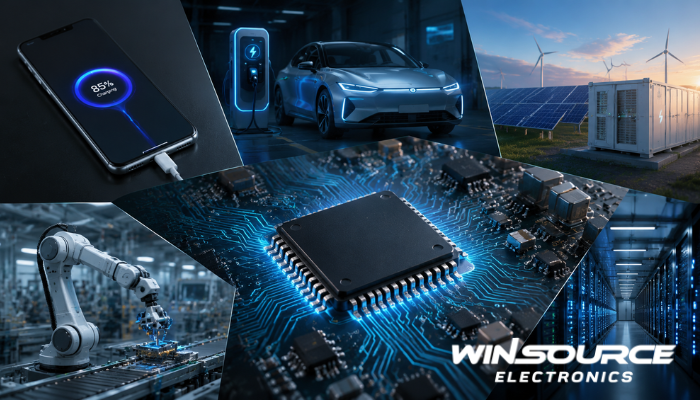
Power and power management technologies are essential components of modern electronic systems. From smartphones and wearable devices to electric vehicles, industrial equipment, and renewable energy systems, the demand for more efficient and reliable power solutions continues to grow.
The development of power and power management technologies is mainly driven by the need for higher energy efficiency, smaller device sizes, longer battery life, improved reliability, and the increasing demand for electrification and intelligent systems.
As electronic devices become more powerful and connected, efficient power conversion, regulation, and distribution have become critical factors in system design.
Why Is Energy Efficiency a Major Driver of Power Technology Development?
Energy efficiency is one of the most important factors influencing advances in power management technology.
Modern electronic systems require more functionality while consuming less energy. Improving power efficiency helps:
- Extend battery operating time in portable devices
- Reduce energy consumption in data centers
- Lower heat generation in electronic systems
- Improve overall system reliability
Technologies such as high-efficiency DC/DC converters, low-power ICs, and advanced semiconductor materials help reduce power losses and improve energy utilization.
How Does Miniaturization Influence Power Management Design?
As electronic devices become smaller and more integrated, power management solutions must provide higher performance in smaller form factors.
Engineers increasingly require:
- Smaller power management ICs
- Integrated power modules
- Compact passive components
- Improved thermal performance
For applications such as smartphones, wearables, and IoT devices, reducing the size of power components while maintaining efficiency is a key design challenge.
Why Is Battery Life Driving Power Management Innovation?
The rapid growth of battery-powered devices has increased the demand for advanced power management solutions.
Applications such as:
- Mobile devices
- Wireless sensors
- Wearable electronics
- Electric vehicles
require efficient power conversion and intelligent energy control to maximize battery performance.
Power management technologies help optimize battery usage through features such as:
- Low standby power consumption
- Dynamic voltage regulation
- Battery charging optimization
- Power-saving operating modes
How Do Emerging Technologies Affect Power Management Development?
New technologies and market trends continue to create new requirements for power systems.
Electric Vehicles and Energy Storage
The growth of electric vehicles requires advanced power solutions for:
- Battery management systems
- High-voltage power conversion
- Fast charging systems
- Energy efficiency optimization
Renewable Energy Systems
Solar power, energy storage, and smart grids require efficient power conversion technologies to manage energy generation and distribution.
Artificial Intelligence and Data Centers
The expansion of AI computing increases demand for high-performance power solutions capable of supporting higher processing power while controlling energy consumption and heat generation.
What Role Do Semiconductor Materials Play in Power Technology Development?
Advances in semiconductor materials have significantly improved power management performance.
Traditional silicon-based devices continue to evolve, while wide-bandgap materials such as:
- Silicon carbide (SiC)
- Gallium nitride (GaN)
provide advantages including:
- Higher switching speeds
- Lower power losses
- Higher operating temperatures
- Improved power density
These technologies are enabling more efficient solutions in applications such as electric vehicles, renewable energy, and industrial power systems.
What Are the Key Goals of Future Power Management Technologies?
Future power management development will continue to focus on:
- Higher energy efficiency
- Greater power density
- Lower standby power consumption
- Improved thermal management
- More intelligent control systems
- Better integration with digital platforms
With the growth of connected devices, electrification, and smart technologies, power management will remain a fundamental area of innovation in the electronics industry.
Summary
The development of power and power management technologies is driven by the increasing demand for efficient, compact, reliable, and intelligent electronic systems.
Energy efficiency, miniaturization, battery performance, electrification, and advanced semiconductor technologies are shaping the future of power solutions. As electronic applications continue to evolve, effective power management will remain essential for improving system performance and sustainability.