* Question
Why Did NTT DoCoMo’s i-mode Service Gain Worldwide Attention?
* Answer
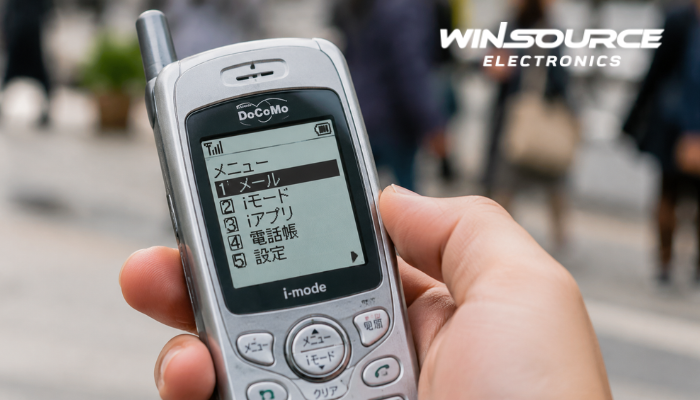
NTT DoCoMo’s i-mode service gained worldwide attention because it introduced a new way of using mobile phones beyond traditional voice communication. Launched in 1999, i-mode enabled users to access mobile internet services, email, online content, and digital applications through a standard mobile phone before smartphones became widely available.
The success of i-mode was driven by several key factors, including its user-friendly mobile internet experience, strong content ecosystem, convenient payment model, and early adoption of mobile services that later became common in the smartphone era.
What Made NTT DoCoMo’s i-mode Service Innovative?
Before smartphones became mainstream, most mobile phones were primarily used for voice calls and basic messaging. i-mode changed this concept by turning mobile phones into platforms for accessing online services.
Unlike many early mobile internet attempts that focused mainly on technical connectivity, i-mode emphasized practical user applications, including:
- Mobile email
- News and information services
- Online banking
- Entertainment content
- Mobile shopping
This approach demonstrated that mobile devices could become everyday digital platforms rather than just communication tools.
How Did i-mode Build a Successful Mobile Ecosystem?
One of the biggest reasons for i-mode’s success was its ability to create a complete ecosystem involving users, network operators, and content providers.
DoCoMo provided developers with a relatively accessible environment based on compact HTML (cHTML), which allowed many existing web developers to create mobile content without learning an entirely new programming language. This helped expand the number of available mobile services.
In addition, DoCoMo introduced a billing system that allowed users to pay for digital content through their mobile phone bills. This reduced payment barriers and encouraged more users to try online services.
Why Was i-mode Considered Ahead of Its Time?
Many features that later became standard in smartphones appeared in i-mode years earlier.
Examples include:
- Mobile internet access
- Digital content platforms
- Mobile payments
- App-like service ecosystems
- Emoji-based communication
The service also contributed to the development and popularization of emoji, which later became a globally recognized digital communication method across smartphones and online platforms.
Why Didn’t i-mode Dominate the Global Market?
Although i-mode was highly successful in Japan, its international expansion faced challenges.
DoCoMo introduced i-mode in several overseas markets, but adoption remained limited. One major reason was that the mobile industry structure differed between Japan and other regions.
In Japan, operators played a strong role in controlling handset specifications, distribution channels, and service ecosystems. In many overseas markets, handset manufacturers, operators, and service providers had different business relationships, making the i-mode model harder to replicate.
The arrival of the iPhone in 2007 also changed the global mobile industry by introducing a new smartphone ecosystem based on app stores, operating systems, and developer platforms. This model eventually became dominant worldwide.
What Is the Legacy of NTT DoCoMo’s i-mode?
Although i-mode did not become the global mobile standard, its influence on the electronics and communication industries remains significant.
It demonstrated the potential of mobile internet services and introduced concepts that later became fundamental parts of modern smartphones, including:
- Mobile applications
- Digital content platforms
- Integrated payment systems
- Connected mobile lifestyles
The experience of NTT DoCoMo shows that technological innovation requires not only advanced features but also a scalable ecosystem that can adapt to different markets.
Summary
NTT DoCoMo’s i-mode gained worldwide attention because it successfully transformed mobile phones into internet-connected platforms before the smartphone era. Its innovative service model, content ecosystem, and user-focused design made it an important milestone in mobile communication history.
Although i-mode did not become the global standard, many ideas it introduced continue to influence today’s mobile internet and smartphone ecosystems.