
* Question
What are the characteristics of the inductor component?
* Answer
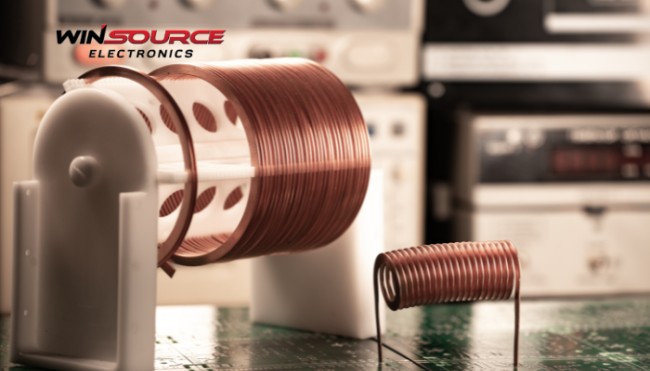
An inductor is a passive electronic component that stores energy in its magnetic field when current flows through it. The characteristics of an inductor are defined by its ability to resist changes in current, and they are influenced by various factors such as its inductance, resistance, and frequency behavior. Below are the key characteristics of an inductor:
1.Inductance (L)
- Definition:The primary characteristic of an inductor is its inductance, denoted by “L,” which is the ability to store energy in the magnetic field. It is measured in henries (H).
- Relationship with Current:Inductance determines how much the inductor resists changes in current. A higher inductance means the inductor is better at resisting changes in current. The inductance is proportional to the number of coils in the inductor, the cross-sectional area of the coil, and the magnetic permeability of the core material.
2.Inductive Reactance (X_L)
- Definition:Inductive reactance is the opposition an inductor offers to alternating current (AC), and it depends on the frequency of the AC signal. The higher the frequency, the higher the inductive reactance.
- Formula:The inductive reactance is given by the formula:
XL=2πfL
Where:
- XL = inductive reactance (in ohms)
- f= frequency of the AC signal (in Hz)
- L = inductance (in henries)
3.Impedance (Z)
Definition: The impedance of an inductor is the total opposition to current, including both resistance and reactance. For an ideal inductor (without resistance), the impedance is purely inductive and is given by the reactance XL.
Frequency Dependent: As the frequency of the applied current increases, the impedance of the inductor increases because XL increases with frequency.
4.Resistance (R)
- Definition:Inductors have some inherent resistance due to the wire used in their windings. This resistance causes power loss in the form of heat and is known as copper loss. The resistance is usually small compared to the inductive reactance but still contributes to the overall impedance.
- Effect on Performance:Higher resistance results in higher energy losses and reduced efficiency, especially at high frequencies.
5.Self-Resonant Frequency (SRF)
- Definition:The self-resonant frequency is the frequency at which the inductance and the parasitic capacitance of the inductor form a resonant circuit. At this frequency, the inductor behaves like a resistor, and the impedance drops significantly.
- Importance:Inductors should be chosen with a higher SRF to avoid unwanted resonance effects that could interfere with the intended function of the circuit.
6.Core Material
- Definition:The core material of an inductor affects its inductance and efficiency. Inductors can have air cores, ferrite cores, or iron cores, with each material offering different magnetic properties.
- Effect on Inductance:Ferrite and iron cores increase the inductance of an inductor by providing a better magnetic path than air. However, magnetic saturation and core losses can occur at high currents or frequencies.
7.Saturation Current
- Definition:The saturation current is the maximum current the inductor can carry before the core material becomes saturated and the inductance decreases significantly.
- Effect on Performance:When the core material saturates, the inductor loses its ability to store energy effectively, which can lead to circuit malfunction.
8.Energy Storage
- Definition:Inductors store energy in their magnetic field when current flows through them. The amount of energy stored is given by the formula:
E=1/2LI2
Where:
- E = energy stored (in joules)
- L = inductance (in henries)
- I = current (in amperes)
- Energy Release:When the current changes, the energy stored in the magnetic field is released back into the circuit.
9.Quality Factor (Q)
Definition: The quality factor of an inductor, or Q-factor, measures its efficiency. It is the ratio of the inductive reactance to the resistance at a given frequency. A higher Q-factor indicates lower energy losses and better performance.
Formula:
Q=XL/R
Where:
- Q = quality factor
- XL= inductive reactance
- R = resistance
10.Physical Size and Form Factor
- Definition:The physical size of an inductor is influenced by the required inductance, current handling capacity, and operating frequency. Miniature inductors are available for compact devices, while larger inductors are used for high-power applications.
- Impact on Design:Designers must balance the size and performance requirements to fit inductors into different types of circuits, especially in compact electronic devices.
In Summary:
Inductors have several key characteristics such as inductance, inductive reactance, resistance, and self-resonant frequency, which dictate their behavior in circuits. They store energy in a magnetic field, resist changes in current, and are often used for filtering, energy storage, and signal processing applications. The core material, resistance, saturation current, and other factors affect the efficiency and performance of inductors in various electrical and electronic systems.

COMMENTS