
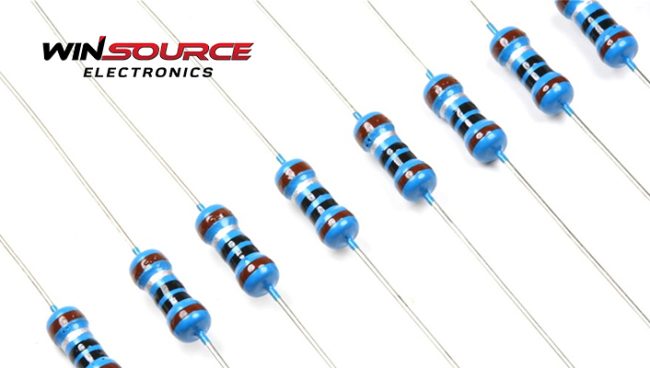
Potentiometer Fundamentals
These devices enable variable resistance adjustments, dividing a voltage into specific proportions. In high-end applications, precision and reliability are crucial, necessitating great attention to every component, particularly the resistive film.
Types of Resistive Films
There are various types of resistive films. Each type brings its unique characteristics to the table, catering to specific requirements and applications. Let’s learn more about resistive films:
1. Metal Films: Precision and Stability
The foundation of precision in high-end potentiometers often rests on the shoulders of metal films. Typically composed of nichrome or tantalum, these films are crafted through sophisticated deposition processes onto a ceramic substrate.
Their hallmark lies in the uniformity of the film, ensuring a consistent and reliable performance over time. With an impressively low temperature coefficient, metal films excel in applications demanding not only high accuracy but also minimal resistance drift, making them the go-to choice in environments where precision is non-negotiable.
2. Carbon Films: Robust and Cost-Effective
In the quest for a balance between performance and cost-effectiveness, carbon films emerge as stalwart contenders. Fashioned from a blend of carbon and ceramic, these films embody robustness and resilience. While they may not match the precision of their metal counterparts, carbon films find their niche in applications where durability takes precedence.
In essence, carbon films provide a cost-effective solution without compromising on the fundamental requirements of a high-end potentiometer.
3. Cermet Films: The Best of Both Worlds
Seeking an amalgamation of precision and robustness leads to the realm of cermet films. A synergy of ceramic and metal particles, cermet films strive to encapsulate the best of both worlds. The result is a resistive film that not only delivers the precision associated with metal films but also exhibits the durability characteristic of carbon films.
This unique combination positions cermet films as the golden mean in high-end potentiometer construction, catering to applications that demand a harmonious blend of accuracy and resilience.
4. Conductive Plastic Films: Innovation in Precision
Speaking of potentiometer technology, conductive plastic films stand out as a beacon of innovation. Composed of a conductive polymer, these films redefine precision in high-end potentiometers. Their operation is marked by smoothness and a distinct lack of noise, making them ideal for applications where precision is not just a requirement but a stringent necessity.
Beyond their impeccable performance, conductive plastic films exhibit a remarkable resistance to wear, elevating them to the forefront of longevity and reliability. As a testament to their cutting-edge nature, these films are increasingly becoming the preferred choice in applications that demand nothing short of perfection.
Factors Influencing Resistive Film Selection
The choice of the ideal resistive film is influenced by a myriad of factors, each playing a pivotal role in determining the performance, reliability, and overall efficacy of the potentiometer. Let’s explore, in greater detail, the multifaceted factors that sway the decision-making process on resistive film selection:
Precision Requirements
Different resistive films exhibit varying levels of precision, and the choice hinges on the need for fine adjustments and minimal tolerance deviations. Applications demanding razor-sharp accuracy often lean towards metal or cermet films, where every nuance of resistance can be finely tuned. Conversely, situations where cost-effectiveness is paramount might find solace in the reliable yet economically friendly embrace of carbon films.
Environmental Considerations
The environmental conditions in which a potentiometer is destined to operate wield a significant influence on resistive film selection. Metal films, with their low temperature coefficients and stable performance across varying temperatures, find favor in applications where stringent temperature control is imperative.
These films exhibit a resilience that makes them a stalwart choice in environments characterized by temperature fluctuations or extremes.
In contrast, carbon films, known for their robustness, may be preferred in settings where durability takes precedence over precision.
Longevity and Reliability
The longevity and reliability of a high-end potentiometer are intrinsically tied to the resistive film it employs. In scenarios where prolonged, uninterrupted performance is non-negotiable, the spotlight often falls on conductive plastic films.
Their resistance to wear and tear, coupled with a consistent and precise performance over an extended lifespan, positions them as the vanguard of longevity. Engineers and designers must weigh the demands of the application against the durability offered by each resistive film type, ensuring that the potentiometer is not just a short-lived maestro but a symphony that endures.
Cost Considerations
In the delicate balance of performance and economics, cost considerations inevitably sway resistive film selection. Metal films, with their high precision, often come at a premium, making them suitable for applications where cost is secondary to accuracy.
On the other hand, carbon films, offering a commendable compromise between performance and cost-effectiveness, find their niche in scenarios where budget constraints necessitate a judicious balance. The economics of resistive film selection play a pivotal role in ensuring that high-end potentiometers strike the right chords in both performance and affordability.
Application-Specific Requirements
Beyond the general considerations, the specific requirements of the application wield a decisive influence. The potentiometer’s intended use – whether in aerospace, medical devices, audio equipment, or industrial machinery – dictates the priorities in resistive film selection. Each application brings forth unique challenges, from precision demands to environmental extremes, necessitating a tailored approach in choosing the most fitting resistive film.
Long story short, resistive films play a crucial role in high-end potentiometer construction, contributing to the precision and reliability of these electronic components. The choice of resistive film material directly impacts the performance and longevity of potentiometers, making it a critical consideration for designers and engineers.
When sourcing resistive films for high-end potentiometers, it is essential to explore reputable electronic component distributors. WIN SOURCE stands out as a reliable supplier, offering a diverse range of resistive films that meet the stringent requirements of high-performance potentiometers.
© 2025 Win Source Electronics. All rights reserved. This content is protected by copyright and may not be reproduced, distributed, transmitted, cached or otherwise used, except with the prior written permission of Win Source Electronics.

COMMENTS