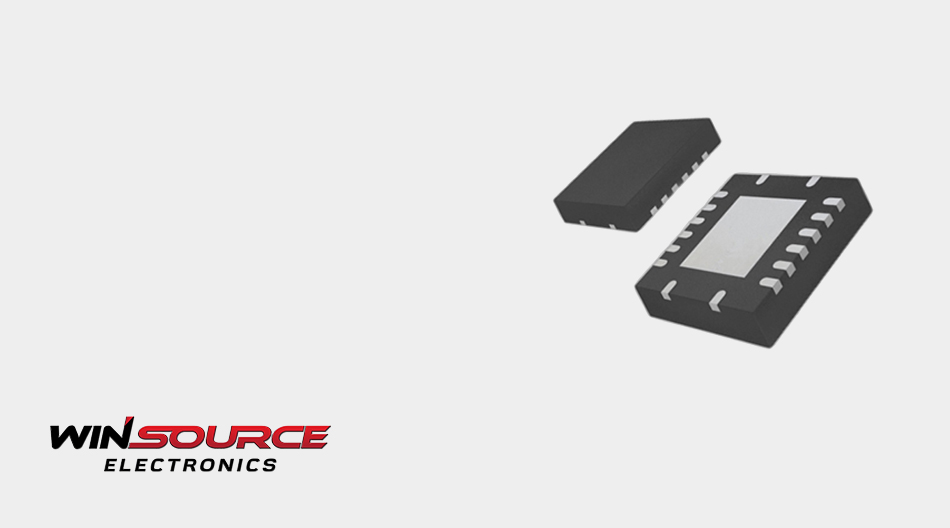
In embedded systems and industrial communication design, Ethernet connectivity has become a fundamental capability. Within the overall communication chain, the PHY (Physical Layer Transceiver), which bridges the MAC layer and the physical transmission medium, plays a critical role. Its selection directly affects system stability, compatibility, and long-term reliability.
Compared with processors or main controllers, PHY devices are often underestimated during early design stages. However, in practical applications, they have a significant impact on signal integrity, link establishment performance, and environmental robustness. The ICS1893CKILFT, as a typical 10/100 Mbps Ethernet PHY, serves as a useful reference for understanding key considerations in real-world selection processes.
The Role of PHY in System Design and Selection Fundamentals
In an Ethernet architecture, the PHY is responsible for converting digital signals from the MAC layer into analog signals suitable for the physical medium, while also handling signal recovery, clock synchronization, and link negotiation. Its performance directly determines the stability of link establishment and communication quality under complex conditions.
During system selection, the PHY must match the interface type of the host controller, such as MII or RMII, and meet the required bandwidth specifications. For 10/100 Mbps applications, mature Fast Ethernet PHY solutions remain widely used in industrial and embedded systems, offering a balanced combination of power consumption, design complexity, and ecosystem maturity.
Beyond basic performance parameters, engineering evaluation should also consider auto-negotiation capability, link detection stability, and fault recovery behavior. In industrial environments or long-term operation scenarios, these factors often carry greater practical importance than theoretical bandwidth alone.
Features and Application Fit of ICS1893CKILFT
The ICS1893CKILFT is designed for 10/100 Mbps Ethernet communication and supports a standard MII interface, enabling compatibility with a wide range of mainstream MCUs and processor platforms. This level of interface standardization provides flexibility in embedded system integration.
From an engineering perspective, its key strengths lie in stability and maturity. Compared with higher-bandwidth PHY solutions, Fast Ethernet devices typically offer more balanced characteristics in terms of electromagnetic compatibility, power management, and system-level integration complexity.
In practical applications, the ICS1893CKILFT is well suited for scenarios with clearly defined and stable bandwidth requirements, where reliability is a primary concern. Typical use cases include industrial control equipment, communication modules, and certain IoT endpoints. These systems often operate over extended periods and require consistent link stability and environmental tolerance, making proven and mature solutions a preferred choice.
Key Considerations in Design and Selection
In practical design, PHY selection is influenced not only by device specifications but also by overall system architecture. Power design is a critical aspect, as PHY devices are sensitive to power supply noise. Proper decoupling and power integrity design are essential for maintaining stable communication performance.
PCB layout also has a direct impact on signal quality. Key design considerations typically include:
- Maintaining impedance continuity for differential signal traces to minimize reflections
- Reducing unnecessary vias and stubs to limit crosstalk
- Keeping the connection path between the PHY and the transformer as short as possible to optimize signal transmission
At the system level, selection should be evaluated in the context of the target operating environment. In industrial or outdoor scenarios, temperature variation, electromagnetic interference, and long-term aging effects can all influence device behavior and, in turn, affect overall communication reliability. As a result, environmental robustness and long-term stability are essential evaluation factors.
In practical engineering projects, the ICS1893CKILFT is well suited for applications with clearly defined bandwidth requirements, mature system architectures, and a strong emphasis on long-term operational reliability. In such cases, selection decisions are typically driven by a balance among performance, reliability, and implementation complexity, rather than by a single parameter. Within this context, device maturity and stability often provide better system-level suitability than higher-specification but more complex alternatives. At the same time, supply continuity remains an important consideration. During project execution, access to stable supply channels with broad product coverage, such as WIN SOURCE, can provide greater certainty in component sourcing.
From a system-level selection perspective, the value of Fast Ethernet PHY solutions such as the ICS1893CKILFT lies not in isolated parameter advantages, but in their alignment with specific application requirements and system architectures. For designs that prioritize stability and maintainability, these mature solutions continue to offer clear practical advantages. Accordingly, PHY selection should focus on balancing long-term reliability and implementation complexity, rather than simply pursuing higher specifications.
©2026 Win Source Electronics. All rights reserved. This content is protected by copyright and may not be reproduced, distributed, transmitted, cached or otherwise used, except with the prior written permission of Win Source Electronics.