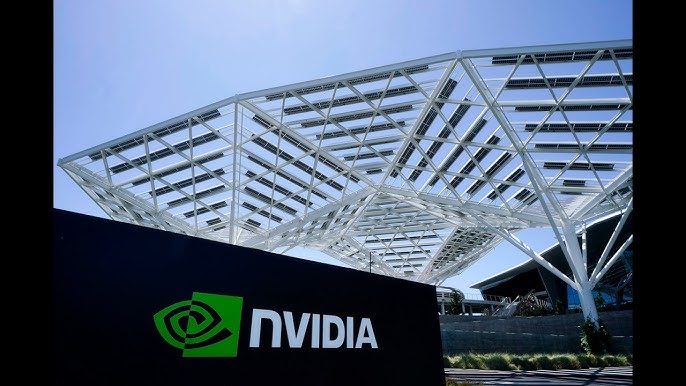
*Image from the internet; all rights belong to the original author, for reference only.
NVIDIA’s $150 Billion Annual Investment in Taiwan’s AI Supply Chain and Its Impact on the Electronic Component Ecosystem
In May 2026, NVIDIA’s CEO announced that the company plans to invest approximately $150 billion annually in Taiwan’s AI supply chain, targeting the production, packaging, and system integration of high-end GPUs and AI accelerators. This investment far exceeds previous levels and is expected to significantly drive demand for related electronic components, impacting lead times, inventory, and pricing. This article focuses on the event itself, analyzing supply chain pressure, price fluctuations, R&D coordination, and distributor strategies, providing actionable insights for OEM procurement managers, hardware engineers, and R&D leaders.
Q1: What immediate pressures does this massive investment place on the electronic component supply chain?
The $150 billion annual investment translates into a sharp surge in orders for high-end GPUs and AI accelerators, concentrating demand on critical components such as high-bandwidth memory (HBM), power MOSFETs, and key passive components. In the short term, this can result in extended lead times and localized shortages, especially for high-frequency, high-power designs. During prototype verification, if HBM is delayed, engineering teams typically rely on lower-density memory or standard power modules to complete functional testing, while ensuring peripheral components like power management ICs and passive parts are prepared. This approach allows projects to maintain progress despite the core component delay.
Q2: How might concentrated demand affect component pricing?
When order volumes concentrate, high-performance power devices and HBM can experience short-term price increases of 10–20%, with passive components rising around 5–10%. Cost-sensitive projects need to anticipate these fluctuations and adjust ordering and inventory strategies accordingly. In a small-batch pre-production scenario, procurement teams often lock in available batches of power MOSFETs and substitute standard power modules for part of the original design specification, ensuring trial production and verification proceed without being impacted by price volatility.
Q3: How can engineering and procurement teams collaborate effectively when lead times are extended?
Delays in GPU or HBM delivery can block system verification and small-batch testing. A staged design approach is recommended: complete board-level verification with general-purpose power modules and peripheral power management ICs while procurement secures stock for critical peripheral components to ensure functional testing remains uninterrupted. In one prototype test of an AI accelerator board, if GPUs were delayed, engineers first validated power delivery and interface functionality, while procurement supplied available power modules and power management ICs, ensuring verification proceeded smoothly—a common practice in high-end supply chain management.
Q4: What opportunities and strategies does concentrated ordering create for distributor customers?
Concentrated orders increase reliance on distributors for inventory visibility, lead-time management, and alternative solutions. Distributors can help clients secure key components and provide alternative part recommendations, mitigating project delays caused by shortages. In GPU mass-production preparation, distributors typically advise on available substitute options and delivery-ready batches for power MOSFETs or passive components, enabling procurement teams to make timely decisions and avoid production bottlenecks caused by a single delayed component.
Q5: What are the long-term implications for the electronic component supply chain?
Over the long term, sustained high-volume orders will drive expanded production capacity and component specification upgrades—for example, higher voltage ratings for power MOSFETs and increased memory bandwidth. Supply chain concentration makes lead-time and inventory management ongoing challenges. In continuous mass-production scenarios, procurement teams typically implement tiered substitution strategies: prioritizing power MOSFETs and power management ICs first, then extending to peripherals such as connectors and protection devices, while selecting components aligned with specification upgrades. This approach reflects verified best practices in managing high-end AI chip supply chains.
Conclusion
NVIDIA’s $150 billion annual investment in Taiwan directly impacts the high-performance electronic component supply chain, with short-term effects including extended lead times, localized shortages, and price volatility, and long-term effects promoting capacity expansion and specification upgrades. Analysis of the event shows that a combination of staged verification, key component stock reservation, and tiered substitution strategies allows customers to buffer supply chain pressures effectively, maintain project continuity, and adapt to component specification upgrades—an established practice in professional supply chain management for the electronics industry.
© 2026 Win Source Electronics. All rights reserved. This content is protected by copyright and may not be reproduced, distributed, transmitted, cached or otherwise used, except with the prior written permission of Win Source Electronics.