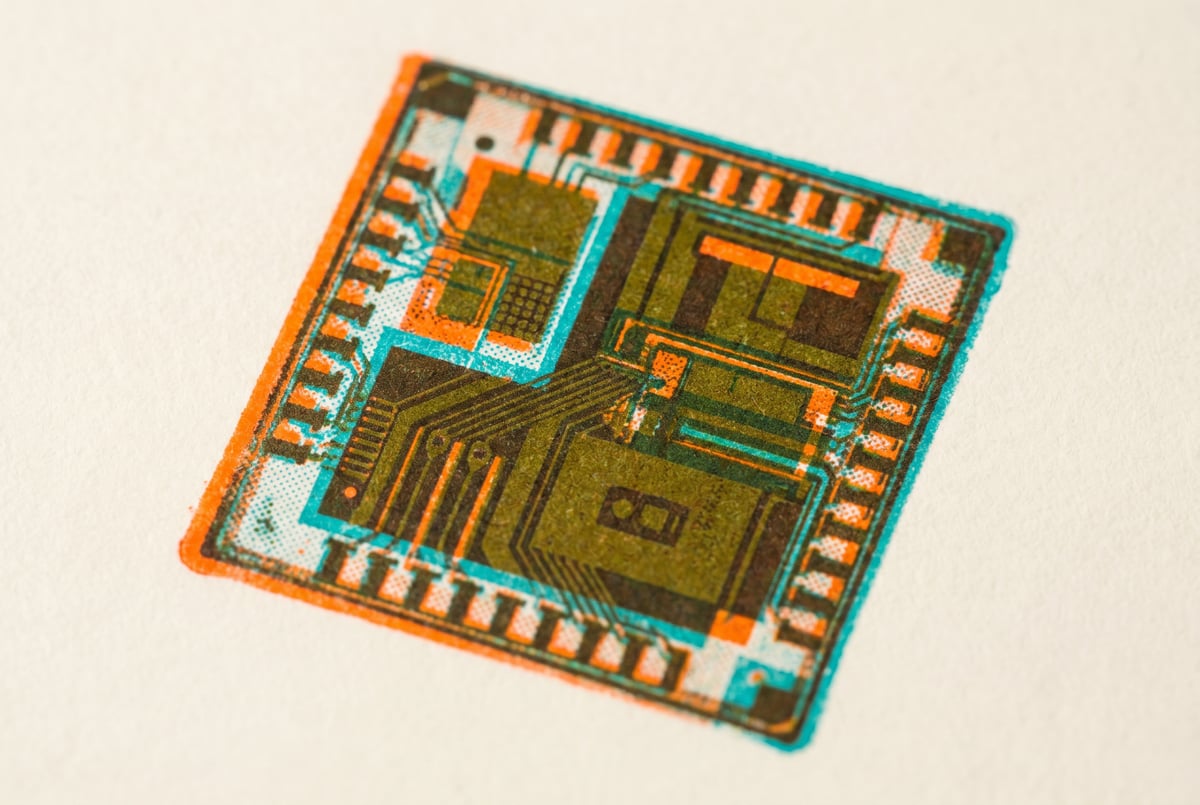
*Image from the internet; all rights belong to the original author, for reference only.
OpenAI’s Jalapeño Chip Posts Its First Detailed Inference Results
Quick Take
- OpenAI says Jalapeño delivered 1.5–1.9 times more peak AI work per watt than the comparison systems across three public models.
- The 700 W inference accelerator is designed to reduce data movement and balance compute, memory and networking resources.
- Deployment is planned to begin by the end of 2026, but production qualification and broader performance validation are still underway.
Background
On August 25, 2026, OpenAI published the first detailed performance results for Jalapeño, its custom AI inference accelerator developed with Broadcom and system partner Celestica. The chip was originally unveiled in June, but the new update provides concrete latency, throughput and power measurements. For engineers and supply-chain teams, the results offer an early view of how purpose-built inference silicon may change future AI server designs.
Q1. What did OpenAI announce this week?
OpenAI released its first detailed benchmark results for Jalapeño, a custom processor designed specifically for large-language-model inference. The company tested the chip on the public InferenceX methodology using GPT-OSS 120B, DeepSeek R1 670B and Kimi K2.5 1T.
Across those models, OpenAI reported 1.5–1.9 times more AI work per watt at peak throughput and 1.7–3.6 times lower end-to-end latency than the comparison systems. These are company-reported results rather than an independent certification, and their relevance depends on the tested models, precision formats, serving configuration and latency targets.
The announcement is a new performance update, not a new-chip launch: OpenAI originally unveiled Jalapeño on June 24.
Q2. What is technically different about Jalapeño?
Jalapeño is an application-specific AI inference accelerator, rather than a general-purpose processor adapted to every type of AI workload. OpenAI says it designed the chip, memory subsystem, network, software and rack-scale system together around the behavior of modern language models.
During inference, the prefill phase is relatively compute-intensive, while token-by-token decoding is often constrained by memory bandwidth and data movement. Jalapeño is designed to keep model state—including the KV cache—local where possible and to coordinate compute, memory and networking resources for each phase.
Its package is rated at 700 W, while OpenAI says sustained power remained at or below 550 W during the reported workloads. That distinction matters: rated power supports system design, while measured workload power reflects particular tests rather than a universal operating level.
Q3. Why do the performance-per-watt and latency results matter?
AI inference systems must usually balance throughput, response time and power. A heavily batched system can process more requests efficiently, but individual users may wait longer. A low-latency configuration may respond faster while operating hardware less efficiently.
OpenAI claims Jalapeño improves both sides of that trade-off for the workloads tested. On GPT-OSS 120B, it reported about 1.9 times higher peak mixed tokens per second per kilowatt and approximately 1.7 times lower end-to-end latency than the comparison system. Results varied for the other models.
If those gains hold in production, they could let data centers serve more interactive workloads within a given power envelope. However, benchmark leadership should not be treated as universal: real performance also depends on model architecture, software maturity, utilization, networking and rack-level cooling.
Q4. Which components and applications could be affected?
The direct application is high-volume, low-latency AI inference for services such as conversational assistants, coding agents and other multi-step agentic workloads. OpenAI describes Jalapeño as an inference platform and says it will continue using accelerators from NVIDIA and other partners for both training and inference.
At the system level, custom accelerators still depend on a wider component ecosystem. Relevant categories include server memory, high-speed networking silicon, optical interconnects, power management ICs, voltage regulators, data-center connectors and thermal-management hardware. These are natural design considerations for dense AI racks, but OpenAI has not publicly identified every supplier or component used in the Jalapeño platform.
Accordingly, target applications should not be confused with confirmed customer orders or disclosed component selections.
Q5. Will Jalapeño affect semiconductor supply, pricing or inventory?
There is no confirmed evidence yet that this performance update has changed market-wide supply, pricing or inventory. OpenAI plans to begin deploying Jalapeño within its compute infrastructure by the end of 2026, but the company says production qualification, software maturation, scale preparation and validation across additional models are still in progress.
A successful ramp could add demand for advanced packaging, accelerator memory, networking components, power delivery and rack infrastructure. That is an editorial assessment based on the architecture of AI systems, not a disclosed purchasing forecast from OpenAI.
Procurement teams should therefore monitor actual deployment volumes, supplier disclosures and component lead times instead of treating the benchmark announcement as evidence of an immediate shortage.
Q6. What should the industry watch next?
The first signal is whether OpenAI begins deployment by the end of 2026 as planned. Production qualification and software maturity will be as important as benchmark performance because a data-center accelerator must operate reliably across different models and sustained workloads.
The second signal is independent or customer-visible validation. Comparable tests using consistent model precision, latency targets, system power and rack configurations would make it easier to evaluate Jalapeño against GPUs and other custom ASICs.
Finally, supply-chain teams should watch for confirmed disclosures concerning production scale, advanced packaging, memory configuration, networking hardware and deployment partners. OpenAI says a second generation is already deep in development and a third is taking shape, but those roadmap statements should not be interpreted as fixed shipment schedules.
Conclusion
Jalapeño’s first detailed results show why purpose-built inference silicon is becoming an important part of AI infrastructure design: it may improve response time and useful work per watt by optimizing the complete system around language-model workloads. The update does not yet establish broad production performance or an immediate component shortage. The most useful next signals will be the planned deployment ramp, independent validation and confirmed information about system configurations and supply volumes.
© 2026 Win Source Electronics. All rights reserved. This content is protected by copyright and may not be reproduced, distributed, transmitted, cached or otherwise used, except with the prior written permission of Win Source Electronics.