
* Question
What are the main standards for microwave RFID?
* Answer
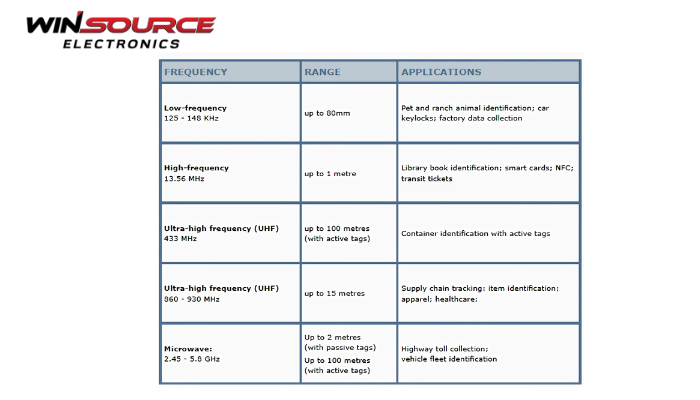
Microwave RFID systems—typically operating in the 2.45 GHz and 5.8 GHz bands—are governed by several international and regional standards that define air-interface protocols, frequency allocation, modulation schemes, and interoperability requirements. Among the most widely referenced frameworks is ISO/IEC 18000-4, which specifies the air-interface for RFID devices operating at 2.45 GHz. This standard outlines communication methods, channel spacing, and anti-collision procedures to ensure stable operation in high-density environments.
In the industrial and logistics sectors, IEEE 802.11 and 802.15 families indirectly influence microwave RFID design, as they define coexistence rules and interference management for devices sharing the same bands. Regulatory bodies such as FCC (Part 15 in the United States) and ETSI EN 300 440 in Europe impose transmit-power limits, spectrum masks, and duty-cycle constraints to ensure that microwave RFID devices operate safely within unlicensed ISM bands.
Some applications—especially those involving automatic vehicle identification, asset tracking, or electronic tolling—follow ISO 14906 and regional intelligent-transportation standards, which define higher-level communication protocols built on top of microwave RFID technologies. In Asia-Pacific markets, additional national standards may apply, including frequency allocation and compliance requirements issued by local radio authorities.
Together, these standards create a unified framework that ensures microwave RFID tags and readers from different manufacturers can operate reliably, avoid interference, and meet global regulatory expectations. Understanding these specifications is essential when designing or selecting microwave RFID solutions for industrial, transportation, or high-speed identification environments.

COMMENTS