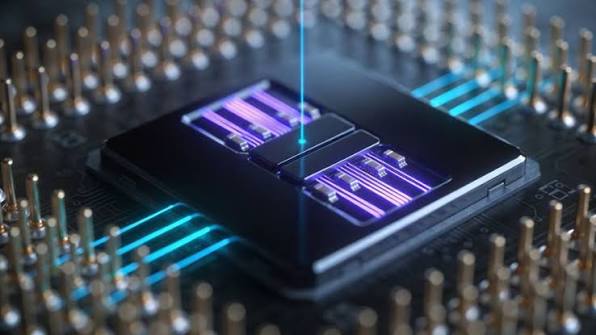
*Image from the internet; all rights belong to the original author, for reference only.
Why Sivers Is Expanding InP DFB Laser Capacity for AI Data Centers
Quick Take
- Sivers plans to invest $30 million in its Glasgow indium phosphide manufacturing facility.
- The expanded site is expected to support annual production of more than 100 million CW DFB lasers.
- Construction will begin in the second half of 2026, but the additional capacity is not expected to become operational until the fourth quarter of 2027.
Background
On September 3, 2026, Sivers Semiconductors announced a $30 million expansion of its indium phosphide manufacturing facility in Glasgow, Scotland. The project is intended to add automation, process capabilities and production flexibility for continuous-wave distributed feedback lasers used in AI data center optical links. Sivers expects the expanded site to support annual capacity exceeding 100 million lasers once it becomes operational in the fourth quarter of 2027.
Q1. What exactly did Sivers announce?
Sivers committed $30 million to expanding its Glasgow InP manufacturing facility. The program is scheduled to begin during the second half of 2026, with the expanded capacity expected to become operational in the fourth quarter of 2027.
Once completed, the site is planned to support annual production of more than 100 million CW DFB lasers. Sivers also intends to add automation and new process capabilities while moving from a Fab-Lite model toward what it calls a Hybrid Manufacturing strategy. That approach combines greater internal production capacity with external foundry, packaging and manufacturing partners.
The announcement establishes a capacity target and investment schedule. It does not mean the facility currently produces 100 million lasers per year, and Sivers did not disclose its present capacity or the percentage increase represented by the project.
Q2. What is an InP CW DFB laser?
An InP CW DFB laser is a semiconductor light source made on an indium phosphide platform. “CW” means continuous wave, indicating that the laser provides a continuous optical output. “DFB” refers to distributed feedback, a structure that uses an integrated grating to control the output wavelength.
These characteristics make DFB laser diodes useful where optical links require stable wavelengths, narrow spectral output and reliable continuous operation. Sivers positions its devices as light sources for pluggable optical transceivers, silicon photonics platforms and emerging near-package or co-packaged optical architectures.
Its InP100 manufacturing platform supports DFB lasers, Fabry–Pérot lasers and semiconductor optical amplifiers on 4-inch InP wafers. The company’s public portfolio includes a 1310 nm, 70 mW DFB laser intended for 800G-and-above transceivers, as well as multi-wavelength laser arrays.
Q3. Where is the meaningful industry development?
The important development is manufacturing scale, not the invention of the DFB laser. AI clusters require increasing numbers of high-speed optical connections between servers, switches and accelerator systems. Scaling those links also increases demand for suitable laser sources.
Sivers is preparing for this by expanding internal InP manufacturing while continuing to use outside foundry and packaging partners. In principle, that combination can provide more control over critical processes without relying entirely on a single production route.
The target of more than 100 million lasers per year is therefore a significant capacity statement. However, it remains a company plan rather than demonstrated output. Sivers has not identified the customers behind the expected production ramps, disclosed committed volumes or provided utilization assumptions for the expanded facility. Those limitations should remain visible when assessing the announcement.
Q4. Which products and applications are most directly connected?
The closest product categories are DFB laser diodes, laser arrays, optical transceivers and silicon photonics assemblies used in data center interconnects. These components can support pluggable modules as well as near-package optics and co-packaged optics.
Sivers specifically identifies its 1310 nm DFB laser as suitable for 800G-and-above transceivers. Its portfolio also includes four-channel CWDM DFB chipsets and eight-wavelength O-band laser arrays. These are optical sources rather than complete transceiver modules: they must be combined with modulators, photonic integrated circuits, drivers, control electronics, optical packaging and connectors.
The investment could therefore be relevant to optical module manufacturers, silicon photonics developers and data center networking suppliers. Actual product qualification still depends on wavelength, output power, temperature performance, reliability, packaging format and compatibility with the customer’s optical architecture.
Q5. Does this mean DFB laser supply is currently tight?
No confirmed market-wide shortage can be established from this announcement alone. Sivers says the investment is intended to prepare for anticipated customer production ramps and increasing engagement in AI data center and optical networking programs. It does not provide market inventory, lead-time or price data.
The project is also forward-looking. Because the expanded facility is not expected to become operational until the fourth quarter of 2027, it will not immediately add supply. Its eventual market effect will depend on construction, equipment installation, process qualification, customer certification, yield and utilization.
For procurement teams, the announcement is best treated as a medium-term capacity signal. It may indicate that suppliers expect higher demand for InP laser sources, but it does not by itself justify assuming shortages, price increases or longer lead times for all DFB lasers or optical transceivers.
Q6. What should the supply chain watch next?
The first indicators will be whether the expansion starts on schedule and whether Sivers reports equipment installation or process-qualification milestones. Customer certification and product-specific production ramps will provide stronger evidence than the headline capacity target.
It will also be important to see how the company divides production between its Glasgow facility and external foundry or packaging partners. That mix will influence manufacturing flexibility, supply resilience and the speed at which additional capacity can support commercial programs.
For the wider market, useful signals include lead times and pricing for high-power InP DFB lasers, adoption of 800G and faster optical transceivers, and progress in near-package and co-packaged optics. Procurement teams evaluating another laser source must compare wavelength, optical power, linewidth, temperature range, package, reliability qualification and system compatibility rather than treating all DFB devices as interchangeable.
Conclusion
Sivers’ planned expansion is a tangible optical semiconductor capacity development rather than simply another AI product announcement. The $30 million investment links growing data center interconnect requirements with a specific component category: InP CW DFB lasers. Its significance will depend on execution, customer qualification and actual utilization after the Glasgow expansion comes online. Until those milestones are reported, the planned annual capacity of more than 100 million lasers should be viewed as a medium-term supply signal—not proof of present shortages or guaranteed demand.
© 2026 Win Source Electronics. All rights reserved. This content is protected by copyright and may not be reproduced, distributed, transmitted, cached or otherwise used, except with the prior written permission of Win Source Electronics.