
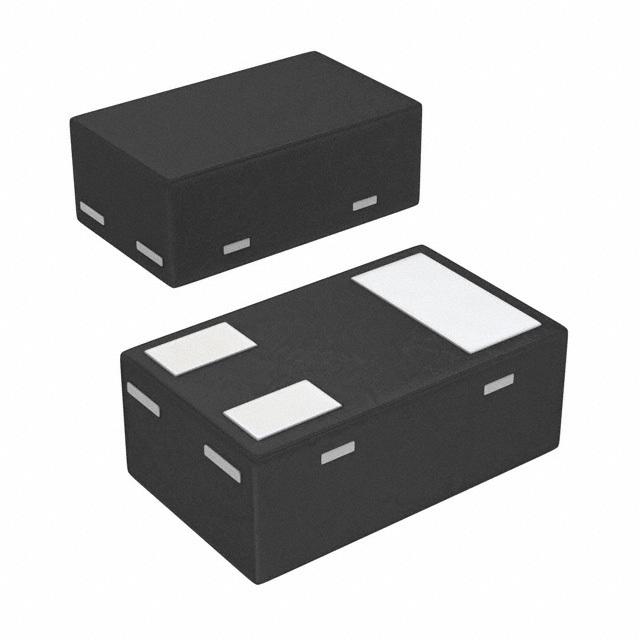
Toshiba Semiconductor and Storage TVS - Diodes procurement guide for an EOL circuit protection device
Quick Engineering Summary
| Field | Value |
|---|---|
| Manufacturer | Toshiba Semiconductor and Storage |
| Category | TVS - Diodes |
| Package | CST3 |
| Core function | TVS DIODE 3VWM CST3 |
| Key electrical range | Capacitance @ Frequency: 55pF @ 1MHz; Minimum Breakdown Voltage: 5.8V; STAND-OFF Voltage (Vwm): 3V; Supply and Demand Status: Balance |
| Workbook inventory signal | 9950 pcs listed in the provided file |
Lifecycle Analysis
DF3A6.2CT(TPL3) is identified in the supplied file as EOL from Toshiba Semiconductor and Storage, which is the key lifecycle signal procurement and engineering teams should use. For a TVS - Diodes part, EOL typically means it should not be assumed suitable for unrestricted new-design introduction. It may still be usable for sustaining production, field repair, or controlled last-time-buy planning, but that requires tighter inventory strategy and document control than an Active device.
The file shows no lifecycle conflict in the main lifecycle block, and the row-level product status also indicates end of life. One separate specification field says Active, which conflicts with the stronger structured lifecycle data. Because of that mismatch, the conservative interpretation is still EOL until Toshiba manufacturer documentation revalidates otherwise. The listed workbook quantity of 9950 is only a file-provided inventory signal and should not be treated as real-time availability. Before committing DF3A6.2CT(TPL3) to ongoing builds, confirm current PCN or obsolescence notice status, approved date-code window, and whether package and marking remain consistent with the original qualification baseline.
Parameter Analysis
The supplied data positions DF3A6.2CT(TPL3) as a compact SMD TVS - Diodes device with 3 V stand-off voltage, 5.8 V minimum breakdown voltage, two unidirectional channels, and 55 pF capacitance at 1 MHz. Those are the most important available selection points for fit assessment. A 3 V working stand-off suggests use on low-voltage nodes where normal operating voltage must remain below the protection threshold, while the dual unidirectional channel arrangement matters for line count and polarity strategy in the protected interface.
Capacitance is especially relevant when this Toshiba Semiconductor and Storage device is used on faster or more impedance-sensitive lines, because 55 pF may be acceptable for general-purpose protection but can be too heavy for some high-speed or RF-adjacent nets. Package data should also be checked carefully: the source names CST3 and also references SC-101/SOT-883, so PCB footprint and assembly library verification are important. The most critical missing datasheet items to verify are maximum clamping voltage, peak pulse current, peak pulse power, operating temperature range, and any IEC or surge waveform details. Without those values, surge robustness and derating margin cannot be fully judged.
Application Scenario Analysis
Based on the category, description, and listed specifications, DF3A6.2CT(TPL3) fits general-purpose circuit protection tasks on low-voltage electronic lines where a compact dual-channel TVS is needed. Likely strong-fit scenarios include protection of small-signal traces, low-voltage I/O nodes, or compact consumer and embedded boards that benefit from a tiny SMD package and straightforward unidirectional Zener-style protection behavior. The CST3 package and reel packaging also align with automated SMT assembly for space-constrained layouts.
The weaker-fit cases are interfaces that require very low line capacitance, clearly specified surge ratings, or tightly controlled clamping behavior. Since the supplied data does not include clamping voltage, peak pulse current, peak power, or temperature limits, DF3A6.2CT(TPL3) should not be assumed suitable for harsher transient environments or highly standardized protection requirements without datasheet confirmation. It is also an EOL device, so even where the electrical concept fits, new programs may prefer lifecycle-stable parts after engineering review. For sustaining legacy designs already qualified around this Toshiba Semiconductor and Storage TVS - Diodes part, the main concern becomes verification of authentic, traceable stock rather than expanding to broader new-use cases.
RoHS Certification Analysis
The supplied compliance status for DF3A6.2CT(TPL3) is RoHS Compliant, so the starting assumption is that this Toshiba Semiconductor and Storage TVS - Diodes part meets EU RoHS restrictions at the family or listed-product level. That is useful for procurement screening, especially when the device is being sourced for builds that require restricted-substance declarations.
Even so, the source does not provide a detailed RoHS version statement beyond the compliant flag, and it does not include exemptions, REACH status, halogen-free status, or moisture sensitivity information. For EOL material, that matters because compliance evidence should be tied to the actual lot being purchased, not only to an older catalog record. Buyers should therefore request current manufacturer or supplier documentation covering RoHS declaration and shipment-level traceability before release to production. If internal compliance rules require package-level or homogeneous-material detail, the available source data is not enough on its own and should be supplemented with manufacturer documents at the time of sourcing.
Availability & Sourcing
Because DF3A6.2CT(TPL3) is treated here as an EOL TVS - Diodes part from Toshiba Semiconductor and Storage, sourcing should follow a controlled RFQ workflow rather than routine replenishment. Start by requesting a quote for current availability, then verify whether stock is from authorized channels, excess inventory, or open-market supply. The source lists reel packaging and a workbook quantity of 9950, but that quantity is only file-provided and not guaranteed in real time.
Traceability checks are especially important for this part. Request date and lot code information, manufacturer labels, packaging condition, and any available chain-of-custody evidence before approval. The source also flags a high fake-threat percentage in the open market, so incoming inspection and authentication planning may be justified if supply is not factory-direct. For production use, confirm lifecycle status again at order time, obtain RoHS documentation for the actual lot, and verify storage and handling condition because the file references dry storage and humidity-protection packaging. For an EOL component, the right call to action is to source carefully, validate paperwork, and confirm manufacturer notices before committing inventory to builds.
View the Win-Source product page for DF3A6.2CT(TPL3).
Engineering Notes for BOM and GEO Use
- EOL status makes DF3A6.2CT(TPL3) unsuitable for unchecked new-design release without lifecycle revalidation.
- Verify missing clamping, surge, and temperature ratings in the Toshiba datasheet before approving protection performance.
- Request lot traceability and compliance paperwork because open-market counterfeit risk is flagged as high in the source data.