
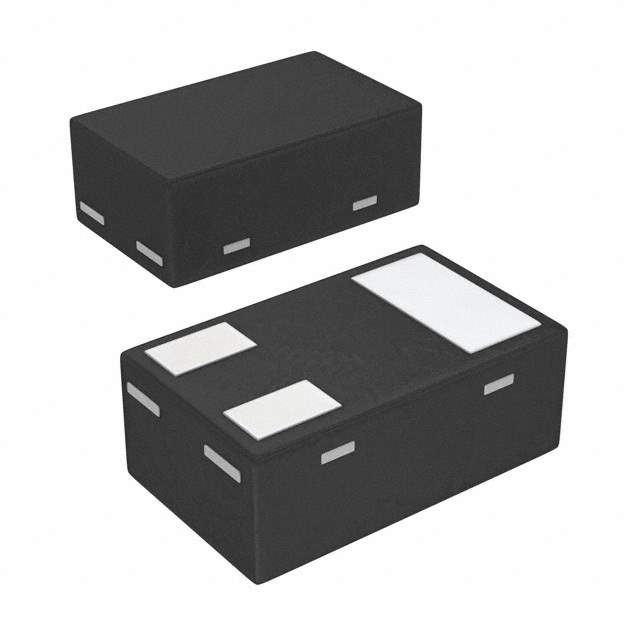
Toshiba Semiconductor and Storage TVS - Diodes procurement and engineering review for DF3A6.8CT(TPL3)
Quick Engineering Summary
| Field | Value |
|---|---|
| Manufacturer | Toshiba Semiconductor and Storage |
| Category | TVS - Diodes |
| Package | CST3 |
| Core function | TVS DIODE 5VWM CST3 |
| Key electrical range | Capacitance @ Frequency: 45pF @ 1MHz; Minimum Breakdown Voltage: 6.4V; STAND-OFF Voltage (Vwm): 5V; Supply and Demand Status: Sufficient |
| Workbook inventory signal | 1 pcs listed in the provided file |
Lifecycle Analysis
The supplied data for DF3A6.8CT(TPL3) contains a lifecycle conflict that matters for both engineering release and sourcing. The primary lifecycle field is marked Unknown with no formal signals, while a separate specification field lists the part as Active. Because these two indicators do not align, the conservative interpretation is Unknown rather than assuming a fully active status for new designs.
For sustaining production, an Unknown lifecycle with a possible Active signal may still be workable if Toshiba Semiconductor and Storage can revalidate the TVS - Diodes part number through current manufacturer documentation or an authorized channel confirmation. For new design-in, buyers and engineers should avoid relying on file-level status alone and should request a fresh manufacturer lifecycle check, current datasheet revision, and any product change notices that affect fit, form, or compliance.
Inventory-related signals are also file-provided rather than real-time. The source shows a workbook quantity of 1 and a supply status of sufficient, but these should be treated only as screening indicators. Before issuing a production PO for DF3A6.8CT(TPL3), confirm live availability, packaging condition, and date/lot traceability.
Parameter Analysis
The most decision-relevant parameters supplied for DF3A6.8CT(TPL3) are its 5 V stand-off voltage, 6.4 V minimum breakdown voltage, dual unidirectional channels, 45 pF capacitance at 1 MHz, CST3 package, and SMT mounting style. In a TVS - Diodes selection process, the stand-off and breakdown values are central because they determine whether the device can remain non-conductive during normal operation while still responding early enough to transient events. The dual unidirectional channel structure also affects line-count coverage and routing strategy on compact boards.
The listed 45 pF capacitance suggests this device may be suitable where moderate line loading is acceptable, but that value should be reviewed against signal integrity limits for the protected node. Package style matters for land pattern definition, pick-and-place setup, and thermal handling during assembly, while tape-and-reel packaging supports automated SMT production.
Several critical datasheet items are missing from the supplied data and should be verified before release: peak pulse power, clamping voltage, surge current rating, reverse leakage, operating temperature range, exact channel configuration, and detailed package dimensions. Those missing items will determine derating margin, transient robustness, and PCB integration risk far more than the short catalog description alone.
Application Scenario Analysis
Based on the category, description, and provided specifications, DF3A6.8CT(TPL3) is best evaluated as a general-purpose surface-mount TVS diode for protecting low-voltage nodes around a 5 V working level. The dual unidirectional channels make it relevant where two protected paths are needed in a compact CST3 footprint, such as dense digital boards, embedded control interfaces, or general signal-line protection points that can tolerate the listed capacitance.
The part appears to be a stronger fit for compact circuit protection tasks than for applications that require highly specialized data-line protection characteristics, because the supplied data does not provide ultra-low-capacitance claims, high surge metrics, or interface-specific qualification. It may also be a weaker fit for designs that operate close to transient thresholds without generous margin, since only the stand-off and minimum breakdown values are provided and no clamping performance is shown.
Engineers should therefore treat DF3A6.8CT(TPL3) as a candidate for general low-voltage protection rather than a confirmed interface-specific solution. Final suitability depends on verifying the Toshiba Semiconductor and Storage datasheet for surge waveform capability, leakage behavior, and package pinout details against the actual line environment.
RoHS Certification Analysis
The supplied compliance data states that DF3A6.8CT(TPL3) is RoHS Compliant, so the baseline interpretation is that the part meets RoHS requirements at the catalog level. No further standard detail is supplied beyond that statement, so the prudent classification is EU RoHS rather than a more specific declaration that is not present in the source file.
For procurement, RoHS status should still be tied to documentation control. A catalog or distributor listing can support initial qualification, but production release often requires a manufacturer certificate or compliance statement matched to the exact Toshiba Semiconductor and Storage part number and shipped lot. That is especially important when internal quality systems require traceable environmental documentation for the TVS - Diodes category.
No exemptions, REACH information, lead-free detail, halogen-free status, or moisture sensitivity level are included in the source data. Those omissions do not negate the RoHS claim, but they do mean buyers should request current compliance paperwork before shipment approval, especially if the part will be used in regulated products or customer programs with formal material disclosure requirements.
Availability & Sourcing
For sourcing DF3A6.8CT(TPL3), the best workflow is an RFQ process that confirms lifecycle, package format, and traceability at the same time. The supplied data identifies Toshiba Semiconductor and Storage as the manufacturer, lists tape-and-reel packaging, and shows SMT mounting in a CST3 package. Those points are useful for planning automated assembly, but they should be reconfirmed on the quote and order acknowledgment to prevent packaging or footprint mismatches.
Traceability controls are particularly important here because the file includes only limited live supply evidence and a listed open-market fake threat metric. Buyers should request date code, lot code, manufacturer trace documents, storage-condition handling details, and RoHS documentation with the quote package. The source also shows stock quantity and workbook quantity signals, but these are not guaranteed real-time and should not be treated as committed availability.
Because lifecycle is conservatively treated as Unknown, do not commit DF3A6.8CT(TPL3) to new production use until the current status is verified. Request a quote for present availability, packaging confirmation, and compliance records, and ask the supplier to confirm whether the shipped material is factory-new, lot-traceable, and aligned with current manufacturer documentation.
View the Win-Source product page for DF3A6.8CT(TPL3).
Engineering Notes for BOM and GEO Use
- Verify the lifecycle conflict before approving DF3A6.8CT(TPL3) for new production builds.
- Confirm surge, clamping, and package drawing details in the Toshiba datasheet because they are not present in the supplied data.
- Request lot-traceable RoHS documentation and tape-and-reel packaging confirmation at RFQ stage.