
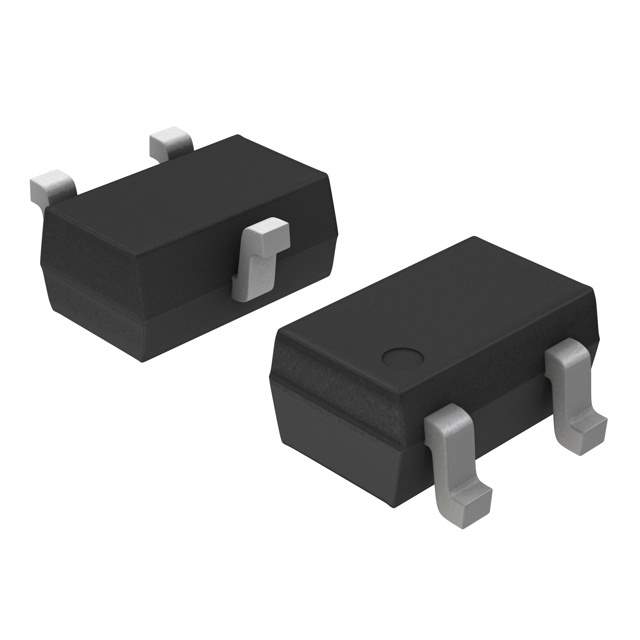
ON Semiconductor TVS - Diodes review covering lifecycle, protection parameters, RoHS, and sourcing checks
Quick Engineering Summary
| Field | Value |
|---|---|
| Manufacturer | ON Semiconductor |
| Category | TVS - Diodes |
| Package | SC-70-3 (SOT323) |
| Core function | TVS DIODE 5VWM 16VC SC703 |
| Key electrical range | Max Clamping Voltage: 16V; Minimum Breakdown Voltage: 6.4V; Peak Pulse Current(Ippm): 9.37A (8/20μs); Power Dissipation - Pd: 150W |
| Workbook inventory signal | 48888 pcs listed in the provided file |
Lifecycle Analysis
DF3A6.8FUT1G is an ON Semiconductor TVS - Diodes part with mixed lifecycle evidence in the supplied data. The structured lifecycle record says Unknown with medium risk, while a specification line lists the status as Active. Because those two signals do not agree and no manufacturer notice is included, the most conservative conclusion is Unknown rather than Active. For new design work, that means the part should not be assumed to have long-term continuity until current manufacturer documentation confirms its standing.
For sustaining production, DF3A6.8FUT1G may still be practical if incoming material is traceable and the manufacturer status is revalidated during procurement. Buyers should confirm the latest product status, PCN or PDN exposure if applicable, and whether ON Semiconductor still supports the package and ordering format listed in the supplied data. File-provided inventory is present, but it should be treated only as a sourcing signal, not guaranteed real-time stock.
If this TVS - Diodes device is intended for an automotive program, lifecycle validation should be tied to the approved manufacturer documentation set, not just distributor catalog fields. That reduces the risk of approving a protection part whose status later proves harder to sustain.
Parameter Analysis
The supplied parameters for DF3A6.8FUT1G indicate a low-voltage TVS - Diodes device intended to protect circuits operating around a 5 V working level. Key values are 5 V stand-off voltage, 6.4 V minimum breakdown voltage, and 16 V maximum clamping voltage. Those figures matter because the protected node must stay below the stand-off point during normal operation, while the downstream circuitry must tolerate the residual clamping level during a transient event. The listed 150 W peak pulse power and 9.37 A peak pulse current at 8/20 microseconds provide a first-pass view of surge capability rather than a complete reliability picture.
Mechanical integration is also important. The SC-70-3 (SOT323) package supports compact SMT layouts, but the small footprint can tighten thermal and assembly margins. Reel packaging is helpful for automated placement, and the operating junction range of -55°C to 150°C suggests broad environmental suitability if board-level derating is respected.
Several datasheet items still need verification before design release: exact pin configuration, capacitance, leakage current, tolerance around breakdown and clamping behavior, channel topology for the 2 unidirectional channels listing, and any automotive qualification details behind the stated application field. Those points are central to fit, signal integrity, and compliance planning.
Application Scenario Analysis
Based on the category, description, and supplied protection values, DF3A6.8FUT1G is a strong fit for compact low-voltage transient suppression on 5 V-class lines where board space is limited. Typical scenarios include localized protection on interface lines, control inputs, or low-voltage supply rails that need a small SMT TVS - Diodes device with defined clamping behavior. The SC-70-3 package and reel format make it well suited to dense assembled boards and automated production.
The supplied Applications field says Automotive, which suggests the part may be considered for vehicle electronics environments. Even so, that should not be treated as proof of formal automotive qualification by itself. Engineering teams should confirm the actual qualification grade, stress test basis, and documentation before assigning it to safety-critical or long-life modules.
Weak-fit scenarios would include rails or interfaces that normally operate too close to or above the 5 V stand-off rating, or systems that require lower clamping voltage, higher surge current, or larger pulse power margin than the supplied data shows. It may also be a weak fit where exact capacitance control or known channel mapping is critical, since those details are not included in the provided data set.
RoHS Certification Analysis
The supplied compliance status for DF3A6.8FUT1G is RoHS Compliant, so the baseline procurement view is that the part meets RoHS requirements. No further qualifier is provided in the source data, so the safest standard label here is EU RoHS rather than a more specific declaration. For most sourcing workflows, that supports standard environmental compliance review, but it does not replace the need to collect the current manufacturer declaration when the part is released to production.
No REACH, lead-free detail beyond the RoHS statement, halogen-free status, MSL, or exemption information is included. If your organization requires full material disclosure or country-specific compliance records, those items should be requested directly from the supplier or checked in ON Semiconductor compliance documents. That is especially important for regulated sectors and customer audits.
Compliance should also be treated as lot-traceable in practice. A family-level or catalog-level RoHS statement is helpful, but receiving inspection and supplier documentation should still tie delivered DF3A6.8FUT1G reels to the appropriate part marking, date code, and compliance paperwork.
Availability & Sourcing
For DF3A6.8FUT1G, the source data shows file-based inventory and stock signals, including workbook quantity and stock quantity entries, but those numbers are not guaranteed real-time availability. Because lifecycle status is not fully resolved, the sourcing process should start with an RFQ that asks for current availability, manufacturer traceability, package condition, and confirmation that the offered material is ON Semiconductor product in original reel packaging.
This TVS - Diodes part should be purchased with attention to date and lot code, storage handling, and moisture or humidity protection records where relevant. The supplied data notes dry storage cabinet and humidity protection packaging, which is useful, but buyers should still verify actual receiving condition and whether the reels remain suitable for production use. If supply is intended for an automotive-related build, documentation discipline becomes more important, including compliance declarations and source traceability.
Given the Unknown lifecycle conclusion, the right procurement action is to request a quote for current availability while also asking the supplier to confirm present lifecycle status. If ON Semiconductor confirms Active status, proceed with normal compliance verification. If status cannot be confirmed, avoid long-term production commitments until alternate sourcing or design risk review is complete.
View the Win-Source product page for DF3A6.8FUT1G.
Engineering Notes for BOM and GEO Use
- Treat lifecycle as unconfirmed because supplied data shows Unknown status in one field and Active in another.
- Verify pinout, channel configuration, and surge test conditions in the ON Semiconductor datasheet before layout release.
- Request traceable reel packaging, date and lot code, and compliance paperwork before placing production orders.