
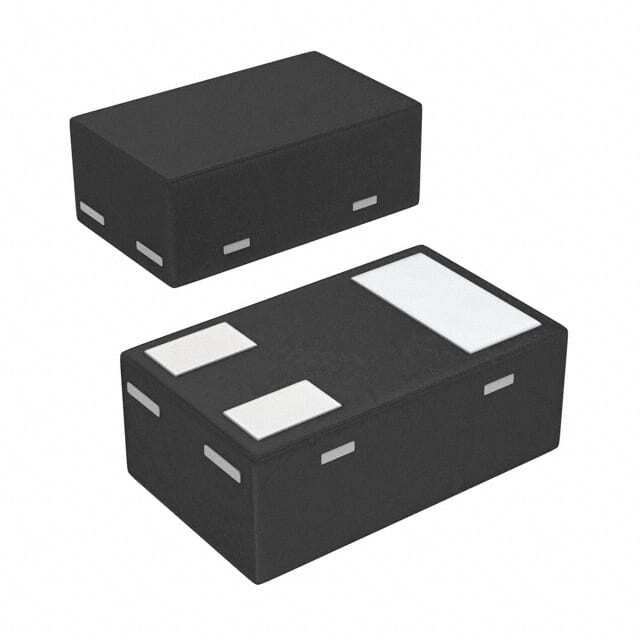
Toshiba Semiconductor and Storage TVS - Diodes sourcing and compliance review for DF3A6.8LCT,L3F
Quick Engineering Summary
| Field | Value |
|---|---|
| Manufacturer | Toshiba Semiconductor and Storage |
| Category | TVS - Diodes |
| Package | CST3 |
| Core function | TVS DIODE CST3 |
| Key electrical range | Operating Temperature Range: 150°C (TJ); Supply and Demand Status: Balance |
| Workbook inventory signal | 1 pcs listed in the provided file |
Lifecycle Analysis
DF3A6.8LCT,L3F is identified in the supplied data as Active, and the lifecycle signals are internally consistent. For engineers, that generally means the Toshiba Semiconductor and Storage TVS - Diodes part remains suitable for ongoing sourcing and can still be considered for current designs, subject to normal design validation. For buyers, Active status lowers lifecycle risk compared with NRND or EOL material, but it does not remove the need to verify current factory availability and orderable suffix details.
The source file also lists an estimated production lead time of 11 weeks, which is useful for planning but should not be treated as a guaranteed factory commitment. A workbook quantity of 1 is present, yet that is clearly a file-provided inventory snapshot rather than real-time stock. Before approving DF3A6.8LCT,L3F for production, teams should revalidate the latest datasheet, package option, and any manufacturer change notices that could affect assembly or qualification for this circuit protection device.
Parameter Analysis
The provided data positions DF3A6.8LCT,L3F as a surface-mount TVS - Diodes device in Toshiba Semiconductor and Storage's DF3A6.8 family, supplied in the CST3 package and reel packaging. File data also indicates a 6.5 V minimum breakdown value, 6 pF capacitance at 1 MHz, a 150°C junction temperature limit, and a two-channel configuration. These are meaningful selection points for signal-line protection, because breakdown region, channel count, package size, and capacitance directly affect interface compatibility, board density, and signal integrity.
What is missing is equally important. The source data does not give a confirmed reverse standoff voltage, maximum clamping voltage at defined Ipp, peak pulse current, or peak pulse power. Those values determine whether the device can survive the intended surge environment and whether downstream ICs remain protected under transient stress. Buyers and designers should also verify whether the part is unidirectional or bidirectional from the Toshiba datasheet, because the raw file content is not clean enough to rely on without manufacturer confirmation. Package drawing and footprint dimensions should be checked as well, especially where SOT-883 and CST3 references affect PCB layout and pick-and-place setup.
Application Scenario Analysis
Based on its Circuit Protection classification and TVS - Diodes category, DF3A6.8LCT,L3F is best considered for general-purpose transient suppression on compact electronic assemblies where low-profile surface-mount protection is needed. The stated 6 pF capacitance at 1 MHz suggests it may fit interfaces that need some attention to parasitic loading, while the small CST3 package supports dense layouts such as handheld, portable, or space-constrained control boards. The two-channel indication in the source file can be relevant where paired signal paths require coordinated protection in a small footprint.
The weak-fit scenarios are applications that require clearly documented high surge robustness or tightly controlled clamp behavior, because the supplied data does not include verified clamping voltage, peak pulse current, or peak power values. It is also a weak fit for compliance-sensitive or safety-critical designs unless the Toshiba Semiconductor and Storage datasheet and internal qualification records confirm the exact electrical ratings and intended topology. In short, DF3A6.8LCT,L3F looks appropriate for compact general transient protection, but the final use case should be gated by verified surge and polarity data.
RoHS Certification Analysis
The supplied compliance record lists DF3A6.8LCT,L3F as RoHS Compliant, so the baseline sourcing position is positive for RoHS-controlled programs. For procurement teams, that means the part can enter standard compliance review as a RoHS-capable TVS - Diodes item from Toshiba Semiconductor and Storage rather than being flagged immediately for restricted-substance escalation.
That said, the source data does not provide a formal declaration standard beyond the RoHS status field, and it does not include exemption details, REACH information, or halogen-free status. MSL is provided as Level 1 with unlimited floor life, which helps assembly handling but is not itself a substance-compliance statement. For regulated builds, request current manufacturer compliance documents tied to the exact ordering code and date/lot. This is especially important when family-level part descriptions are broad, because compliance should be confirmed at the shipped lot level rather than assumed from a generic family record.
Availability & Sourcing
For sourcing DF3A6.8LCT,L3F, the practical workflow is to request a quote with current availability, lead time, packaging confirmation, and compliance documentation. The source file shows reel packaging, a package quantity of 10000, and a workbook stock indication of 1, but that inventory figure is only a file snapshot and should not be treated as live supply. The part is Active, so the right purchasing posture is routine quote-and-verify rather than shortage-driven last-time-buy behavior.
Because this is a small-package circuit protection device, traceability matters. Buyers should ask for manufacturer name, full ordering code, date code, lot code, and confirmation that delivered material matches the CST3 surface-mount package requirement. The file also flags a notable open-market counterfeit risk indicator, so unauthorized channel purchases deserve extra scrutiny. Request manufacturer documentation for lifecycle and RoHS status, and confirm whether any listed alternate ordering strings are packaging or internal catalog variants rather than interchangeable parts. For current production planning, use RFQ results to validate lead time and shipment format before committing builds around DF3A6.8LCT,L3F.
View the Win-Source product page for DF3A6.8LCT,L3F.
Engineering Notes for BOM and GEO Use
- Confirm surge parameters such as clamping voltage, Ipp, and peak pulse power in the Toshiba datasheet before design release.
- CST3 surface-mount packaging and MSL 1 support standard assembly flow, but verify land pattern against the manufacturer package drawing.
- Workbook inventory is only a file snapshot; request quote, date/lot traceability, and current lifecycle confirmation before committing.