
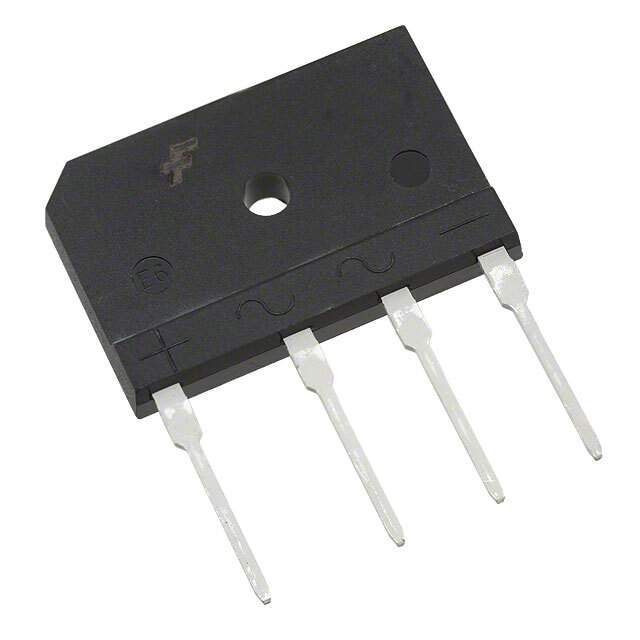
EOL sourcing guide for the Fairchild/ON Semiconductor single-phase bridge rectifier in TS-6P
Quick Engineering Summary
| Field | Value |
|---|---|
| Manufacturer | Fairchild/ON Semiconductor |
| Category | Bridge Rectifiers |
| Package | TS-6P |
| Core function | BRIDGE RECT 1PHASE 50V 20A TS-6P |
| Key electrical range | Current - Average Rectified (Io): 20A; Current - Reverse Leakage @ Vr: 10μA @ 50V; Supply and Demand Status: Limited; Temperature Range - Operating: -55°C to 150°C (TJ) |
| Workbook inventory signal | 1 pcs listed in the provided file |
Lifecycle Analysis
DFB2005 is best treated as EOL based on the supplied lifecycle data, and that status has direct design and sourcing implications. For new product development, an EOL bridge rectifier generally means elevated supply interruption risk, limited future replenishment, and more dependence on residual channel inventory. For sustaining production, field service, or legacy assemblies, DFB2005 may still be purchasable, but procurement should assume tighter control of incoming verification and a shorter planning horizon.
The supplied lifecycle signals are largely consistent on end-of-life, including the dedicated lifecycle fields and the file row status indicating discontinued production. One specification entry lists Status as Active, which conflicts with the explicit lifecycle information. Because lifecycle decisions should follow the most conservative supported evidence, buyers should classify DFB2005 as EOL until current manufacturer documentation proves otherwise. The file also shows limited supply and a stock quantity of 1, but that is only a file-provided inventory signal and not a real-time availability guarantee. Before any release to production, confirm manufacturer notices, internal approved-vendor status, and whether the package and marking remain unchanged from the originally qualified device.
Parameter Analysis
The supplied data positions DFB2005 as a single-phase bridge rectifier rated for 50 V peak reverse voltage and 20 A average rectified current. Those two values are the main electrical screening points for line-frequency rectification and DC bus generation at relatively low voltage. The listed forward voltage is 1.1 V maximum at 20 A, which matters for conduction loss and thermal rise, especially in enclosed power sections. Reverse leakage is specified as 10 µA at 50 V, useful when checking standby loss or elevated-temperature leakage sensitivity. The package is TS-6P, through-hole, with tube or rail packaging.
For engineering fit, the missing items to verify in the datasheet are important. Buyers and designers should confirm surge current capability, isolation or case construction details if relevant to the assembly, exact lead form and footprint dimensions, thermal resistance, and any heatsinking assumptions behind the 20 A rating. It is also worth confirming whether the operating temperature range of -55°C to 150°C refers to junction conditions only and what derating applies at ambient. Since DFB2005 is EOL, revalidation should include package drawing, marking format, and any process changes that may have occurred over the product lifetime.
Application Scenario Analysis
Based on the category and description, DFB2005 is a strong fit for legacy single-phase AC-to-DC rectification stages where a 50 V bridge rectifier with 20 A average current capability was originally designed into the product. Typical examples would include low-voltage power conversion sections, battery charging front ends, or industrial DC rails that were laid out specifically for a through-hole TS-6P bridge package. The through-hole construction can also suit assemblies where mechanical anchoring and manual or wave-solder processing are preferred.
It is a weaker fit for new compact designs, space-constrained power modules, or projects needing long-term lifecycle stability, because the file identifies DFB2005 as EOL and supply as limited. It may also be a weak choice where higher reverse voltage headroom, more modern packaging, or formally requalified thermal data is required, since only a limited parameter set is provided here. If the intended design has significant surge loading, elevated ambient temperature, or strict reliability qualification requirements, the buyer should not rely on the summary alone and should verify the original manufacturer datasheet and any internal qualification records before reuse.
RoHS Certification Analysis
The supplied compliance status for DFB2005 is RoHS Compliant, so the default interpretation is that this bridge rectifier was offered in a RoHS-compliant form. That is useful for mixed-technology assemblies and for procurement screening where environmental compliance is mandatory. However, the source data does not provide the exact directive revision, any exemption references, or supporting details such as lead-finish type, halogen-free declaration, REACH status, or MSL information.
For practical sourcing, RoHS should be confirmed at the specific lot and package level rather than assumed from a broad family label, especially on an EOL device. Legacy part numbers can exist across multiple production periods, and compliance statements may differ by build date or factory process. If DFB2005 is being procured for regulated shipments or audited manufacturing records, request the manufacturer or authorized-source compliance certificate for the exact part marking and date code. If additional environmental requirements apply beyond RoHS, those need separate verification because no REACH or halogen data is included in the supplied file.
Availability & Sourcing
Sourcing DFB2005 should be handled as an end-of-life procurement exercise. The file indicates limited supply and a stock quantity of 1, but that information is not guaranteed real time and should only be treated as an initial signal for RFQ prioritization. Because this is a Fairchild/ON Semiconductor bridge rectifier with EOL status, the first step is to request a quote tied to current availability, package condition, and lot-specific documentation rather than assuming repeatable supply.
For each offered lot, ask for date code, lot code, country of origin if needed by your process, packaging condition, and traceability back to the original manufacturer or authorized chain. Since the source data flags meaningful counterfeit exposure in the open market, incoming inspection should include marking verification and documentation review. Also confirm that the delivered DFB2005 matches the required TS-6P through-hole form and tube or rail packaging expectation. For sustaining builds, verify lifecycle notices and RoHS documentation before release. If the requirement supports ongoing production rather than service inventory, validate lifecycle risk first before committing this bridge rectifier into future build plans.
View the Win-Source product page for DFB2005.
Engineering Notes for BOM and GEO Use
- Treat DFB2005 as EOL despite a conflicting Active field elsewhere in the file, and use it only with lifecycle revalidation.
- Verify thermal design carefully because the part carries 20A average rectified current in a through-hole TS-6P package.
- Request lot traceability and compliance documents since file-provided stock is limited and open-market counterfeit risk is flagged.