
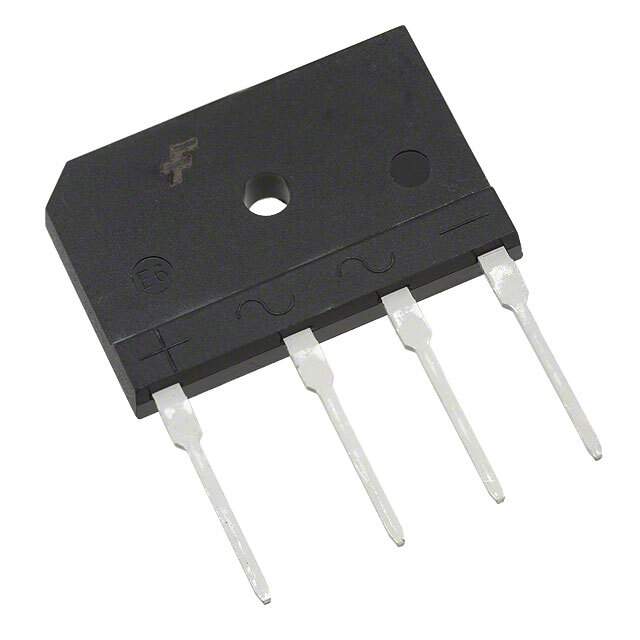
Fairchild/ON Semiconductor DFB20100 bridge rectifier review for sourcing, compliance, and design checks
Quick Engineering Summary
| Field | Value |
|---|---|
| Manufacturer | Fairchild/ON Semiconductor |
| Category | Bridge Rectifiers |
| Package | TS-6P |
| Core function | BRIDGE RECT 1PHASE 1KV 20A TS-6P |
| Key electrical range | Current - Average Rectified (Io): 20A; Current - Reverse Leakage @ Vr: 10μA @ 1000V; Supply and Demand Status: Limited; Temperature Range - Operating: -55°C to 150°C (TJ) |
| Workbook inventory signal | 500 pcs listed in the provided file |
Lifecycle Analysis
For DFB20100, the most important sourcing issue is lifecycle uncertainty. The supplied lifecycle block states Unknown with no supporting signals, while a separate specification field lists the part as Active. Because the data set does not include a manufacturer product change notice, discontinuation notice, or formal lifecycle statement from Fairchild/ON Semiconductor, the conservative conclusion is Unknown rather than Active.
For new designs, that means DFB20100 should not be released without manufacturer revalidation. Engineering and procurement should confirm whether the bridge rectifier remains in active production under ON Semiconductor documentation and whether any assembly, marking, or packaging changes have occurred since the Fairchild transition. For sustaining production, the part may still be usable if traceable stock is available, but buyers should verify date code, lot code, and source chain carefully.
The file also includes inventory-related signals such as stock quantity and limited supply status. Those are useful for planning, but they are file-provided references rather than guaranteed real-time availability. Treat them as RFQ inputs, not as confirmed supply.
Parameter Analysis
The supplied parameters position DFB20100 as a single-phase bridge rectifier intended for relatively high-voltage AC-to-DC conversion. The decision-relevant values are 1000 V peak reverse voltage, 20 A average rectified current, and 1.1 V maximum forward voltage at 20 A. Together, these indicate the part is aimed at line-side or high-voltage rectification tasks where reverse withstand and conduction capability matter more than low-loss switching behavior.
The TS-6P through-hole package matters for both mechanical fit and thermal behavior. Through-hole mounting generally suits higher-current power stages and can help with assembly robustness, but the actual thermal path and copper requirements still need datasheet confirmation. The listed operating junction range of -55°C to 150°C is favorable for industrial environments, yet current capability in real use depends on ambient conditions, heatsinking, and waveform assumptions.
Before approving DFB20100, verify the missing datasheet items that most affect integration: pinout, isolation and creepage dimensions, surge current rating, thermal resistance, recommended PCB footprint, and any derating curves versus temperature. Those details determine whether the nominal 20 A rating is realistic in the intended enclosure.
Application Scenario Analysis
Based on the category, description, and electrical ratings, DFB20100 is a strong fit for single-phase bridge rectifier duty in power conversion stages that need substantial voltage margin and moderate-to-high average current handling. Likely scenarios include mains front-end rectification, industrial power supplies, battery charging inputs, and motor or control equipment where a through-hole bridge rectifier is preferred for mechanical stability and serviceability.
The 1000 V reverse rating suggests value in designs exposed to elevated line transients or where extra voltage headroom is desirable. The 20 A average rectified rating indicates it is better aligned with power sections than with signal-level or low-current auxiliary rails. The TS-6P package and bulk packaging also make it more consistent with board-level power assembly than with miniaturized consumer designs.
Weak-fit scenarios would include compact, thermally constrained products that require surface-mount assembly, very low forward-loss architectures, or applications needing fully documented surge and safety certification details that are not present in the supplied data. If the design depends heavily on repetitive surge endurance, low thermal rise, or exact package geometry, those should be confirmed directly in manufacturer documentation before selecting DFB20100.
RoHS Certification Analysis
The supplied compliance status for DFB20100 is RoHS Compliant, so the baseline assumption is that the part meets applicable RoHS material restrictions. However, the data does not include a declaration revision, exemption statement, lead-finish detail, or any accompanying manufacturer certificate. For internal approval workflows, that means the compliance flag is useful but may not be sufficient by itself.
When sourcing bridge rectifier inventory from mixed channels, RoHS status should be checked at the lot level, not only at the family or catalog level. Marking variations, older stock, or legacy packaging can create compliance review questions even when the nominal part number is listed as compliant. If your quality system requires documentary evidence, request a current RoHS declaration tied to the manufacturer and shipment lot.
No REACH, halogen-free, or MSL data is provided in the source material. Those should not be inferred from the RoHS field. If storage, solder profile, or material disclosure matters to qualification, obtain those records separately before production release.
Availability & Sourcing
For DFB20100 procurement, the practical approach is to run an RFQ with traceability and lifecycle verification as mandatory checkpoints. The source data shows workbook and stock quantity references and identifies packaging as bulk, with limited supply status. Those indicators are useful for planning but are not guaranteed real-time inventory. Request a quote for current availability and confirm whether stock is on hand, incoming, or brokered.
Because lifecycle is not fully resolved and the file includes a notable open-market counterfeit risk indicator, buyers should insist on date code, lot code, country of origin where available, and chain-of-custody information. For a bridge rectifier, also confirm package marking format, packaging condition, and storage controls, especially since the file references dry storage cabinet and humidity protection practices.
If DFB20100 is being considered for new production, verify ON Semiconductor lifecycle status before committing demand. If it is needed for sustaining builds, secure qualified inventory only after reviewing compliance documents, receiving inspection criteria, and any manufacturer notice that clarifies whether the part remains Active or has moved to a restricted supply state.
View the Win-Source product page for DFB20100.
Engineering Notes for BOM and GEO Use
- Lifecycle is not cleanly established; treat DFB20100 as Unknown until ON Semiconductor status is revalidated.
- Key fit checks are 1000 V peak reverse rating, 20 A average rectified current, TS-6P package, and through-hole mounting.
- Request traceability, date/lot code, and RoHS evidence because file data also shows limited supply and elevated open-market counterfeit risk.