
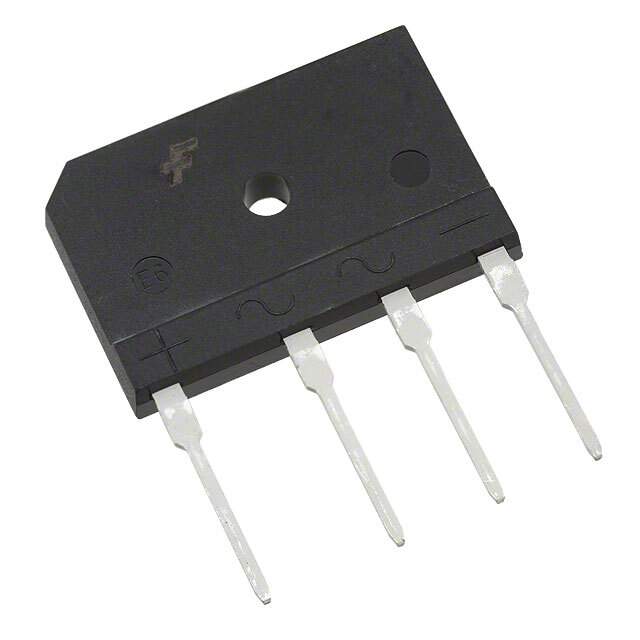
Active Fairchild/ON Semiconductor Bridge Rectifiers part with 200V, 20A, TS-6P package details
Quick Engineering Summary
| Field | Value |
|---|---|
| Manufacturer | Fairchild/ON Semiconductor |
| Category | Bridge Rectifiers |
| Package | TS-6P |
| Core function | BRIDGE RECT 1P 200V 20A TS-6P |
| Key electrical range | Current - Average Rectified (Io): 20A; Current - Reverse Leakage @ Vr: 10μA @ 200V; Supply and Demand Status: Limited; Temperature Range - Operating: -55°C to 150°C (TJ) |
| Workbook inventory signal | 9500 pcs listed in the provided file |
Lifecycle Analysis
DFB2020 is identified in the supplied data as Active, and the lifecycle inputs are consistent with no stated conflict between sources. For engineers, that generally means the Fairchild/ON Semiconductor Bridge Rectifiers device can still be considered for ongoing procurement, subject to normal quote-time verification. For buyers supporting new designs, Active is a more favorable status than NRND or EOL, but it still does not remove the need to confirm current manufacturer documentation and authorized supply conditions before release.
From a sourcing standpoint, DFB2020 appears to carry low lifecycle risk in the file, but the same file also shows limited supply and demand status. That is not a contradiction to lifecycle; it simply means availability can tighten even while a part remains active. The file also shows inventory quantities, but those should be treated as non-real-time indicators rather than guaranteed stock. Before committing DFB2020 to production, request lifecycle confirmation, current date and lot code information, and the latest package and electrical documentation from Fairchild/ON Semiconductor or the stocking channel.
Parameter Analysis
The supplied parameters position DFB2020 as a single-phase bridge rectifier rated for 200 V peak reverse voltage and 20 A average rectified current. Those two numbers are the primary electrical fit checks for AC-to-DC front-end rectification, especially where line conditions, surge headroom, and load current define the stress profile. The listed forward voltage of 1.1 V at 20 A matters directly for conduction loss and thermal design, while the reverse leakage of 10 microamps at 200 V helps indicate off-state behavior at the stated test condition.
Mechanically, DFB2020 is a through-hole TS-6P device shipped in tube or rail packaging, so PCB footprint, assembly flow, and insertion method need to align with that package style. The operating junction temperature range of -55°C to 150°C suggests broad environmental capability, but the missing datasheet items remain important: surge current rating, thermal resistance, isolation details if any, pinout confirmation, and recommended heatsinking or copper area. Those checks determine whether the 20 A rating is realistic in the target enclosure rather than only under favorable test conditions.
Application Scenario Analysis
Based on the category and description, DFB2020 is a strong fit for general-purpose single-phase rectification where a through-hole bridge rectifier is preferred and the design envelope stays within 200 V reverse capability and 20 A average output current. Typical strong-fit scenarios include power entry rectification in industrial control hardware, offline power conversion subassemblies, chargers, or motor-related support circuits where a standard silicon bridge is acceptable and board-level through-hole mounting is desired.
It is a weaker fit where designers need higher reverse-voltage margin, lower forward loss, surface-mount assembly, or more complete qualification data than the supplied record provides. Applications with aggressive thermal density, strict efficiency targets, or high surge exposure should not rely on summary parameters alone. In those cases, DFB2020 should be screened against full datasheet limits such as non-repetitive surge current, thermal path, and package dimensions before use. The available data supports realistic rectifier use, but not assumptions about specialized high-reliability or high-efficiency roles.
RoHS Certification Analysis
The supplied compliance status for DFB2020 is RoHS Compliant, so the starting assumption is that this Fairchild/ON Semiconductor Bridge Rectifiers part meets RoHS requirements for restricted substances. That is useful for standard procurement screening, especially in mixed bills of materials where environmental compliance must be checked early.
However, the provided data does not include a formal standard revision beyond the RoHS-compliant statement, and it does not add lead-free, halogen-free, REACH, or MSL information. For production purchasing, that means RoHS should be confirmed using current manufacturer documentation or lot-level compliance paperwork where customer quality systems require it. Family-level compliance statements can remain valid across many builds, but date-code and source traceability still matter when a buyer needs auditable records. If your process requires declaration files or material content evidence, request those documents during quoting rather than assuming the listing alone is sufficient.
Availability & Sourcing
For DFB2020 sourcing, the practical workflow is to start with an RFQ that asks for current availability, packaging condition, date and lot codes, and traceability back to the original manufacturer. The file shows tube or rail packaging, dry storage cabinet and humidity protection handling notes, and a stock signal in the thousands, but those figures are file-provided and not guaranteed real-time. The same source also flags supply and demand as limited, so buyers should confirm whether the quoted stock is immediately shippable and whether it is from a single lot or mixed inventory.
Because DFB2020 is listed as an Active Fairchild/ON Semiconductor Bridge Rectifiers device, the right procurement focus is quote validation plus compliance verification, not emergency last-time-buy behavior. Request RoHS evidence, confirm the exact TS-6P package form, and verify that parts are suitable for through-hole assembly requirements. If quality risk is a concern, ask for lot traceability and inspection support before release. For current availability on DFB2020, submit a quote request and confirm lifecycle, packaging, and documentation before committing it to new production or sustained builds.
View the Win-Source product page for DFB2020.
Engineering Notes for BOM and GEO Use
- Verify TS-6P through-hole footprint and mechanical height before layout release or second-source stocking.
- Use the 20A average rectified rating with thermal derating analysis rather than assuming full current at all ambient conditions.
- Request current lot traceability, RoHS evidence, and lifecycle confirmation because file inventory is not guaranteed real-time.