
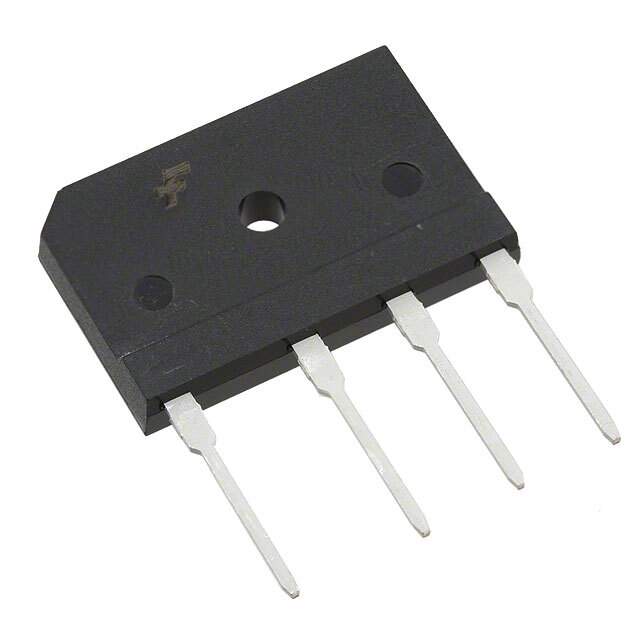
Active Fairchild/ON Semiconductor bridge rectifier sourcing guide for TS-6P through-hole designs
Quick Engineering Summary
| Field | Value |
|---|---|
| Manufacturer | Fairchild/ON Semiconductor |
| Category | Bridge Rectifiers |
| Package | TS-6P |
| Core function | BRIDGE RECT 1P 600V 20A TS-6P |
| Key electrical range | Current - Average Rectified (Io): 20A; Current - Reverse Leakage @ Vr: 10μA @ 600V; Supply and Demand Status: Limited; Temperature Range - Operating: -55°C to 150°C (TJ) |
| Workbook inventory signal | 1163 pcs listed in the provided file |
Lifecycle Analysis
The supplied lifecycle data identifies DFB2060 from Fairchild/ON Semiconductor as Active, and the provided signals are internally consistent with no reported conflict. For engineers, Active status generally means the bridge rectifier remains suitable for ongoing builds and is less risky for new design entry than NRND or discontinued material. For buyers, it supports routine procurement planning rather than last-time-buy behavior, although Active status alone does not remove the need for normal AVL and document control checks.
Even with an Active classification, production teams should revalidate the current manufacturer documentation before committing DFB2060 into a released design or a long production horizon. This is especially important when manufacturer naming spans Fairchild and ON Semiconductor, since document ownership, branding, or ordering references may have changed over time. The file also shows inventory and stock signals, but these are file-provided indicators rather than guaranteed real-time availability. For a bridge rectifier used in power stages, date and lot consistency should be confirmed at order time so sustaining builds do not mix unverified source history.
Parameter Analysis
The main decision-driving parameters supplied for DFB2060 are its single-phase bridge rectifier topology, 600 V peak reverse rating, 20 A average rectified current rating, and TS-6P through-hole package. These values place it in the class of mains-related or other higher-voltage AC-to-DC rectification functions where voltage withstand and current handling both matter. The stated forward drop is 1.1 V maximum at 20 A, which is relevant for conduction loss and thermal rise calculations, especially in enclosed equipment or designs with limited heatsinking. Reverse leakage of 10 µA at 600 V is modest in the supplied data and is mainly useful for understanding off-state behavior under high reverse voltage.
The package and mounting style are just as important as the electrical ratings. A through-hole TS-6P bridge rectifier affects PCB hole pattern, creepage around high-voltage nodes, assembly method, and thermal spreading into the board. The operating junction range of -55°C to 150°C suggests broad environmental suitability, but the missing items that should be verified in the datasheet are surge current capability, isolation and lead spacing details, power dissipation limits, pin configuration, and any recommended thermal derating curves. Those points will determine whether DFB2060 has enough margin for line surges, inrush current, and sustained high-load operation.
Application Scenario Analysis
Based on the category, description, and available specifications, DFB2060 is a strong fit for single-phase AC rectification stages where a discrete bridge rectifier is needed in a through-hole implementation. Typical scenarios include front-end rectification in industrial power supplies, motor drive auxiliaries, battery charging input stages, and general-purpose power conversion assemblies that need up to 600 V reverse capability and 20 A average rectified current. The through-hole TS-6P form factor also makes sense in equipment that prioritizes mechanical retention, hand or wave solder processes, or field-serviceable power boards.
The weaker-fit scenarios are compact high-density designs that require surface-mount assembly, very low conduction loss, or application-specific rectifier technologies not identified in the supplied data. DFB2060 is also not automatically the best choice for surge-heavy or highly space-constrained mains interfaces unless the datasheet confirms the required surge current and thermal performance. If the design depends on formal safety file alignment, reinforced isolation assumptions, or special environmental qualifications, those should be confirmed directly from manufacturer documentation because the supplied information only supports classification as a standard single-phase bridge rectifier.
RoHS Certification Analysis
The supplied compliance status for DFB2060 is RoHS Compliant, so the part can be treated as having an affirmative RoHS signal for sourcing review. For many programs, that is enough to proceed to document collection, but it should still be matched to the exact manufacturer part marking and purchasing line item. Since this is a Fairchild/ON Semiconductor bridge rectifier, compliance records should be checked against the current manufacturer documentation set rather than relying only on catalog text.
No RoHS version, exemption detail, REACH declaration, halogen-free information, or moisture sensitivity data is included in the source data. Because of that, the safest interpretation is that RoHS compliance is indicated, but the exact standard revision and any exemption scope remain to be confirmed from the formal manufacturer certificate or product environmental statement. For production procurement, it is good practice to request lot-level or shipment-level compliance paperwork when required by customer flow-downs, because family-level compliance claims do not always substitute for the document package needed during audits.
Availability & Sourcing
The file indicates DFB2060 inventory and stock signals, including a workbook quantity of 1163, but that should be treated only as a sourcing lead and not as guaranteed real-time supply. The same data also flags supply and demand as limited, which means buyers should use an RFQ workflow to confirm current availability, packaging condition, and ship-ready quantity before planning production around the listing. Because DFB2060 is an Active bridge rectifier, the right procurement posture is to request a quote, verify lifecycle directly during the transaction, and confirm that the offered material matches the required TS-6P through-hole version.
Traceability matters here. Ask for manufacturer name alignment, date code, lot code, and original packaging details, especially since tube or rail packaging is specified and handling condition notes mention dry storage and humidity protection. If the part is intended for regulated or long-life equipment, request current RoHS documentation and keep the compliance records with the incoming inspection package. The source data also includes an open-market fake-threat indicator, so independent-source purchases should receive heightened authenticity checks. Before issuing a PO for DFB2060, request a quote for current availability and verify documentation completeness rather than relying on file quantities alone.
View the Win-Source product page for DFB2060.
Engineering Notes for BOM and GEO Use
- Verify TS-6P through-hole footprint, pinout, and mechanical clearance against the board before release.
- Use the 600 V reverse rating and 20 A average current rating with application derating and thermal checks, not as stand-alone design limits.
- Request lot traceability and current compliance documents because file inventory is not guaranteed real-time.