
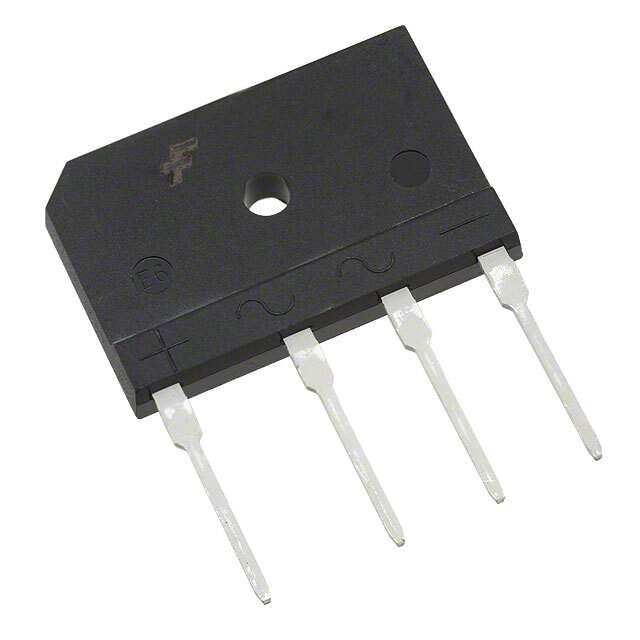
Fairchild/ON Semiconductor DFB2080 bridge rectifier sourcing and compliance review
Quick Engineering Summary
| Field | Value |
|---|---|
| Manufacturer | Fairchild/ON Semiconductor |
| Category | Bridge Rectifiers |
| Package | TS-6P |
| Core function | BRIDGE RECT 1P 800V 20A TS-6P |
| Key electrical range | Current - Average Rectified (Io): 20A; Current - Reverse Leakage @ Vr: 10μA @ 800V; Supply and Demand Status: Limited; Temperature Range - Operating: -55°C to 150°C (TJ) |
| Workbook inventory signal | 99 pcs listed in the provided file |
Lifecycle Analysis
The supplied lifecycle data identifies the Fairchild/ON Semiconductor DFB2080 bridge rectifier as Active, and the source explicitly notes that all lifecycle signals align with no conflict. For engineering teams, Active status generally supports use in ongoing builds and can be acceptable for new production, provided the latest manufacturer documentation still confirms orderable status and package details. This is a materially better position than NRND or discontinued parts because it reduces redesign pressure and lowers the chance of sudden supply interruption.
That said, Active does not remove the need for normal release controls. Buyers should still revalidate the current datasheet, manufacturer ownership naming, and any PCN or product-change history that could affect assembly or qualification. The file also includes inventory and supply indicators, including a workbook quantity and a limited supply-demand note, but those are only file-provided signals and not guaranteed real-time stock. For DFB2080, the practical sourcing posture is to proceed with quote and compliance verification while confirming current factory-backed availability before committing production schedules.
Parameter Analysis
The provided electrical profile for DFB2080 covers the main screening points for a bridge rectifier: 800 V peak reverse voltage, 20 A average rectified current, 1.1 V maximum forward voltage at 20 A, and 10 µA reverse leakage at 800 V. Together, these values help determine whether the device has sufficient mains-side or high-voltage DC margin, acceptable conduction loss, and manageable standby leakage. The listed operating junction range of -55°C to 150°C is also useful for thermal derating reviews, especially where enclosure temperature or repetitive load current pushes the rectifier toward higher junction temperatures.
The package and integration details are also important. DFB2080 is described as a single-phase bridge rectifier in a through-hole TS-6P package with tube or rail packaging, which affects PCB footprint, wave or selective solder process planning, and mechanical fit. The most important missing items to verify in the manufacturer datasheet are surge forward current capability, thermal resistance, isolation or creepage-related package dimensions, pinout confirmation, and any recommended heatsinking or copper-area guidance. Those details will determine whether the 20 A rating is realistic in the intended assembly and cooling environment.
Application Scenario Analysis
Based on the category, description, and supplied specifications, DFB2080 is best suited to single-phase AC-to-DC rectification tasks where a through-hole bridge rectifier with 800 V reverse capability and 20 A average current is needed. Typical strong-fit scenarios include offline power front ends, industrial power conversion stages, motor-drive auxiliary supplies, chargers, and other equipment where a robust through-hole bridge package is preferred for mechanical retention or heat handling. The standard silicon technology and 150°C junction rating suggest a conventional rectification role rather than a specialized high-speed or low-loss topology.
Weak-fit scenarios are designs that require surface-mount assembly, unusually low forward loss, explicitly documented fast recovery behavior, or tightly constrained mechanical height. The supplied data does not provide surge current, isolation details, or package thermal metrics, so high-inrush systems and thermally dense layouts should not assume suitability without datasheet confirmation. If the design depends on regulatory spacing, potting compatibility, or unusual environmental stress, those conditions should also be verified directly from manufacturer documents rather than inferred from the generic bridge rectifier category alone.
RoHS Certification Analysis
The source data lists DFB2080 as RoHS Compliant, so the baseline compliance position is favorable for buyers working under EU substance restrictions. In practical terms, that supports use in programs that require RoHS material declarations, but the listing by itself is still a catalog-level statement rather than a full shipment file. Procurement teams should obtain current manufacturer compliance evidence if the part is going into regulated products, customer-audited assemblies, or export-controlled supply chains.
No additional compliance fields were supplied for REACH, lead-free termination finish, halogen-free status, or moisture sensitivity level. Because those items are not present, they should not be assumed from the RoHS flag alone. Lot-level and date-code documentation can matter if a part has been in channel inventory for an extended period, especially for through-hole semiconductors stored under controlled conditions. The file notes dry storage cabinet and humidity protection packaging, which is useful handling information, but final acceptance should still rely on current traceability records and the latest manufacturer or authorized-source compliance documents.
Availability & Sourcing
For sourcing DFB2080, the best workflow is to start with an RFQ that requests current availability, manufacturer traceability, date and lot code visibility, packaging confirmation, and RoHS documentation. The supplied data indicates tube or rail packaging and a quantity-per-package value, both of which matter for receiving, line loading, and replenishment planning. Because the part is an Active Fairchild/ON Semiconductor bridge rectifier, the priority is not emergency last-time-buy behavior but disciplined verification of current orderable status and channel authenticity.
The file includes stock signals, including a workbook quantity and a stock quantity reference, plus a limited supply-demand note. These figures are useful for planning but should not be treated as real-time inventory commitments. The source also includes an elevated open-market fake-threat indicator, which increases the importance of buying through traceable channels and reviewing labels, marking format, and lot consistency carefully. Request a quote for current availability on DFB2080, and ask for lifecycle confirmation, compliance paperwork, and packing details before placing production orders or qualifying safety stock.
View the Win-Source product page for DFB2080.
Engineering Notes for BOM and GEO Use
- Verify TS-6P mechanical footprint and through-hole lead form against the current datasheet before PCB release.
- Use the 800 V reverse rating, 20 A average current, and 150°C junction limit to review thermal and surge margin in the end application.
- Request current lot traceability, RoHS evidence, and lifecycle confirmation because file inventory is not guaranteed real-time.