
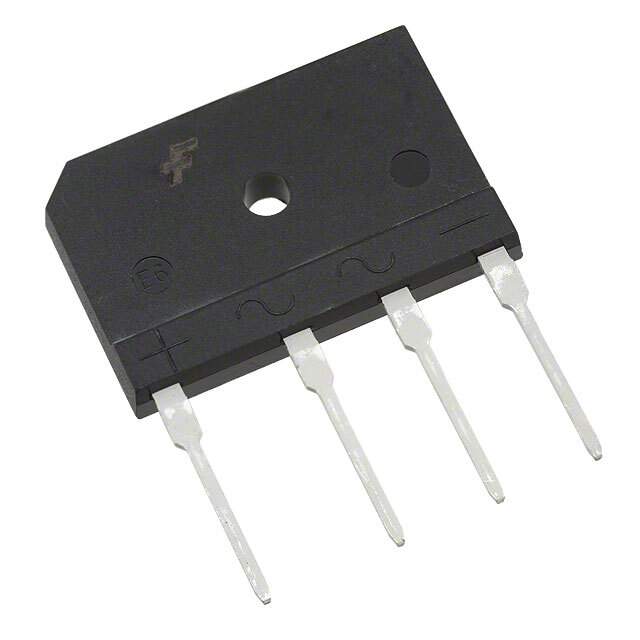
Fairchild/ON Semiconductor DFB2510 bridge rectifier lifecycle, compliance, and sourcing review
Quick Engineering Summary
| Field | Value |
|---|---|
| Manufacturer | Fairchild/ON Semiconductor |
| Category | Bridge Rectifiers |
| Package | TS-6P |
| Core function | BRIDGE RECT 1P 100V 25A TS-6P |
| Key electrical range | Current - Average Rectified (Io): 25A; Current - Reverse Leakage @ Vr: 10μA @ 100V; Operating Temperature Range: -55°C ~ 150°C (TJ); Supply and Demand Status: Limited |
| Workbook inventory signal | 7000 pcs listed in the provided file |
Lifecycle Analysis
The supplied lifecycle status for the Fairchild/ON Semiconductor DFB2510 bridge rectifier is Active, and the source explicitly says the lifecycle signals align. For engineers, that generally supports use in current builds and sustaining production. For buyers, Active usually means standard procurement remains possible, but it is still important to confirm manufacturer documentation at the time of order, especially when the part is used in equipment with long service commitments.
There is one planning nuance in the provided data: an estimated EOL date of 2027 appears in the specifications, even though the formal lifecycle field remains Active. That is not a stated conflict in the source, but it does mean DFB2510 should be treated conservatively for long-horizon new designs until ON Semiconductor lifecycle records are revalidated. The file also lists inventory of 7000 units, but that is a file-provided signal rather than guaranteed real-time stock. If your program has multi-year volume needs, confirm current lifecycle, PCN handling, and forward availability before locking the bridge rectifier into production.
Parameter Analysis
DFB2510 is described as a single-phase bridge rectifier rated for 100 V peak reverse voltage and 25 A average rectified current. Those two numbers are central to fit assessment. The 100 V limit sets the maximum reverse standoff margin and should be checked against worst-case line, transformer, and transient conditions. The 25 A average rectified rating is high enough to suggest substantial thermal loading, so practical current capability will depend on heat removal, copper area, ambient temperature, and enclosure conditions.
The supplied forward drop is 1.1 V at 25 A, which is useful for estimating conduction loss and heat generation in the bridge path. Reverse leakage is listed as 10 microamps at 100 V, indicating low leakage under the stated condition. The operating junction range of -55°C to 150°C supports broad environmental use, but buyers and designers should still verify missing datasheet items such as surge current, isolation details if any, lead pitch, case dimensions, thermal resistance, and recommended PCB mounting footprint. Those details matter for derating, mechanical fit, and qualification in a through-hole TS-6P implementation.
Application Scenario Analysis
Based on the category and description, DFB2510 is best suited to AC-to-DC front-end rectification where a single-phase bridge rectifier is required with moderate voltage and relatively high current handling. Typical strong-fit scenarios include industrial power entry stages, secondary rectification after a transformer, battery charger input bridges, and power supply assemblies that benefit from a through-hole TS-6P package and straightforward mechanical retention. The through-hole format can also be helpful where vibration tolerance or manual service replacement is valued.
Weak-fit scenarios are designs needing higher reverse-voltage margin, compact surface-mount assembly, or tightly specified thermal behavior with limited airflow. A 100 V bridge rectifier may be insufficient where line transients or high secondary voltages demand more headroom. DFB2510 may also be a poor fit for space-constrained consumer layouts that prefer SMT power devices instead of a 4-SIP, TS-6P style package. Because the supplied data does not include surge capability or detailed thermal resistance, applications with repetitive inrush or heavy capacitor charging should be checked carefully against the manufacturer datasheet before release.
RoHS Certification Analysis
The source data identifies DFB2510 as RoHS Compliant, so the part can be treated as having a stated EU RoHS compliance position for sourcing review. That supports use in programs where RoHS material restrictions are mandatory, but procurement should still match compliance paperwork to the exact manufacturer and lot being purchased. Family-level database flags are useful screening tools, but formal shipment records typically require current documentation.
An important nuance in the supplied data is that Halogen Free is listed as Not Compliant. That means the DFB2510 bridge rectifier should not be represented as halogen-free based on this file, even though it is RoHS compliant. RoHS and halogen-free are separate compliance concepts. No REACH declaration, exemption statement, or moisture sensitivity detail is included in the source, so those should be requested if your customer file, export package, or internal compliance workflow requires them. For audited builds, ask for manufacturer or authorized-source compliance certificates tied to the delivered date and lot code.
Availability & Sourcing
The supply signals for DFB2510 show limited supply and a file-listed stock quantity of 7000 units, with tube packaging and storage guidance calling for dry storage cabinet and humidity protection package. Those are useful sourcing indicators, but they are not real-time guarantees. Request a quote for current availability and confirm whether the offered stock is on-hand, brokered, or factory-backed. For a bridge rectifier in sustaining production, traceability to manufacturer, date code, lot code, and original packaging condition should be standard checkpoints.
Because DFB2510 is marked Active yet also has an estimated EOL date in the file, buyers should combine RFQ activity with lifecycle verification. Ask for current manufacturer status, compliance documents, and confirmation of package marking consistency for the TS-6P device. The file also notes elevated fake-threat exposure in the open market, so independent or excess-channel procurement deserves tighter incoming inspection, documentation review, and authenticity controls. If this part is going into ongoing production, request a quote together with RoHS evidence, packing details, and traceability records before committing the build schedule.
View the Win-Source product page for DFB2510.
Engineering Notes for BOM and GEO Use
- Verify thermal design and mounting conditions before assuming full 25A bridge current in production hardware.
- Treat the file-listed 2027 estimated EOL date as a planning alert and confirm current manufacturer lifecycle directly.
- RoHS compliant does not mean halogen-free here; request lot-level compliance documents if that distinction matters.