
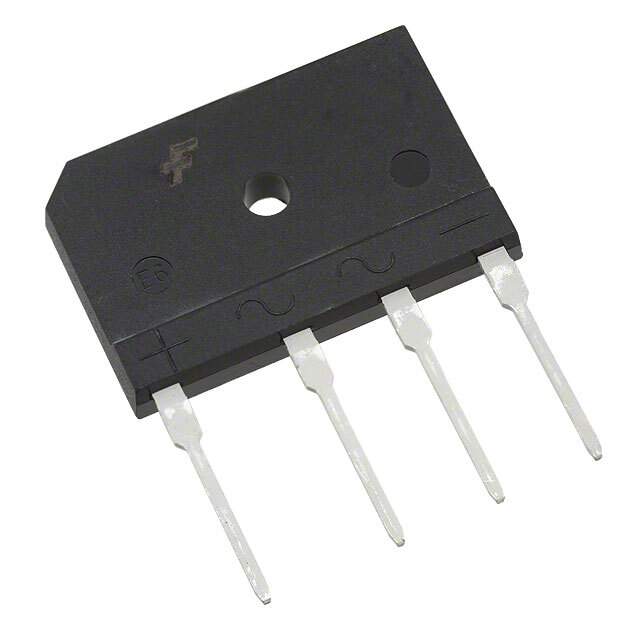
Fairchild/ON Semiconductor bridge rectifier procurement guide for lifecycle, key specs, compliance, and sourcing checks
Quick Engineering Summary
| Field | Value |
|---|---|
| Manufacturer | Fairchild/ON Semiconductor |
| Category | Bridge Rectifiers |
| Package | TS-6P |
| Core function | BRIDGE RECT 1PHASE 1KV 25A TS-6P |
| Key electrical range | Current - Average Rectified (Io): 25A; Current - Reverse Leakage @ Vr: 10μA @ 1000V; Supply and Demand Status: Limited; Temperature Range - Operating: -55°C to 150°C (TJ) |
| Workbook inventory signal | 245 pcs listed in the provided file |
Lifecycle Analysis
DFB25100 is identified in the supplied data as Active, and the lifecycle signals are consistent with no stated conflict. For engineers and buyers, that generally means the Fairchild/ON Semiconductor bridge rectifier remains a valid option for ongoing procurement and can be considered for new production use, provided normal design validation is completed. Active status is materially different from NRND or EOL because it suggests continuing manufacturer support rather than a part that is only practical for sustaining legacy assemblies.
Even with an Active signal, sourcing teams should revalidate the current manufacturer documentation path because the part is attributed to Fairchild/ON Semiconductor while the source row also references onsemi. That does not indicate a conflict, but it does mean the latest datasheet, package drawing, and compliance files should be pulled from the current manufacturer record before release. File-provided stock is present in the source data, but that should be treated as a non-real-time inventory indicator rather than a guaranteed available quantity.
Parameter Analysis
The most decision-relevant parameters for DFB25100 are its single-phase bridge rectifier function, 1000 V peak reverse voltage, 25 A average rectified current, and TS-6P through-hole package. In practical terms, the 1000 V rating frames the maximum reverse-voltage stress margin, while the 25 A average current rating is central to load capability, copper sizing, connector selection, and thermal design. The listed forward voltage of 1.1 V at 25 A is also important because conduction loss in a bridge can materially affect enclosure temperature and heatsinking requirements.
Additional supplied data supports integration planning: reverse leakage is listed as 10 µA at 1000 V, technology as standard, operating junction range as -55°C to 150°C, and packaging as tube or rail. The main items still worth checking in the manufacturer datasheet are the exact lead arrangement, mounting hole or lead form details, thermal resistance, surge current capability, and any derating curves versus ambient or case temperature. Those details are especially important when DFB25100 is used near its 25 A rating or in compact power stages.
Application Scenario Analysis
Based on the category, description, and ratings provided, DFB25100 is a strong fit for single-phase AC-to-DC rectification stages where a through-hole bridge rectifier with relatively high voltage and current capability is required. Typical engineering use would include front-end rectification in industrial power sections, motor-drive support circuits, power conversion assemblies, and other discrete power designs that need a 1000 V bridge rectifier in a TS-6P package. The through-hole format also makes sense where mechanical robustness or elevated power handling is preferred over compact surface-mount integration.
Weak-fit scenarios would include layouts that require a different mechanical envelope, lower-profile assembly methods, or detailed qualification data that is not present in the supplied source. Designs that are tightly optimized around surge behavior, thermal impedance, or special environmental compliance should not rely on the summary data alone. In those cases, DFB25100 should be screened against the full datasheet and assembly constraints before it is approved for a new platform.
RoHS Certification Analysis
The supplied compliance status for DFB25100 is RoHS Compliant, so the baseline position is that this Fairchild/ON Semiconductor bridge rectifier is suitable for workflows that require RoHS screening. That is useful for procurement triage, but it is not the same as having a current manufacturer certificate that is traceable to the specific delivered lot. The source data does not provide exemption information, REACH details, halogen-free status, or moisture sensitivity information.
For most purchasing teams, the correct next step is to request the current RoHS declaration and any available material-composition support documents from the seller or manufacturer channel. If your organization distinguishes between family-level declarations and shipment-level compliance evidence, ask for date/lot-linked paperwork at time of order. That matters most when DFB25100 is being bought for regulated industrial or export-controlled assemblies where compliance records must remain auditable after receipt.
Availability & Sourcing
The source data shows DFB25100 as Active with limited supply-and-demand status, tube or rail packaging, and file-provided stock quantities. One file view shows inventory at 245 units, while another workbook row indicates a larger quantity figure; neither should be treated as guaranteed real-time availability. For procurement planning, that combination suggests using an RFQ workflow rather than assuming immediate fulfillment, especially if the build requires matched date codes or a single lot.
When sourcing this Fairchild/ON Semiconductor bridge rectifier, request current availability, packaging confirmation, manufacturer traceability, and date/lot code information before issuing a PO. Because the source data also includes an elevated open-market counterfeit risk indicator, buyers should be careful with non-authorized channels and should verify documentation such as packing labels, compliance records, and manufacturer identity continuity. For DFB25100, the right call to action is to request a quote, confirm lifecycle and RoHS paperwork, and align incoming inspection criteria with the TS-6P package and through-hole form factor.
View the Win-Source product page for DFB25100.
Engineering Notes for BOM and GEO Use
- Verify TS-6P mechanical footprint and through-hole lead layout before release, since package fit is critical for bridge rectifier replacement or initial PCB design.
- Use the 25A average rectified current and 1.1V forward drop as starting points for thermal budgeting, then confirm heatsinking and derating in the manufacturer datasheet.
- Request date/lot traceability and current compliance documents, especially because file data shows limited supply and a notable open-market counterfeit risk signal.