
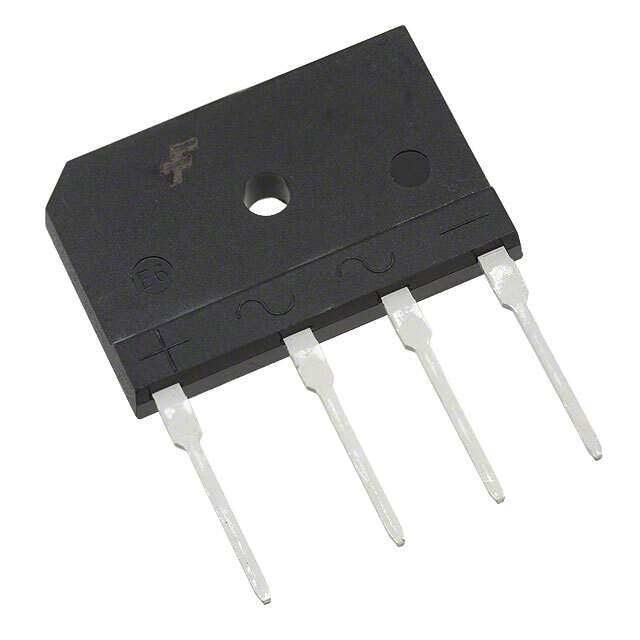
Active Fairchild/ON Semiconductor bridge rectifier sourcing guide for TS-6P 200V 25A applications
Quick Engineering Summary
| Field | Value |
|---|---|
| Manufacturer | Fairchild/ON Semiconductor |
| Category | Bridge Rectifiers |
| Package | TS-6P |
| Core function | BRIDGE RECT 1P 200V 25A TS-6P |
| Key electrical range | Current - Average Rectified (Io): 25A; Current - Reverse Leakage @ Vr: 10μA @ 200V; Supply and Demand Status: Limited; Temperature Range - Operating: -55°C to 150°C (TJ) |
| Workbook inventory signal | 1 pcs listed in the provided file |
Lifecycle Analysis
The supplied lifecycle data for DFB2520 from Fairchild/ON Semiconductor is consistent and indicates Active status for this bridge rectifier. That is the best available signal for ongoing sourcing, and it generally supports use in current production as well as service builds. Because there are no conflicting lifecycle entries in the provided file, the part can be treated more confidently than listings that mix Active and obsolete indicators.
Even with an Active status, engineering and procurement teams should revalidate the latest manufacturer documentation before a design freeze. That includes checking for any current product change notices, package revisions, or documentation updates tied to the Fairchild to ON Semiconductor branding history. The file also shows an inventory signal and limited supply-demand status, but those are file-provided indicators only and should not be treated as real-time stock assurance. For new production use, DFB2520 is reasonable to quote, but buyers should still confirm current availability and traceable source status before committing volume.
Parameter Analysis
DFB2520 is described as a single-phase bridge rectifier rated for 200 V peak reverse voltage and 25 A average rectified current. Those two values drive the primary fit decision: reverse-voltage headroom determines whether the device is suitable for the intended AC input and transient environment, while the 25 A Io rating sets the baseline current capability for thermal and reliability analysis. The listed forward drop of 1.1 V at 25 A is also important because conduction loss in a bridge path can materially affect heating, heatsinking, and enclosure temperature rise.
The supplied reverse leakage figure is 10 µA at 200 V, which is useful for understanding off-state behavior but is usually less decisive than current, voltage, and thermal limits in power rectification. The through-hole TS-6P package and tube or rail packaging matter for PCB layout, insertion process, and serviceability. Several decision-critical datasheet items are still missing from the supplied data and should be verified before release: exact pinout, package dimensions, thermal resistance, surge forward current, isolation or creepage details if applicable, and any recommended mounting or derating guidance across the -55°C to 150°C junction temperature range.
Application Scenario Analysis
Based on the category, description, and published ratings, DFB2520 fits power conversion stages that need a through-hole single-phase bridge rectifier in the 200 V and 25 A class. Likely strong-fit scenarios include AC rectification in industrial power sections, chargers, motor-drive front ends, or general power supplies where a standard silicon bridge in TS-6P packaging matches the mechanical and thermal design. The stated -55°C to 150°C junction range also suggests relevance for equipment that must tolerate broad operating temperatures, provided the thermal design is validated.
Weak-fit scenarios would include designs requiring surface-mount assembly, higher reverse-voltage margin, or lower conduction loss than a standard silicon bridge typically provides. It may also be a poor fit where the mechanical design does not support through-hole TS-6P parts or where high surge conditions demand a rectifier with specifically documented surge-current capability that has not been confirmed here. If the application is tied to mains input, engineers should verify actual line conditions, transients, and safety spacing needs in the manufacturer datasheet rather than relying only on the summary listing for DFB2520.
RoHS Certification Analysis
The supplied compliance status identifies DFB2520 as RoHS Compliant, so the part can be treated as meeting RoHS requirements at a summary level. That is useful for initial sourcing screens, especially for programs that restrict non-compliant components early in the AVL process. No direct conflict appears in the provided records, and no alternate compliance flags were supplied.
However, the source data does not include the exact RoHS revision statement, exemption details, REACH information, lead-free confirmation wording, halogen-free status, or moisture sensitivity data. For production purchasing, teams should request a current manufacturer or authorized-source compliance document that ties RoHS status to the exact orderable part and lot where possible. That lot-level check matters because summary database entries can lag manufacturer updates. In practice, DFB2520 appears suitable for RoHS-screened procurement, but compliance should still be documented formally in the purchasing and quality file before shipment release.
Availability & Sourcing
For sourcing, DFB2520 should be handled as an Active Fairchild/ON Semiconductor bridge rectifier, but with normal procurement controls for a power semiconductor used in current-carrying applications. The file shows limited supply-demand status and a workbook stock signal, including a quantity entry, yet those figures are not guaranteed real-time. Buyers should use an RFQ workflow to confirm current availability, factory lead status, and the exact packaging form being shipped, especially since the data references tube or rail packaging and a quantity-per-package figure.
Traceability is especially important for bridge rectifiers because date code, lot code, and source chain quality directly affect reliability risk. Request manufacturer traceability, current RoHS documentation, and confirmation of storage and handling condition where relevant. The supplied open-market counterfeit risk indicator further supports tighter source control and incoming inspection discipline. Before placing production orders for DFB2520, confirm lifecycle status, package identity, and latest datasheet revision, then request a quote for current availability from a traceable source rather than assuming the file-listed inventory is still present.
View the Win-Source product page for DFB2520.
Engineering Notes for BOM and GEO Use
- Verify TS-6P mechanical drawing, lead form, and pinout before PCB release because package fit is critical for through-hole bridge rectifiers.
- Check thermal path and surge-current limits in the datasheet; the supplied 25A Io rating alone is not enough for mains rectifier reliability decisions.
- Request current RoHS paperwork, date/lot traceability, and lifecycle confirmation before placing production orders for DFB2520.