
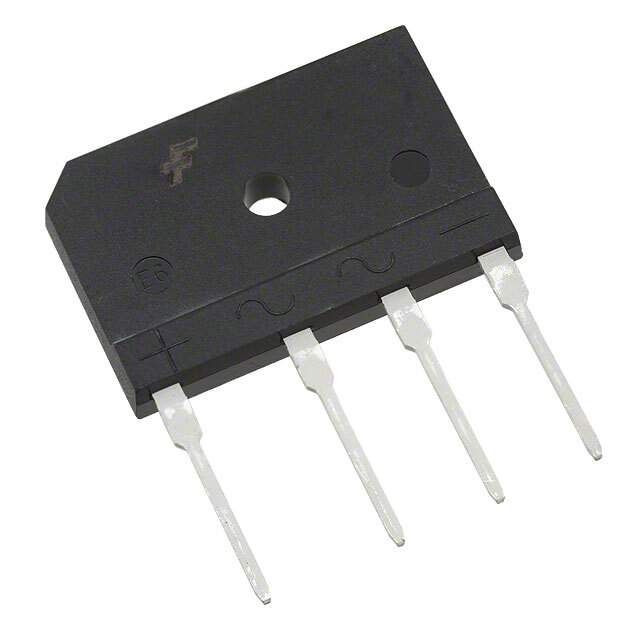
Fairchild/ON Semiconductor DFB2540 bridge rectifier sourcing guidance for EOL procurement and design review
Quick Engineering Summary
| Field | Value |
|---|---|
| Manufacturer | Fairchild/ON Semiconductor |
| Category | Bridge Rectifiers |
| Package | TS-6P |
| Core function | BRIDGE RECT 1P 400V 25A TS-6P |
| Key electrical range | Current - Average Rectified (Io): 25A; Current - Reverse Leakage @ Vr: 10μA @ 400V; Supply and Demand Status: Balance; Temperature Range - Operating: -55°C to 150°C (TJ) |
| Workbook inventory signal | 1220 pcs listed in the provided file |
Lifecycle Analysis
DFB2540 is best treated as an EOL bridge rectifier from Fairchild/ON Semiconductor. For engineering teams, that means it is generally unsuitable for fresh design-ins unless there is a tightly controlled service requirement or a documented stocking strategy. For sustaining production, EOL status shifts the focus from routine purchasing to risk management, including remaining stock validation, incoming inspection planning, and internal approval for lifecycle exposure.
The supplied lifecycle signals are mostly consistent: the dedicated lifecycle status is EOL and the risk level is high, with no conflicts reported in the lifecycle record itself. However, one specification field lists Status as Active. Because lifecycle-specific fields usually carry higher decision value than generic catalog fields, the conservative interpretation is still EOL. If DFB2540 is tied to an existing assembly, buyers should revalidate the latest manufacturer documentation and any product change notices before placing long-horizon demand. File-provided inventory exists, but it should be treated only as a snapshot and not as guaranteed real-time availability.
Parameter Analysis
The provided data positions DFB2540 as a single-phase bridge rectifier rated for 400 V peak reverse voltage and 25 A average rectified current. Those two values are the primary screening parameters for mains rectification and DC bus generation, since they define basic voltage withstand and current carrying capability. The listed maximum forward drop of 1.1 V at 25 A is also important because conduction loss in a bridge directly affects thermal rise, enclosure temperature, and heatsinking margin. Reverse leakage of 10 µA at 400 V suggests low leakage under the stated condition, which matters for standby behavior and high-temperature drift review.
Mechanically, DFB2540 uses a TS-6P package with through-hole mounting and tube or rail packaging, so PCB footprint, lead forming, and wave or manual assembly compatibility should be checked against the original board design. The stated operating junction range is -55°C to 150°C, which is useful for derating review, but several important datasheet items are still missing from the supplied record. Before release, verify surge current capability, thermal resistance, isolation or creepage details if relevant, pinout orientation, and any required mounting or heatsink conditions.
Application Scenario Analysis
Based on its category and stated ratings, DFB2540 is a practical fit for line-frequency single-phase rectification stages where a through-hole bridge rectifier is preferred. Typical strong-fit scenarios include legacy power supplies, industrial control rectifier inputs, motor drive front ends with moderate current demand, and service replacement in existing equipment already designed around a TS-6P bridge rectifier footprint. The 25 A average rectified current and 400 V peak reverse rating suggest relevance where rectified mains or similar DC conversion is required, provided the original thermal design supports the expected dissipation.
The weaker fit is any new design that needs long production continuity, automated high-density surface-mount assembly, or more complete qualification data at the sourcing stage. DFB2540 is also a weak fit when surge current behavior, package-specific thermal limits, or exact creepage requirements are critical and must be proven early, because those details are not included in the supplied data. For redesign projects, the part can still serve as a reference point for the incumbent electrical envelope, but engineering should confirm the full datasheet before assuming suitability in demanding rectification environments.
RoHS Certification Analysis
The supplied compliance status for DFB2540 is RoHS Compliant, so the starting assumption is that this Fairchild/ON Semiconductor bridge rectifier was offered in a RoHS-compliant version. For many buyers, that is sufficient to proceed to quote and document collection, but it is not a substitute for shipment-level paperwork when customer compliance files require formal evidence. No exemption details are listed in the source data.
Because DFB2540 is an EOL device, compliance review should be tied to the exact inventory lot being purchased rather than relying only on family-level or historical catalog statements. Older stock can remain compliant, but buyers should still request manufacturer or supplier declarations that match the delivered date/lot code. The source data does not provide REACH, halogen-free, or moisture sensitivity information, so those items remain open verification points. If your organization has restricted substance controls beyond basic RoHS, ask for the latest compliance certificate before approving material receipt.
Availability & Sourcing
For DFB2540, sourcing strategy should reflect its EOL bridge rectifier status. An RFQ should request current availability, date and lot code format, packaging condition, and full traceability back to the original manufacturer or authorized channel where possible. The source file shows inventory of 1220 units and tube or rail packaging, but that quantity is only a file-provided signal and should not be treated as live stock. For sustaining demand, buyers should align purchases with actual build schedules and incoming inspection plans rather than assuming replenishment will remain possible.
Because the supplied data also flags a notable open-market counterfeit threat indicator, brokered procurement requires extra caution. Ask for photos, labeling details, storage history, and any available manufacturer paperwork, especially for older lots. Storage notes reference dry storage cabinet and humidity protection packaging, which is useful context, but physical condition should still be reviewed at receiving. Before committing DFB2540 to production, request a quote for current availability and verify lifecycle status, RoHS documentation, package identity, and date/lot traceability. For long-term support, sourcing teams should also evaluate whether inventory should be secured now while engineering reviews migration options.
View the Win-Source product page for DFB2540.
Engineering Notes for BOM and GEO Use
- Treat DFB2540 as EOL for planning, even though one status field shows Active.
- Key fit checks are 400 V peak reverse rating, 25 A average rectified current, and TS-6P through-hole footprint.
- Request date/lot traceability and RoHS documentation before using broker or residual stock.