
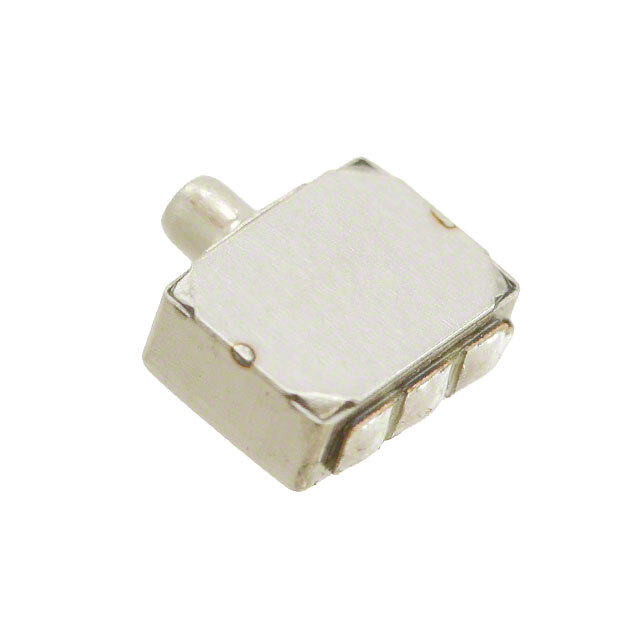
Discontinued Knowles microphone sourcing, compliance, and fit-check guidance
Quick Engineering Summary
| Field | Value |
|---|---|
| Manufacturer | Knowles |
| Category | Microphones |
| Package | Tray |
| Core function | MIC BOOM ANLG UNI -69DB 0. |
| Key electrical range | Current - Supply: 50 µA; Frequency Range: 100 Hz ~ 10 kHz; Output Type: Analog; Supply and Demand Status: Shortage |
| Workbook inventory signal | 54 pcs listed in the provided file |
Lifecycle Analysis
DFG-30445-000 carries high lifecycle risk for procurement. The source data shows conflicting labels of EOL and Discontinued, with the explicit conflict noted between an Excel lifecycle parameter marked EOL and both lifecycle status and product status marked Discontinued. For engineering and sourcing decisions, that conflict should not be interpreted optimistically. The conservative position is Discontinued, which means this Knowles Microphones part should generally be avoided for new platform designs.
For sustaining production, service stock, or repair activity, DFG-30445-000 may still be buyable through remaining channel inventory, but that does not restore manufacturer support. Teams should verify whether any official product change notice, last-time-buy notice, or obsolescence notice applies to the exact part number. File-provided stock is listed in the source, but it should be treated only as an inventory signal and not as guaranteed real-time availability.
If this microphone is already qualified in an existing assembly, the immediate task is lifecycle revalidation. Confirm current approved documentation, review any internal AVL exposure, and determine whether the remaining supply window is long enough to cover forecast demand, repairs, and qualification overlap for any future migration plan.
Parameter Analysis
The available electrical and acoustic data positions DFG-30445-000 as an analog unidirectional boom microphone with 1.3 V to 3 V operating range and very low 50 µA supply current. For battery-powered audio designs, that supply current is favorable, but the narrow voltage range still needs checking against the host bias network and any low-voltage startup conditions. The listed sensitivity of -69 dB ±4 dB at 74 dB SPL is a major integration variable because the tolerance band can materially affect gain setting, noise floor planning, and production calibration margin.
Mechanical details also matter here. The Knowles microphone is circular at 2.57 mm diameter with 2.74 mm maximum height, solder pad termination, and tray packaging. Port location is listed as bottom, top in the source data, which should be treated as a verification flag rather than a settled mounting conclusion because port orientation directly affects enclosure acoustics, gasket design, and PCB keep-out rules.
The most important missing items to verify in the datasheet are signal-to-noise ratio, recommended bias circuit, acoustic overload behavior, reflow or soldering limits, and the exact footprint and porting arrangement. Without those details, it is difficult to complete derating, audio path qualification, and manufacturability review with confidence.
Application Scenario Analysis
Based on the category, description, and listed specifications, DFG-30445-000 fits compact analog audio capture designs that need a unidirectional boom microphone and very low supply current. The 100 Hz to 10 kHz frequency range suggests voice-oriented use rather than wideband studio capture, making it a plausible fit for speech pickup, communications accessories, or other space-constrained voice interfaces where analog front-end integration already exists.
The part appears stronger where legacy designs are already built around Knowles analog microphone biasing, a circular small-form-factor package, and solder pad assembly. It is also more suitable where speech intelligibility matters more than extended high-frequency response. Because sensitivity is relatively low and tolerance is broad, gain structure and acoustic tuning should be checked carefully in systems with strict loudness or noise requirements.
Weak-fit scenarios include new products that need long lifecycle assurance, digital audio output, or broader documented performance data. It is also a weaker choice for programs that require easy future second-sourcing, since the source data here does not provide approved alternates or compatibility claims. For any redesign, the discontinued status changes the decision from pure fit to fit plus supply continuity risk.
RoHS Certification Analysis
The source identifies DFG-30445-000 as RoHS Compliant, which is the key environmental compliance signal available for this Knowles Microphones part. That supports use in programs requiring RoHS-conforming material declarations, but the data set does not include the exact regulatory revision, exemption usage, lead-free detail, halogen status, REACH declaration, or moisture sensitivity information.
Because only a general RoHS statement is present, buyers should treat compliance as needing transaction-level confirmation rather than assuming family-wide status is sufficient. This matters especially for discontinued parts, where older inventory may come from different production periods and documentation may have changed over time. The safest practice is to request the current certificate of compliance or manufacturer-backed environmental declaration tied to the shipped date/lot code.
If your internal process requires RoHS 3 formatting, homogeneous material evidence, or additional declarations beyond basic RoHS, those documents should be requested during the RFQ stage. RoHS compliance in the listing is useful, but it is not a substitute for lot-specific paperwork when the part is being sourced for regulated production.
Availability & Sourcing
DFG-30445-000 should be sourced with discontinued-part controls. The source data shows a shortage signal and file-provided inventory of 54 units, but that quantity is not guaranteed real-time and should be confirmed through an RFQ. For a discontinued Knowles microphone, availability can change quickly, and remaining stock may be split across date codes or offered only in limited packaging conditions.
During quote review, ask for traceability to the original manufacturer, date/lot code disclosure, packaging condition, and confirmation of tray handling if your receiving process depends on original presentation. Because this is an analog microphone with small dimensions and solder pad termination, verify whether the stock is factory-sealed, whether any repack occurred, and whether handling history could affect assembly yield or contamination risk around the acoustic port.
Before placing production demand, request current lifecycle confirmation, RoHS documentation, and any available manufacturer notices for DFG-30445-000. For sustaining builds, it is prudent to secure inventory only after those checks are complete and to assess whether the buy covers forecast service needs. Request a quote for current availability and documentation rather than relying on file quantities alone.
View the Win-Source product page for DFG-30445-000.
Engineering Notes for BOM and GEO Use
- Treat DFG-30445-000 as a sustaining-supply item, not a new-design microphone.
- Verify acoustic port orientation, pad footprint, and mechanical stack-up from manufacturer documents before reorder.
- Request date/lot traceability and current RoHS evidence because file inventory is not real-time guaranteed.