
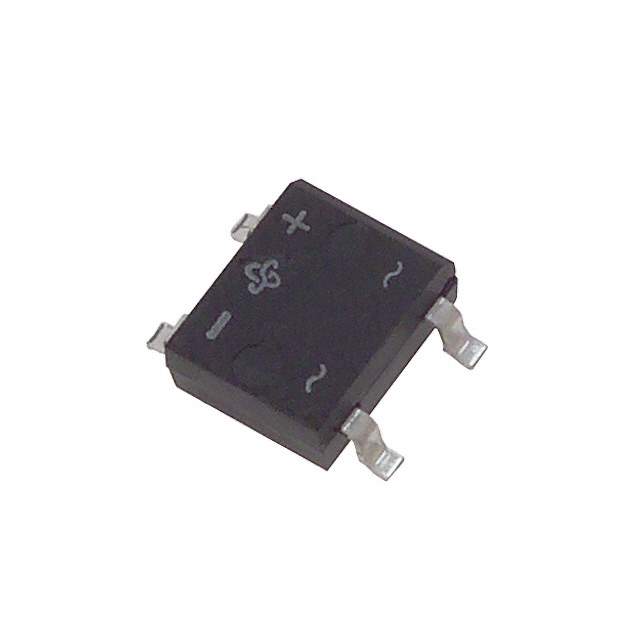
Vishay bridge rectifier procurement guide for lifecycle, specs, compliance, and sourcing checks
Quick Engineering Summary
| Field | Value |
|---|---|
| Manufacturer | Vishay |
| Category | Bridge Rectifiers |
| Package | DFS |
| Core function | BRIDGE RECT 1PHASE 600V 1. |
| Key electrical range | Current - Average Rectified (Io): 1.5A; Current - Reverse Leakage @ Vr: 5μA @ 600V; Supply and Demand Status: Limited; Temperature Range - Operating: -55°C to 150°C (TJ) |
| Workbook inventory signal | 21090 pcs listed in the provided file |
Lifecycle Analysis
DFL1506S-E3/77 is identified in the supplied data as an Active Vishay bridge rectifier, and the lifecycle inputs are internally consistent. That matters for both engineers and buyers because Active generally supports ongoing procurement for new builds as well as sustaining production, provided the latest manufacturer status remains unchanged at time of order. In this case, there are no stated conflicts between lifecycle sources, so the lifecycle signal is comparatively low risk.
Even with an Active status, prudent sourcing should still include manufacturer revalidation before release to production, especially if this Vishay bridge rectifier will be tied to a long service-life program. Package-level qualification, product change notices, and assembly-related details should be checked in current manufacturer documents. The file also includes inventory-related signals and a workbook quantity, but those are historical or file-provided indicators rather than guaranteed live stock. For new production use, treat DFL1506S-E3/77 as Active but confirm current availability, documentation revision, and any recent notices during the RFQ process.
Parameter Analysis
The most decision-relevant published parameters for DFL1506S-E3/77 are its 600 V peak reverse rating, 1.5 A average rectified current, single-phase bridge topology, and DFS SMT package. Together these define the part as a compact AC-to-DC front-end rectifier option for moderate current levels. The listed 1.1 V maximum forward voltage at 1.5 A affects dissipation and thermal rise, so it should be included in power-loss estimates, especially in enclosed designs or boards with limited copper area. The 5 µA reverse leakage at 600 V is useful when evaluating high-voltage standby behavior and temperature-related margin.
The -55°C to 150°C junction operating range supports use across broad environmental conditions, but layout and heat spreading remain critical because package thermal performance is not supplied here. Buyers and designers should verify the exact package drawing, pad pattern, surge current capability, isolation-related construction details if relevant, and any thermal resistance values in the Vishay datasheet. Those missing items will strongly influence derating, assembly robustness, and qualification for repetitive inrush or line-transient conditions.
Application Scenario Analysis
Based on the category and published description, DFL1506S-E3/77 is best suited to single-phase bridge rectification in compact SMT power-input stages. Strong-fit scenarios include general AC rectification where a 600 V bridge rectifier with 1.5 A average current capability aligns with the power level and thermal budget. It can also fit designs that benefit from a surface-mount form factor instead of through-hole assembly, such as compact consumer, industrial interface, or control boards where automated assembly is preferred.
Weak-fit scenarios are applications with uncertain surge conditions, sustained high dissipation, or current demand near or beyond the nominal 1.5 A level without good thermal margin. The supplied data does not include surge forward current, thermal resistance, or detailed package current-handling guidance, so high-inrush mains front ends or designs with severe ambient conditions should be validated carefully. If the use case depends on special rectifier behavior, enhanced efficiency, or special compliance characteristics beyond standard bridge rectification, those assumptions are not supported by the provided data and should be checked directly in manufacturer documentation.
RoHS Certification Analysis
The supplied compliance status for DFL1506S-E3/77 is RoHS Compliant, so the part can be treated as meeting a baseline RoHS requirement for sourcing workflows unless your program requires deeper documentary evidence. For many purchasing teams, that status is enough to move into quote and document collection, but it should not replace formal compliance review where customer declarations or regulated end markets demand traceable records.
No additional compliance fields were provided for REACH, lead-free wording, halogen-free status, MSL, or exemption details. Because of that, the safest approach is to request the current Vishay bridge rectifier compliance certificate or manufacturer declaration tied to the exact part number and revision. It is also good practice to distinguish family-level catalog claims from lot-level shipment documentation, particularly when incoming inspection, export files, or customer audits require more than a general RoHS statement. DFL1506S-E3/77 appears straightforward from the supplied data, but document granularity should match the end-product obligation.
Availability & Sourcing
For procurement, DFL1506S-E3/77 is presented as an Active Vishay bridge rectifier with reel packaging, SMT mounting, and a file-listed stock signal. The source data includes a workbook quantity and a separate stock quantity figure, but those numbers should be treated as non-real-time indicators only. The data also flags supply and demand as limited, which means sourcing teams should avoid assuming unlimited continuity even though lifecycle status is Active.
An RFQ for DFL1506S-E3/77 should request current availability, date and lot code information, factory traceability, packaging confirmation, and the latest compliance documentation. Because the source also mentions dry storage cabinet and humidity protection packaging, buyers should confirm packaging condition and handling controls for inbound material, especially if reels may have been stored for extended periods. Given the open-market counterfeit threat indicator in the file, authorized traceability and inspection discipline are important. For production planning, request a quote, verify lifecycle and documentation directly against current Vishay records, and align any buffer-stock decision with actual lead-time and lot traceability evidence.
View the Win-Source product page for DFL1506S-E3/77.
Engineering Notes for BOM and GEO Use
- Verify thermal design around the 1.5 A average rectified current and 1.1 V forward drop in the DFS SMT package.
- Confirm real-time stock, date code, and traceability because file-listed inventory is not a live availability guarantee.
- Request current Vishay compliance documents if your approval flow needs lot-level RoHS evidence beyond a catalog status flag.